Answering the common buyer question: what are reliable, compact lumber options for small builds and outdoor projects? This guide highlights 1 x 2 and similar compact boards, including composite and HDPE alternatives, plus select hardwoods that fit 1×2 profiles. The top picks are suited to small decks, furniture accents, planters, and craft projects. The following sections cover five carefully chosen products, with a buying guide to help compare materials, durability, and maintenance needs.
Summary table of chosen products
| Product | Brand | Size / Profile | Best For |
|---|---|---|---|
| BuyPlastic Tangent Poly Lumber – Black, 2×4 | BuyPlastic | 2×4 (1.5″ x 3.5″), 72″ | Outdoor furniture, low-maintenance surfaces |
| Forest 2 Home Ash Wood Lumber Bundle – 1 x 2 x 24″ (10 boards) | Forest 2 Home | 1″ x 2″ (actual ~15/16″ x 2″), 24″ length | Small frames, crafts, trim work |
| Farm Plastic Supply – 2 x 4 (1 1/2″ x 3 1/2″), Premium KD-HT | Farm Plastic Supply | 2×4 (1.5″ x 3.5″), 12″ length | Studs, small framing projects |
| Forest 2 Home Cherry Wood Lumber Bundle – 1 x 2 x 24″ (10 boards) | Forest 2 Home | 1″ x 2″ (actual ~15/16″ x 2″), 24″ length | Woodcrafts, trim accents |
| BuyPlastic Tangent Poly Lumber – Black, 1×4 | BuyPlastic | 1×4 (0.75″ x 3.5″), 36″ | Longer trim, lightweight outdoor surfaces |
BuyPlastic Tangent Poly Lumber – Black, 2×4 (1.5″ x 3.5″), 72″ Length

What it is: A durable HDPE plastic board designed for outdoor furniture and other exterior surfaces. The 2×4 profile is actually 1.5″ thick and 3.5″ wide, with length tolerance around ±0.125″.
Best for: Outdoor furniture frames, benches, and planters where resistance to rot, splinters, and fading matters most. This board is ideal for buyers seeking low-maintenance, fade-resistant color and easy cleaning.
Why selected: This poly lumber stands out for UV-stable colors and a maintenance-friendly surface. It resists stains and chemicals, and dirt washes off with soapy water. The 72″ length helps reduce joints for longer spans without excessive joints.
Limitations: It’s a plastic alternative, so it may not take traditional wood finishes or paint the same way as hardwoods. Structural applications should consider mechanical fasteners and joinery appropriate for HDPE materials.
Forest 2 Home Ash Wood Lumber Bundle – 1 X 2 X 24″ (10 Boards)

What it is: Kiln-dried ash hardwood boards, surfaced on two sides. Nominally 1 inch thick (actual ~15/16″), 2 inches wide, and 24 inches long. Includes a careful quality-control process from forest to home, with an emphasis on chemical-free handling.
Best for: Small woodworking projects, trim, frames, and craft pieces where a clean, durable hardwood finish is desired. The 1 x 2 size offers precise, lightweight components for models and mini-furniture accents.
Why selected: Ash hardwood provides a stronger alternative to softwoods for small build projects. The surfaced-2-sides finish helps reduce planing and prep work. It is suitable for staining or clear finishes to showcase natural grain.
Limitations: Being solid hardwood, ash can be more susceptible to moisture-related movement if not properly sealed in outdoor conditions. Use appropriate sealants for exterior use to maximize longevity.
Farm Plastic Supply – 2 in. x 4 in. (1 1/2″ x 3 1/2″) KD-HT Stud

What it is: Premium KD-HT (Kiln-Dried Heat-Treated) 2×4 stud lumber. This piece is sized at 1.5″ x 3.5″ with a 12″ length in this listing.
Best for: Framing, small structural pieces, and projects that require standard framing dimensions with good strength and a classic woodworking approach.
Why selected: It meets common grading standards for strength and appearance while remaining versatile for staining or priming, ensuring a clean, durable surface for interiors or sheltered outdoor use.
Limitations: Shorter length limits span applications; for larger frames, you’ll need multiple boards or longer stock. Prime and seal for outdoor use to reduce moisture uptake.
Barrington Hardwoods Maple Lumber Square Turning Blanks (4pc) (2″ x 2″ x 8″)

What it is: Maple turning blanks sized 2″ x 2″ x 8″, sold in a 4-piece set. Maple is widely used for turning, with a tight grain pattern and good workability.
Best for: Small turning projects, decorative accents, and hobbyist woodworkers seeking uniform blanks for turning bowls or spindles.
Why selected: Maple’s consistent grain and workability make it a solid choice where aesthetics and finish quality matter. These blanks are surfaced and ready for shaping.
Limitations: Maple is a hardwood that can be difficult to glue and finish for beginners; ensure proper finishing and sealing for durability in use.
VENTRAL Lumber 2×4 Construction Premium Whitewood Board Stud (8FT)

What it is: Premium whitewood stud lumber, 8 feet long, sized at 1.5″ x 3.5″ in the 2×4 profile. Pre-sanded and pre-cut near 12″ lengths for craft-ready use, with tight tolerances.
Best for: DIY framing, decks, and craft projects where consistent dimensions and smooth surfaces reduce prep time. Whitewood stocks are common in home improvement builds.
Why selected: The pre-sanded, pre-cut design appeals to builders seeking predictable outcomes with fewer adjustments. It’s well-suited for projects that require quick assembly and a clean finish.
Limitations: Shorter cuts may require jointing or additional cutting for full-frame builds. Not all outdoor conditions tolerate unprotected exposure without proper sealing.
VENTRAL Lumber 2×4 Construction Premium Whitewood Board Stud Wood 8FT
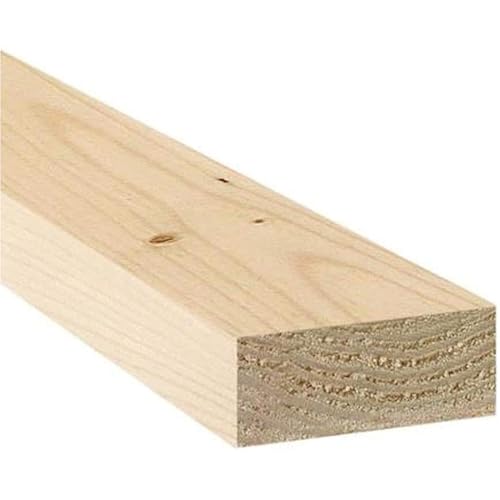
What it is: Similar to the other VENTRAL whitewood option, this is a construction-grade 2×4 board in 8 feet length, meant for crafting, framing, and light structural uses.
Best for: Builders who need reliable, straight boards with consistent dimensions for framing small projects or creating basic frames for outdoor furniture.
Why selected: The product line emphasizes craft-ready dimensions and consistent tolerances, reducing last-minute adjustments during assembly.
Limitations: Like all traditional wood, it can warp or swell with moisture; applying sealant or exterior-grade coatings improves performance in damp environments.
Buying Guide: 1 x 2 Composite Lumber And Alternatives
What matters most when choosing 1 x 2 profiles
Durability vs. flexibility: Composite or HDPE boards offer rot resistance and low maintenance, while hardwoods like ash or maple provide strength and finish quality for visible edges.
Profile and length: For small projects, 1 x 2 profiles (actual dimensions ~15/16″ x 2″) are handy for frames, trim, and lightweight furniture. Longer boards reduce joints for outdoor builds, but shorter options are easier to transport and handle.
Finish and maintenance: Plastic lumber resists stains and rot but may not hold finishes the same way as wood. Hardwood can be stained or painted, but requires sealing for outdoor use. Consider whether you want to paint, stain, or leave natural.
Environmental considerations: If sustainability matters, check for kiln-dried and chemical-free processing, or look for materials labeled as recyclable or with low environmental impact.
Material-specific questions
- Is HDPE plastic lumber suitable for outdoor furniture? Yes, it resists splinters, rot, and fading, and is easy to clean, though it may require different fasteners and joinery than wood.
- When should I choose ash or maple over HDPE or plastic planks? Choose hardwood for fine finishes, precise edges, and a natural grain aesthetic; choose plastic or composite for maintenance-free outdoor applications.
- What about thickness and strength? Composite boards often have standardized thicknesses; actual measurements may vary slightly, so verify tolerances before joining multiple pieces.
- Can I paint or stain plastic lumber? Some HDPE plastics take paints or coatings poorly; check manufacturer guidance for compatible finishes.
- Do these boards require special fasteners? Plastic lumber may use stainless steel or coated fasteners to prevent staining and corrosion; wood boards require corrosion-resistant screws or nails and sometimes pilot holes.
Practical buying tips
- Match the project size with available stock lengths to minimize waste and joints.
- Factor in weather exposure. Outdoor projects benefit from rot-resistant and fade-resistant materials.
- For visible edges, choose hardwood with a clean, uniform appearance or a plastic board with a smooth surface finish.
- Consider maintenance needs: cleaning ease, staining or sealing requirements, and the durability of fasteners in each material.
Quick comparison at a glance
| Material | Best For | Pros | Cons | Typical Finish |
|---|---|---|---|---|
| HDPE Plastic Lumber | Outdoor furniture, decks | Rot/warp resistance, easy to clean | Can be hard to paint; different fasteners needed | Fade-resistant color; stain resistance |
| Ash Wood | Frames, trim, small builds | Strong, attractive grain, easy to work | Requires sealing for outdoor use | Staining or clear finish |
| Maple Wood | Turning blanks, decorative pieces | Uniform grain, good finish | Harder to glue; less outdoor stability | Clear or stained finish |
| Whitewood (Premium) | Framing, general construction | Consistent dimensions, smooth | Less耐 moisture resistance; needs sealing | Paint or sealant |
Frequently asked questions
- What is the actual thickness of a 1 x 2 board? Typically about 15/16 inch, with a width of 2 inches.
- Are HDPE boards easy to cut and drill? They can be cut and drilled, but require sharp blades and appropriate hardware for plastics.
- How long do plastic lumber projects last outdoors? With proper installation and maintenance, HDPE boards can resist rot and fading longer than typical wood in harsh conditions.
- Should I seal hardwood outdoor projects? Yes, applying exterior sealants or paints helps protect against moisture and UV exposure.
- Can these boards be joined with standard wood screws? Wood boards typically require standard hardware, while HDPE boards may require special fasteners to prevent splitting and ensure a clean look.