When your lawn looks less lush due to thatch buildup, choosing the right rake for removing dead grass makes a big difference. This guide highlights five thatch rakes designed to dethatch, loosen soil, and improve airflow for healthier turf. It’s ideal for homeowners who want a practical, durable tool that reduces back strain and speeds up seasonal lawn maintenance.
Who should consider these tools? A dethatching rake is best for homeowners with cool-season or dense lawns dealing with moderate to heavy thatch or compacted soil. It’s also suitable for gardeners who want a multi-purpose rake that can aerate, loosen soil, and remove debris. If you have a small yard and limited storage, a lighter, adjustable option may suit you best. For large lawns with stubborn thatch, a robust, heavy-duty rake often yields quicker results with fewer passes.
| Product | Head Width | Handle Length | Key Benefit | Best For |
|---|---|---|---|---|
| BlumeTrec Thatch Rake | 15 inches | 74 inches total | Dual-sided tines for dethatching and soil loosening | Large yards, back-friendly height |
| YEELOR Thatch Rake | 15 inches | Adjustable handle | Double-sided carbon steel teeth | Versatile lawn and garden aeration |
| Walensee Thatch Rake | 17 inches | Adjustable length | Ergonomic, rust-resistant stainless steel | Longevity and easy handling |
| UIABOPZ Thatch Rake | 13 inches | 55 inches (adjustable) | Double-sided design with deep dethatching | Deep cleaning and soil loosening |
| BARAYSTUS Thatch Rake | 15 inches | 58.5 inches | Angle-adjustable two-sided tines | Flexible yard work and debris removal |
BlumeTrec Thatch Rake for Lawn

The BlumeTrec Thatch Rake features a 15-inch wide dethatching head with 19 curved tines and a long 74-inch overall length. The dual-sided tines provide two functions: dethatching and soil loosening. The manganese steel head is hardened and powder-coated to resist rust, delivering durability across seasons. This rake is best for homeowners with medium to large lawns who want to minimize bending and work from a standing position. Best for thorough dead grass removal and surface debris clearance in bigger yard spaces. Caution: the long handle adds reach but may feel unwieldy for very small or tight areas.
Who it’s best for: Large yards and hands that prefer standing work, with a need for both dethatching and light soil loosening in one tool.
Why selected: Combines a wide head with a robust steel head and dual-tine design to target thatch, debris, and surface soil, supporting healthy turf growth by improving airflow and nutrient access.
Limitations: Heavier construction can be more tiring to handle in very tight spaces; ensure you have storage space for the long pole.
YEELOR Thatch Rake – Adjustable 15-Inch

The YEELOR thatch rake features a 15-inch wide head with double-sided carbon steel teeth and an adjustable handle. One side is designed to clear debris, while the opposite side smooths soil for a flat surface. The rake body uses stainless steel with anti-rust powder coating, combining strength with longevity. This tool is best for homeowners who prefer a versatile rake that can both dethatch and slightly loosen soil while maintaining a stylish and durable build. Caution: carbon steel teeth may require maintenance to prevent rust in highly damp climates if not properly dried.
Who it’s best for: Homeowners seeking a two-in-one tool for debris removal and light soil leveling, with a focus on durability and ease of use.
Why selected: The dual-sided design reduces the need to switch tools, and the anti-rust finish helps extend life in outdoor settings.
Limitations: The handle length is adjustable, which is great for some users but may require occasional tightening during heavy work.
Walensee Thatch Rake – Durable and Ergonomic

The Walensee thatch rake uses a 17-inch wide head with 19 curved steel tines. It combines an ergonomic design with a length-adjustable handle to reduce back strain during dethatching. The tines penetrate beneath the turf to lift dead material and slightly loosen topsoil, improving drainage and aeration. The rake is built with stainless steel and treated with anti-rust coatings, promising long-term reliability. Best for gardeners prioritizing a balance of effectiveness and comfort. Caution: adjust the length carefully to maintain balance when reaching into taller grass or uneven ground.
Who it’s best for: Gardeners who want a sturdy, rust-resistant rake that can handle thatch and light soil loosening with comfortable operation.
Why selected: The ergonomic handle and durable steel construction offer consistent performance across multiple seasons.
Limitations: Slightly heavier than some lightweight models, which may affect maneuverability in very small lawns.
UIABOPZ Thatch Rake – Double-Sided Dethatcher
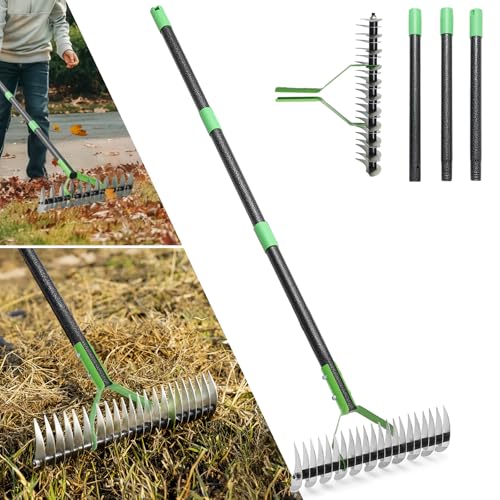
The UIABOPZ thatch rake offers a 13-inch wide head with a 55-inch adjustable handle and a robust 21-tine side for aggressive dethatching, plus an 11-tine side for surface raking and soil loosening. The dual-sided design enables quick tool switching without extra equipment. It uses thick carbon steel tines and a rust-resistant coating, with a reinforced head-to-handle connection to resist bending. This rake is best for homeowners who want a compact yet capable tool that can tackle thick thatch and compact soil. Caution: the narrower head may require more passes in very dense thatch compared with wider heads.
Who it’s best for: Users needing a compact, two-sided dethatcher that can also widen its reach with a long, adjustable handle.
Why selected: The combination of a deep dethatching tine arrangement and a separate loosening side provides flexible lawn care in one tool.
Limitations: The 13-inch head is not as wide as some competitors, which can slow work on very large lawns.
BARAYSTUS Thatch Rake Dethatcher

The BARAYSTUS thatch rake features a 15-inch wide rake head and a 58.5-inch adjustable length. Its double-sided steel tines come with angle-adjustable functionality so you can tailor the rake to the task—dethatching or soil loosening. The head is carbon steel with a powder-coated anti-rust finish, and the handle is stainless steel for durability. This tool is best for gardeners who want a flexible rake that adapts to different lawn conditions and angles. Caution: angle adjustments may require occasional tightening to keep the setting secure during heavy use.
Who it’s best for: Users who need a customizable two-sided rake capable of both aggressive dethatching and soil loosening in a single tool.
Why selected: The angle-adjustable tines give control over penetration depth and soil contact, improving efficiency in diverse lawn conditions.
Limitations: Heavier configurations can be more challenging to maneuver in tight spaces or on small lawns.
Buying Guide: Key Considerations for Choosing a Dead Grass Rake
- Head width: Wider heads cover more ground but can be harder to maneuver in small yards. Consider a 13–17 inch range for balance.
- Tine design: Look for double-sided tines for versatility—one side for dethatching and one for soil loosening or leveling.
- Handle length and adjustability: Longer handles reduce bending and back strain; adjustable handles fit different user heights and tasks.
- Materials and durability: Stainless or manganese steel with rust-resistant coatings offer longevity in outdoor conditions.
- Versatility: Some models include features like angle adjustment or multi-tool functionality to address debris removal, moss, and aeration.
- Weight and ease of use: Heft impacts user fatigue. For larger lawns, a sturdier tool may save time, while smaller yards may benefit from lighter designs.
- Maintenance: Check how easy it is to clean and dry after use to prevent rust and wear on tines.
Frequently Asked Questions
What is a thatch rake best used for?
A thatch rake removes dead grass and thatch buildup, improves airflow, and helps soil absorb water and nutrients more effectively.
Should I choose a double-sided rake?
Yes, if you want to dethatch and loosen soil with one tool. It saves time and minimizes tool switching.
Is a longer handle better?
A longer handle reduces bending and back strain, especially for larger lawns. Choose a length you can reach comfortably without overreaching.
How do I maintain a metal thatch rake?
Rinse after use, dry thoroughly, and store in a dry location. Periodically inspect tines for bending and tighten joints as needed.
Can I use these rakes on wet grass?
Most rakes perform best on dry or slightly damp grass. Wet conditions can cause clogging and heavier effort.