Answer: A ride-on lawn mower with a roller helps flatten and level inconsistent turf while enabling efficient mowing. This article highlights five top options that pair rolling or aerating features with riding attachments, making them ideal for homeowners with medium to large lawns, uneven ground, or new seed beds. The best picks target different needs—from flatting and leveling surfaces to soil aeration and powered mowing. Use this guide to choose the right setup for your yard and lifestyle.
Buyer focus at a glance:
– Best overall roller for leveling and soil prep on large lawns: Agri-Fab 18″ x 36″ Roller.
– Best integrated aeration and rolling solution: Yard Tuff 36″ Aerator Roller.
– Best full-size riding mower for larger properties: CRAFTSMAN 42″ Gas Riding Lawn Mower.
– Best heavy-duty tow-behind roller with adjustable weight: ARNOT 12×36-Inch.
– Best depth-adjustable lawn aerator with spike disks: Vohala 32″ Tow Behind Aerator.
| Product | ||
|---|---|---|
| Agri-Fab 45-0606 | Tow Behind Roller | Large lawns needing flattening and leveling |
| Yard Tuff Drum 36″ | Aerator Roller | Soil aeration while rolling |
| CRAFTSMAN 42″ Gas Riding Lawn Mower | Riding mower | Large properties, efficient mowing |
| ARNOT Lawn Roller 12×36 | Push/Tow Behind Roller | Adjustable weight for varied turf |
| Vohala 32″ Tow Behind Aerator | Aerator with spikes | Deep soil penetration and nutrient access |
Agri-Fab 45-0606 18″ x 36″ Tow Behind Roller

Features: Durable 18-inch diameter and 36-inch wide poly roller drum. Capacity 400 lb. when filled with water. Lightweight (less than 50 lbs.) without water for easy storage and transport. Drain/fill plug allows simple filling with a regular garden hose.
Best for: Homeowners with average to large lawns needing a stable, wide roller for smoothing low spots and leveling newly graded soil. The water-fill design provides easy adjustment of weight to flatten uneven turf.
Caution: The roller is poly; for extremely rocky areas, check for slag or sharp debris that could snag the drum or reduce performance.
Yard Tuff Drum 36 Inch Wide Behind Lawn Mower Aerator Roller

Features: 36-inch wide drum with 78 steel spikes and a 24-gallon water holder. Designed to promote grass growth by penetrating soil and improving nutrient uptake. Large drum covers wide areas for efficient aeration during rolling.
Best for: Homeowners seeking to combine aeration with rolling to relieve compacted soil and encourage root development across expansive lawns.
Limitations: Spiked disks may require frequent cleaning to prevent soil build-up; ensure the ground is not excessively rocky to avoid damage to spikes.
CRAFTSMAN 42″ Gas Riding Lawn Mower
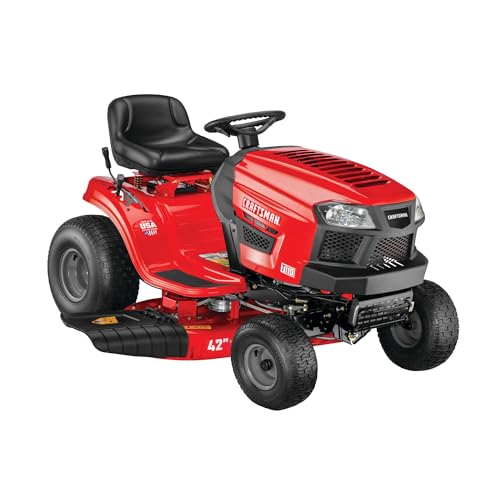
Features: 42-inch stamped steel deck for efficient mowing, powered by a 17.5 HP Briggs and Stratton single-cylinder engine. 7-speed transmission. Optional mulching kit available for professional-like finish.
Best for: Homeowners with larger lawns who want a durable, capable riding mower that can cover more ground with reliable starting and strong performance.
Limitation: Data does not specify cutting height range or maintenance intervals; verify compatibility with mulching kit and accessories before purchase.
Vohala 32″ Tow Behind Lawn Aerator
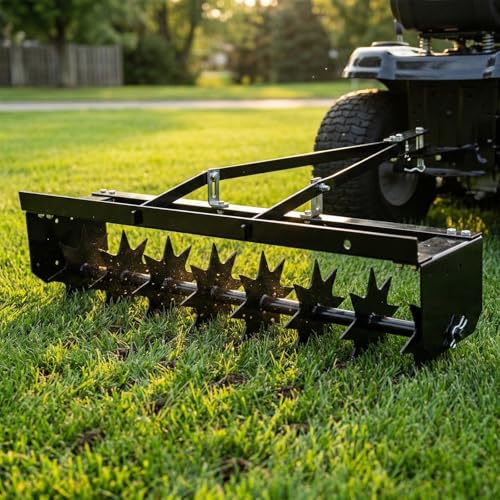
Features: 8 rotating star-shaped spike disks with galvanized steel tines. Includes adjustable weight control with a weight tray designed to hold ballast (up to 200 lbs). Helps open channels for oxygen and fertilizer absorption while rolling.
Best for: Larger yards needing deep core aeration and soil conditioning as part of a rolling routine. The weight tray enables deeper penetration for tougher soil.
Limitation: Heavier configurations require a compatible hitch and vehicle; ensure your mower or tractor can tow behind with the weight mounted safely.
Buying Guide
What should you consider when selecting a ride-on mower with a roller or compatible roller attachment?
- Ground condition and lawn size: For large, uneven lawns, wide rollers or aerator rollers save time. For smaller plots, a narrower drum may suffice.
- Weight and fill options: Water or ballast weight changes the pressure applied by the roller. Heavier setups flatten more but may stress soil or mower tires on rough terrain.
- Roller material and durability: Poly rollers are lightweight and corrosion-resistant; steel drums offer greater rigidity in rocky soils, but may require more maintenance.
- Aeration vs. leveling: If soil compaction is a concern, aerators with spikes open channels for air and nutrients. Rolling alone flattens, while aerators actively improve soil structure.
- Attachment compatibility: Tow-behind options require hitch compatibility with your mower or ATV. Riding mowers should pair with deck-mounted or compatible ground-engaging tools if used with accessories.
- Maintenance and storage: Consider ease of draining and cleaning after use. Lightweight models are easier to store when not in use.
How to use these tools effectively
- Apply even, slow passes to avoid hairline ridges on turf.
- Fill the roller or ballast to your target weight in a test area before wider use.
- Aeration spikes work best on compacted soil after a period of moisture but before intense heat.
Safety and setup considerations
- Check hitch attachments for secure mounting before operation.
- Avoid using heavy rollers on recently seeded lawns until roots establish.
- Wear appropriate PPE and keep bystanders at a safe distance during operation.
FAQ
- What is the main benefit of a roller attached to a ride-on mower?
It flattens and levels turf while enabling efficient mowing, especially on uneven ground.
- Can I use a roller on any lawn mower?
Rollers are compatible with many walk-behind, tow-behind, and riding mowers, but always verify hitch compatibility and weight limits.
- What is better for compacted soil: a roller or an aerator?
Aerators with spikes or tines open channels for air and nutrients, while rollers flatten turf. For compacted soil, a combination is often effective.
- How much weight should I use when filling a roller with water?
Start with a lighter fill to gauge soil response, then increase as needed. Heavier weights deepen flattening but may stress turf or equipment on rough terrain.
- Are there maintenance tips for roller attachments?
Drain water after use, clean debris from spikes, inspect for wear, and store in a dry place to prevent corrosion.