Yes—these holly bushes and trees suit American gardens, offering evergreen foliage, vibrant berries, and year-round structure. This guide highlights five top options, suitable for hedges, privacy screens, and ornamental accents. The best pick depends on your climate, space, and whether you prefer seeds or ready-to-plant specimens. Below, you’ll find concise profiles, ideal buyer types, and practical considerations to help you choose.
| Product | Best For | Key Benefit |
|---|---|---|
| KVITER 50 Yaupon Holly Seeds | Gardeners wanting fast-growing evergreen hedges | High germination; drought- and salt-tolerant |
| Nellie R. Stevens Holly Shrub – 3″ Pot | Low-maintenance privacy screens | Glossy evergreen, bright red berries with male plant nearby |
| Foster #2 Holly Tree | Medium-to-large privacy trees | Self-pollinating; hardy in zones 5–9 |
| Nellie R. Stevens Holly – 10 Live Trees | Tall screen or formal hedge | Dense branches; large berries with compatible pollenizer |
| Burford Holly Tree/Shrub | All-season color with red berries | Vibrant year-round foliage and berry displays |
KVITER 50 Yaupon Holly Seeds (Ilex Vomitoria)

Best for aspiring gardeners who want a growing hedge from seed. The KVITER seeds claim up to 90% germination with proper care and are suited for USDA Zones 7–11. They tolerate full sun to partial shade and are drought- and salt-tolerant. This option is ideal for patients who prefer long-term landscaping projects and herbal tea enthusiasts, since Yaupon holly leaves have historical uses. A caution: seed germination requires a structured stratification process (warm then cold) and patience before a hedge forms.
Nellie R. Stevens Holly Shrub – 3″ Pot
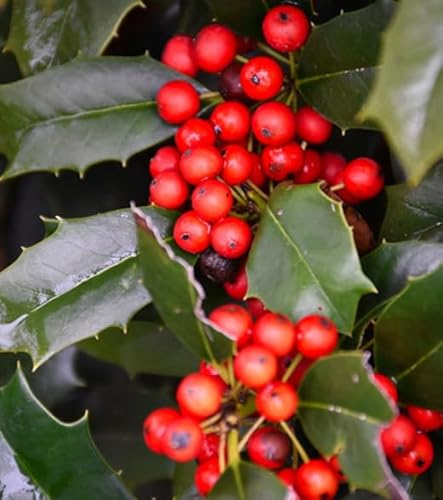
Best for homeowners seeking an immediate privacy screen with year-round evergreen beauty. This Nellie R. Stevens holly comes in a 3″ pot, 6-12 inches tall, with abundant bright red winter berries and glossy evergreen foliage. It is well-suited for landscapes that need quick visual impact. A limitation: as a young plant, it may need steady moisture and protection from harsh early-season freezes until established.
Foster #2 Holly Tree (Self-Pollinating)

Best for medium-sized landscapes where a self-pollinating holly saves space and effort. The Foster #2 Holly Tree thrives in zones 5–9 with full to part sun and is described as ready to plant on arrival. A note: California residents may have restrictions; verify local regulations before ordering. It’s a solid pick for a neat, single-specimen tree or a compact hedge with proper spacing and pruning.
Nellie R. Stevens Holly – 10 Live Trees

Best for substantial privacy screens and formal hedges. These 10 live Nellie R. Stevens hollies offer dense growth and evergreen color. They pair well with a male pollenizer nearby to boost berry production. The plant is described as low maintenance and adaptable to sun or shade. A limitation: large planting projects require planning for spacing and ongoing pruning to maintain shape.
Burford Holly Tree/Shrub

Best for year-round color and a durable landscape specimen. Burford holly offers lustrous evergreen leaves and bright red berries that create a striking winter display. It’s described as low-maintenance and adaptable to various soil types and weather conditions. A caution: like many hollies, berry production may be more robust with a compatible male holly nearby to enhance pollination and fruiting.
Buying Guide
What styles of holly fit my space?
- Hedge or privacy screen: Choose many plants with upright growth, such as Nellie R. Stevens types or Foster #2 for faster, denser screening.
- Specimen tree: A single, tall holly like Burford or Nellie R. Stevens 10-plant tray provides a formal focal point.
- Container-friendly: Seed-based options or dwarf selections work best in pots for patios or decks.
What climate and care do hollies require?
- Most hollies tolerate sun to partial shade. Zones 5–9 are common, but always check cultivar specifics for cold hardiness.
- Berry production depends on pollination. Plant male holly nearby when using female cultivars to boost fruit displays.
- Soil and moisture: Well-drained soil is crucial; several varieties tolerate drought once established but will appreciate regular watering during establishment.
Seed vs. Live Plants: which is better?
- Seeds (like KVITER Yaupon): Best for gardeners who enjoy long-term growth from seed and can manage stratification. Time to hedge formation is longer.
- Live plants: Faster visual impact and instant privacy; ideal for immediate landscaping results but requires more upfront cost and careful planting.
Maintenance considerations
- Pruning: Most hollies respond well to pruning; late winter or early spring is common for shaping. Avoid heavy pruning that removes the flowering/berrying structures unless needed for shape.
- Pest and disease: Hollies can be susceptible to scale and leaf spot; ensure good air circulation and monitor for any signs of trouble.
- Berry production: For fruiting varieties, ensure appropriate cross-pollination with a compatible male cultivar nearby if needed.
Frequently Asked Questions
- Do holly bushes require male and female plants for berries? Some hollies are dioecious and require a male plant nearby to produce berries; others are self-pollinating.
- What is the best time to plant holly? Planting in early spring or fall, depending on your climate, allows roots to establish before extreme weather.
- Are hollies drought-tolerant? Many hollies tolerate drought once established, but they benefit from regular watering during the first growing seasons.
- Can I grow hollies in pots? Yes, several hollies perform well in containers, especially dwarf or smaller varieties; ensure proper drainage and regular feeding.
- Which holly is best for a privacy hedge? Nellie R. Stevens varieties and Foster #2 are strong candidates due to dense growth and evergreen foliage.
- Do hollies attract wildlife? Many hollies attract birds with berries, adding garden interest while providing wildlife habitat.