If you’re battling red spider mites, choose a pesticide that targets mites on contact and offers ongoing protection. The top options below are designed for indoor and outdoor use, with plant-safe formulas suitable for home gardens and family areas. They’re best for gardeners who want effective mite control without harsh chemicals, and for those who prefer OMRI-listed or “natural” solutions when possible. Whether you grow houseplants, vegetables, or ornamentals, these products help protect yields and plant health while minimizing environmental impact.
| Product | Best For | Formulation | Organic/Safety | Notes |
|---|---|---|---|---|
| Grower’s Ally Spider Mite Spray (Ready-to-Use) | Indoor and outdoor plants; beginners | Botanical oils (rosemary, clove, peppermint) | OMRI Listed; FIFRA 25(b) exempt | Fast-acting on contact; safe around bees when dry |
| Trifecta Crop Control Ready to Use | Home gardens and edible crops | All-natural plant-based formula | Biodegradable; safe for edible crops | Also fungicidal and insecticidal |
| Grower’s Ally Crop Defender 3 | Weekly preventive spray; multiple pests | Botanical oils with built‑in surfactant | OMRI Listed; FIFRA 25(b) exempt | Triple-action: miticide, insecticide, fungicide |
| Grower’s Ally Spider Mite Control Concentrate | Larger spaces; dilutable for 25 gal | Botanical oils | OMRI Listed; FIFRA 25(b) exempt | Economical concentrate; store for long use |
| EcoVenger Mite Killer 16 oz | Plants, home, poultry, pets | Plant-powered botanicals | Plant-based; non-toxic | Broad mite coverage; safe around kids and animals |
What to look for when choosing a red spider mite pesticide: contact-kill action, plant safety, organic certification, and ease of use. The products below cover those needs with plant-friendly chemistries and practical application formats. Use as directed to reduce mite populations and minimize damage to beneficial insects and pollinators.
Grower’s Ally Spider Mite Spray – Ready-to-Use
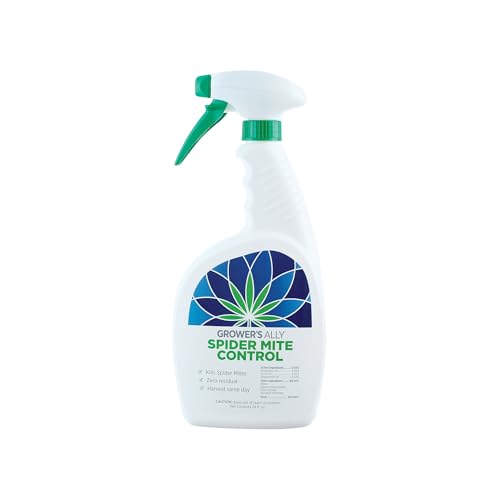
This ready-to-use spray targets spider mites on contact, helping to protect both indoor and outdoor plants. The formula relies on rosemary, clove, and peppermint oils to create a natural, effective miticide and insecticide. It is designed to kill adults and nymphs while repelling future infestations. Best for new infestations or preventive treatment in home gardens.
Who it’s best for: new gardeners or homeowners seeking a ready-to-spray solution with plant-safe ingredients. Why selected: it combines proven essential oils with an OMRI-listed status for organic gardening. Limitation: as a ready-to-use spray, coverage can be more limited per application than concentrates and may require frequent reapplication in heavy infestations.
Trifecta Crop Control Ready to Use
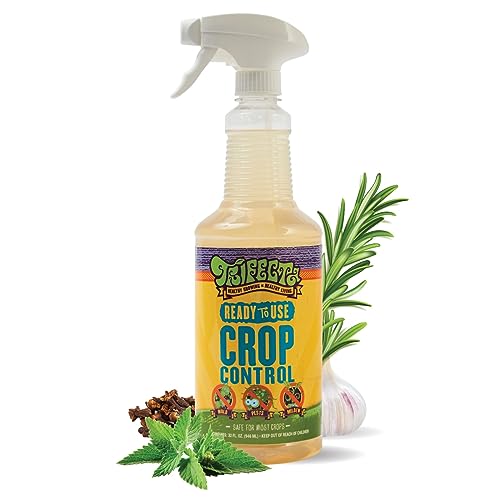
Trifecta Crop Control provides a multi-purpose approach, aiming to control spider mites, powdery mildew, botrytis, and mold. The plant-based formula works by suffocating pests and reducing fungal problems without leaving chemical residues. Suitable for both indoor and outdoor use on edible and ornamental crops.
Who it’s best for: gardeners wanting a consolidated solution that tackles mites and common fungal threats. Why selected: it’s a broad-spectrum, plant-safe option that avoids harsh synthetic pesticides. Limitation: as a maximum-strength natural formula, some users may prefer a more targeted miticide for severe mite outbreaks.
Grower’s Ally Crop Defender 3

Crop Defender 3 is a triple-action formula combining miticide, insecticide, and fungicide. Built-in surfactants enhance spread on plant surfaces, improving coverage against powdery mildew and spider mites. The formula is OMRI listed and FIFRA 25(b) exempt, making it a practical choice for weekly preventive use in organic settings.
Who it’s best for: gardeners looking for a weekly, all-in-one spray to reduce multiple pest pressures. Why selected: its triple-action design targets mites while supporting plant health. Limitation: reliance on botanical oils may require reapplication in very hot, windy, or dusty conditions to maintain efficacy.
Grower’s Ally Spider Mite Control Concentrate

This concentrate makes up to 25 gallons, offering economical dilution for larger spaces or multiple plants. It targets mites by overstimulating the pests’ nervous system and works with rosemary oil to ward off insects preventively. It is FIFRA 25(b) exempt and OMRI listed, aligning with organic growing practices.
Who it’s best for: larger gardens or growers who want to scale spray coverage. Why selected: high dilution efficiency reduces cost per treatment. Limitation: mixing and measuring are required, which may be less convenient for casual gardeners.
EcoVenger Mite Killer 16 OZ

EcoVenger uses plant-based botanicals to eliminate multiple mite species, including dust mites, spider mites, and poultry mites. The formula emphasizes safety around pets and households while providing effective contact kill across life stages. Suitable for homes with plants and animals, as well as poultry environments.
Who it’s best for: households seeking a toxin-minimized approach with broad mite coverage. Why selected: strong plant-powered approach and pet-friendly safety profile. Limitation: consumer-assembled plant-based formulas may vary in performance depending on infestation severity.
Buying Guide: Key Considerations For Red Spider Mite Pesticides
What to ask before buying: Is the product labeled for spider mites on the crops you grow? Does it fit your indoor or outdoor environment? Look for a product that is safe for your plants and uses a mode of action that suits your infestation level.
- Mode of action: Choose contact-kill formulas for rapid control or preventive products with residual activity for ongoing protection. Botanical oils typically act quickly but may require more frequent applications.
- Organic and safety certifications: OMRI listing and FIFRA exemptions indicate compatibility with organic gardening standards. Consider products that minimize residue on edible crops.
- Special use cases: If you have edible crops, pets, or poultry nearby, select a product described as safe for those environments. Plant-powered blends can reduce risk to non-target organisms.
- Coverage and dilution: Ready-to-use sprays are convenient for small setups, while concentrates offer cost savings for larger spaces. Plan for the required mixing and application equipment.
- Application timing: Apply at the first sign of mites, ideally during cooler parts of the day to reduce plant stress. Reapply as directed after rain or heavy irrigation, if applicable.
How To Apply Mite Sprays Effectively
Apply evenly to the leaf undersides where spider mites gather. Focus on stressed or infested areas, and repeat according to label directions. Pair chemical control with environmental changes, such as increasing humidity and inspecting for pest entry points.
Integrated Pest Approach: Beyond Sprays
Combine miticides with cultural controls: prune heavily infested leaves, quarantine new plants, and introduce beneficial insects where appropriate. Use plant-resistant varieties when possible. Monitor mite populations with regular plant inspections to determine treatment timing.
FAQ: Purchasing Answers For Spider Mite Pesticides
- What is the best option for a beginner with a small collection of houseplants? A ready-to-use botanical spray is typically easiest to start with, such as Grower’s Ally Spider Mite Spray, because it requires no mixing and targets mites quickly.
- Are these products safe for edible plants? Some products are described as safe for edible crops when used as directed. Check the label for crop restrictions and follow interval guidelines before harvesting.
- Can I use these around pets and children? Many offerings claim safe-use under specified conditions. Always follow label directions and allow proper drying time before reentry or contact with treated areas.
- Should I choose a concentrate or a ready-to-use spray? Concentrates are best for larger spaces or repeated treatments, while ready-to-use sprays offer convenience for smaller setups and quick responses.
- Do these products harm beneficial insects? Botanical formulas designed for organic gardening aim to minimize harm to beneficial insects, but local conditions and application timing can influence outcomes. Follow label guidance for best results.
- How often should I reapply? Reapplication frequency depends on the product and infestation level. Adhere to the label’s recommended intervals and consider integrating non-chemical controls to reduce reliance on sprays.