Answering common buyer questions about vegetative-stage lighting, these LED grow lights are chosen for efficiency, spectrum, and ease of use in seedling and vegetative growth. The best options suit small tents or desks, while others scale for larger veg spaces. Below you’ll find five products positioned for seed starting and leafy green growth, with clear guidance on who each is best for and why.
| Product | Spectrum / Key Feature | Best For |
|---|---|---|
| VIPARSPECTRA P700 | Full spectrum, 11000 lumens, 70W, heat dissipating design | Small veg tents (2×2 ft) and seedlings needing strong seedling and veg support |
| LEOTER Grow Light | Full spectrum with red/blue, 80 LEDs, 10 dimmable levels | Busy plant lovers who want adjustable spectrum across growth stages |
| RWNTAO 168 LEDs Clip Light | Full spectrum with multiple modes, 3/9/12H timer, 10 brightness levels | Compact setups needing flexible clip-on lighting |
VIPARSPECTRA P700 Grow Light For Seedlings

The VIPARSPECTRA P700 is designed to support seedling vigor and vegetative growth with a balanced full spectrum. It delivers 11000 lumens from a 70W package, offering high PAR output for compact grows. The unit uses a heat-dissipation design with large aluminum fins and a fanless operation option to reduce noise in quiet spaces. This light is best for a 2×2 ft vegetative area and aligns well with growers who want strong early growth without overheating the canopy.
Who it’s best for: small grow tents, seedling trays, and growers who want robust seedling drive in a compact fixture. Why selected: the light combines a thoughtful diode layout with an efficient driver to maximize vegetative-stage performance while keeping energy use modest. Caution: ensure proper height and air flow to maintain consistent temperatures in warmer rooms.
LEOTER Grow Light For Indoor Plants
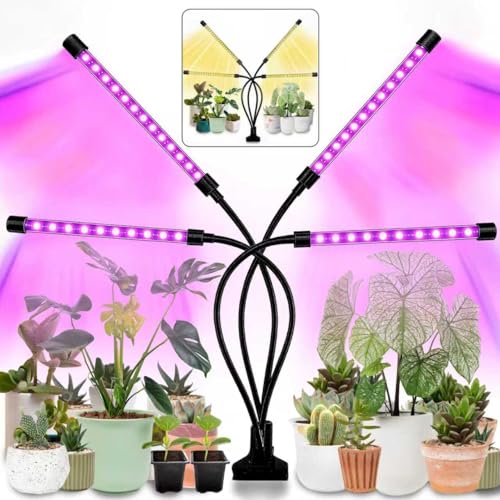
LEOTER’s upgraded model features 80 LEDs (32 red, 12 blue, 36 white) and a full spectrum plus targeted red/blue combinations. The 3/9/12H timer and 10 dimmable brightness levels support gradual transitions from seedling to vegetative stages. A gooseneck and gooseneck-style mounting make it flexible for different setups, including desk gardens, windowsills, and small tents.
Who it’s best for: hobbyists who want adjustable spectrum and an automatic schedule without complex controls. Why selected: the combination of rich spectrum options and a simple timer makes it easy to tailor lighting for seedlings and early vegetative growth. Caution: timer capacity may require a reset after power interruptions for consistent daily use.
RWNTAO Clip-On Full Spectrum Grow Light
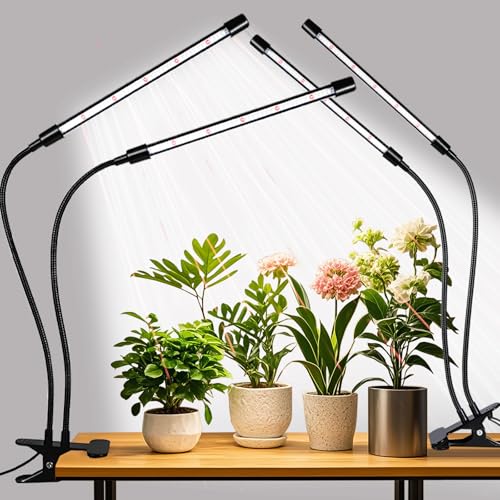
The RWNTAO 168 LED setup is a versatile clip-on light with full-spectrum capability and multiple modes. It includes a cycle memory timer (3/9/12 hours) and 10 dimming levels. The three switch modes and balanced spectrum aim to support vegetative growth, with white light promoting foliage, red light assisting flowering later on, and a full-spectrum blend to simulate natural conditions.
Who it’s best for: small grow spaces or desktop gardens that require quick adjustments and easy clipping. Why selected: it provides a mix of spectrum options and a reliable timer for hands-off care. Caution: placement and height adjustments are important to avoid uneven lighting on tall seedlings.
Uallhome 2 Pack LED Grow Light Panels

Uallhome offers a two-panel setup designed for wider coverage and modular expansion. These panels deliver full-spectrum lighting with white, blue, red, and UV/IR interest in a 4×4 ft range when paired. They’re suitable for veg-to-flower transitions in larger tents or rooms, or as supplemental lighting in busy grow areas.
Who it’s best for: growers needing scalable lighting with flexible mounting for mid-sized veg spaces. Why selected: the pair configuration helps cover more area and supports consistent veg growth across a broader canopy. Caution: ensure adequate heat management when using two panels in a confined space to avoid hotspots.
Buying Guide: Vegetative-Stage Lighting Essentials
Key questions to guide your choice for vegetative-stage lighting include how much area you need to cover, what spectrum supports seedling health and leafy growth, and how much control you want over intensity and schedule. Below are practical considerations and side-by-side comparisons.
- Area and coverage: For a 2×2 ft veg space, a light in the 60–100W-equivalent range with full-spectrum output is typically sufficient. For larger tents (4×4 ft or bigger), consider higher output or a multi-light setup to avoid shading and ensure even canopy growth.
- Spectrum needs: Seedlings benefit from a balanced full spectrum (including red and white LEDs) to promote sturdy stems and healthy leaf formation. In vegetative growth, a spectrum leaning toward blue and white supports compact growth, while red can help early leaf production. A mix that includes 660nm red, 3000K–5000K white, and some blue wavelengths is a practical default.
- Power and heat: Compare energy use to equivalent traditional systems (HPS/MH). LED options often provide equal or better PAR with far lower power draw and cooler operation, which reduces cooling costs in enclosed tents.
- Adjustability and scheduling: Timers and dimming are valuable for reducing stress on plants during transitions. Auto ON/OFF and memory timers simplify daily care when you’re away.
- Mounting flexibility: Clip-on, gooseneck, and panel options determine how easily you can position light to reach all growth zones. Clip-on and gooseneck designs are particularly useful in cluttered spaces.
- Longevity and maintenance: Look for solid heatsinking and driver quality to ensure stable performance over time. Fanless designs can cut noise but may require careful heat management in warmer rooms.
Frequently Asked Questions
- What defines a good vegetative-stage LED grow light? A good veg light provides a balanced spectrum suitable for seedlings and leaves, adequate PAR for the canopy, adjustable intensity, and reliable scheduling to maintain steady growth without overheating.
- Is full spectrum necessary for vegetative growth? Full spectrum helps seedlings establish, but many growers succeed with lights that emphasize white and blue along with some red. The key is consistency and appropriate intensity for your plant type.
- How high should LED lights be placed during vegetative growth? Generally, place lights higher for taller plants and lower for compact varieties. Start around 12–18 inches from the canopy and adjust based on plant response and heat levels.
- Do I need multiple lights for a larger tent? Yes. For larger areas, multiple fixtures or longer panel lights ensure uniform coverage and reduce light drop-off at the edges of the canopy.
- Can I run LED lights 24/7 during vegetative growth? Most plants benefit from a day/night cycle. Common schedules range from 16–18 hours on, with 6–8 hours off. Always match your cycle to species-specific needs and avoid extended continuous light that can stress plants.
- What maintenance does a veg-stage LED require? Regularly check for dust buildup on heat sinks and lenses, ensure power cords and timers function correctly, and monitor canopy temperature to prevent overheating or light burn.