Answering the common question, a drag mat is a practical tool for leveling lawns, driveways, and baseball diamonds. For homeowners, landscapers, and facility managers, the right mat smooths uneven turf, grades soil, and prepares seed beds with consistent results. This guide highlights five durable options designed for manual or vehicle pulling, identifying who each product is best for and why it stands out.
Summary of chosen products:
| Product | Best For | Key Benefit |
|---|---|---|
| Yard Tuff Field Surface Leveling Drag Mat | Homeowners and small properties | Rust-resistant zinc finish, versatile use |
| Rengue 4×4 Feet Baseball Field Drag | Farmers and larger areas | Fully versatile, attaches to tractors/ATVs |
| Yard Tuff Drag Mat 3′ x 3′ | Compact spaces and quick touch-ups | Lightweight steel mesh, easy handling |
| ATSARIUM 4×3 Feet Drag Mat | Heavy-duty, multiple surfaces | Rust-resistant zinc finish, durable build |
| Yard Tuff 5×4.5 Feet Drag Mat | Large projects and field prep | Tow chain, tow ring, robust steel |
Yard Tuff Field Surface Leveling Drag Mat

Best for general lawn leveling on driveways, yards, and soil plots. The heavy-duty steel mesh provides durable performance, and the zinc-plated finish resists rust for long seasons of use. Towable or manual pulling makes it flexible for small properties or maintenance crews. This mat is ideal when you want consistent smoothing without complex setup.
Best use cases: light to medium leveling tasks, lawns with mixed materials, and surfaces that require repeat passes to achieve a uniform grade. Watch for alignment on very rocky surfaces to prevent edge wear. Data supports steady performance in varied weather due to corrosion resistance.
Rengue ATV/UTV 4 x 4 Feet Baseball Field Drag

Best for larger areas and professional-style leveling. This 4×4 feet steel-mesh drag is designed for tractors, ATVs, and UTVs, with added chain and plug for versatile mounting. It excels on baseball diamonds, golf fairways, and clay surfaces where a robust, multi-surface tool is needed. A potential limitation is setup time for manual use if a vehicle isn’t available.
Who this is for: property owners or clubs needing a tough, multi-use drag mat that works with heavier equipment. Why chosen: strong construction and broad compatibility make it a top choice for frequent field maintenance.
Yard Tuff Drag Mat, 3′ x 3′

Best for quick, small-area leveling tasks. The 3′ x 3′ mat is a manageable size for home yards, driveways, and baseball-field diamonds, with a steel mesh that resists the elements. It includes rust-resistant zinc coating for longevity. Use this when you want a simple, controllable tool for regular touch-ups.
Best for: lightweight, frequent use on modest surfaces. Caution: limited coverage per pass compared with larger mats, which can mean more passes on big areas.
ATSARIUM Heavy Duty Drag Mat 4×3 Ft
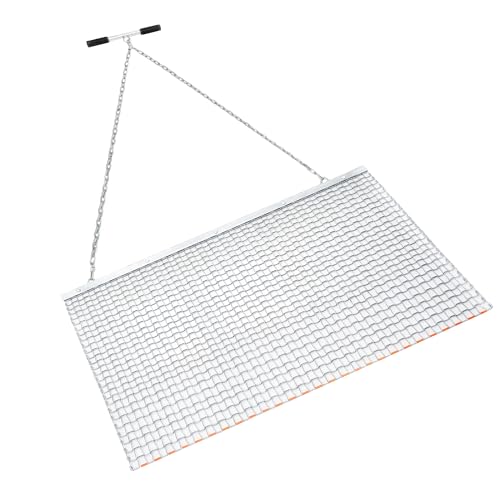
Best for demanding tasks and multiple surface types. The 4×3-foot mat uses heavy-duty steel mesh and a zinc-plated finish to resist rust, making it suitable for long-term use in driveways, yards, and baseball infields. It is well suited for operators who need a reliable, all-purpose leveling tool. Limitation: heavier mats require more effort to drag manually when a vehicle isn’t available.
Why select: robust build promises dependable results across projects, with rust resistance adding value in humid climates.
Yard Tuff 5 Feet by 4.5 Feet Drag Mat

Best for large-scale field preparation and lawn leveling. This mat combines a galvanized mesh with a powder-coated, rust-resistant finish and includes a tow chain and tow ring, enabling easy attachment to ATVs, UTVs, and tractors. It’s ideal for clubs or property owners who routinely level extensive areas. Limitation: larger footprint means storage space and transport considerations.
Choose this if you need maximum coverage per pass and a heavy-duty setup for consistent field leveling.
Buying Guide: How To Choose The Right Drag Mat
What surface will you level most often?
For lawns and driveways, a mid-size steel-mesh mat with rust resistance is typically sufficient. For baseball diamonds, larger mats with vehicle compatibility help achieve uniform field leveling in fewer passes.
Do you require vehicle attachment or manual use?
Models with tow chains and rings are best for vehicle-assisted pulling. If you work in tight spaces or without heavy equipment, lighter or smaller mats that can be dragged by hand are more practical.
How important is rust resistance?
A zinc-plated or powder-coated finish extends mat life in wet climates and during seasonal use. Rust resistance reduces maintenance and replacement costs over time.
What is your typical working area?
For large properties, prioritize bigger mats (e.g., 4×3 ft or larger) to cover more ground per pass. Smaller jobs can benefit from compact mats for precise leveling.
Weight and handling considerations
Heavier mats provide stability but require more effort to drag manually. If you use a vehicle, ensure the mat’s weight is manageable for your equipment and safety.
Durability features to look for
- Heavy-duty steel mesh for longevity
- Rust-resistant coatings (zinc plating or powder coating)
- Integrated tow hardware (chains, rings, or plugs)
- Versatility across surfaces (driveways, lawns, sports fields)
Quick tips for best results
- Drag over with consistent passes and light overlaps to avoid footprint lines.
- Pre-wet or slightly damp soil to reduce dust and improve leveling efficiency on dry days.
- Keep edges aligned to prevent scalping along borders.
FAQ
- Q: Can a drag mat be used on clay surfaces?
- A: Yes, many mats are designed to level clay surfaces, but you may need multiple passes and slower pulls to avoid tearing the soil.
- Q: Are these mats suitable for manual use without a vehicle?
- A: Some models are designed for manual pulling, but larger mats are easier with a tractor, ATV, or UTV.
- Q: Will the mat rust over time?
- A: Look for zinc-plated or powder-coated finishes to minimize rust and extend life in all weather conditions.
- Q: How do I attach a mat to my mower or tractor?
- A: Many mats include tow chains or rings; follow the manufacturer’s mounting instructions and ensure tow points are compatible with your vehicle.
- Q: What size mat should I buy for a standard backyard lawn?
- A: A 3′ x 3′ or 3′ x 4′ mat is typically sufficient for small areas, with larger mats ideal for frequent field maintenance.