Answering the question most buyers ask: which pressure relief and backflow protection valves are best for a residential lawn sprinkler system? This guide highlights five reliable options, showing who they’re best for, what they protect, and any important limitations. Suitable buyers include DIY homeowners, landscape professionals, and good-value shoppers who want dependable protection against overpressure and backflow in outdoor irrigation setups.
Below is a quick buying table to compare the five highlighted products. Use it to skim key specs before reading detailed sections.
| Product | Type | Best For | Key Benefit | Notes |
|---|---|---|---|---|
| Merrill Mfg PRVNL50 | Pressure Relief Valve | Small to mid-sized sprinkler systems | Lead-free brass; IAMPO certified | 1/2″ connections |
| Orbit 57623 | Anti-Siphon Valve | Above-ground installations; backflow prevention | Atmospheric vacuum breaker; flow control | 3/4″ FPT |
| Otoolling Poppet Relief Valve | Adjustable Relief Valve | Systems needing 100–300 psi control | Calibrated knob; brass body | 3/4″ NPT x 1/2″ NPT |
| Watts 0342691 | Pressure Relief Valve | Small to mid-line irrigation setups | Bronze body; straightforward relief | 3/4″ connections |
| Merrill PRVNL75100 | Pressure Relief Valve | Well tanks, pumps, and plumbing systems | Lead-free brass; 100 psi | 3/4″ NPT |
Merrill Mfg PRVNL50 1/2″ No-Lead Pressure Relief Valve

Reference: This valve is designed to protect irrigation lines from excessive pressure. It uses lead-free brass with stainless steel control springs, and carries IAMPO certification. Best for small to medium sprinkler systems where a compact, compliant relief valve is required.
Who it’s best for: Homeowners needing a corrosion-resistant, compliant safety valve with a 1/2″ connection. It’s suitable where lead-free materials are prioritized.
Why selected: Its lead-free brass construction and IAMPO certification provide reliable protection without introducing lead risk into outdoor water lines.
Caution: Verify the 1/2″ NPT sizing matches your piping; compatibility issues can arise with non-standard fittings.
Orbit 57623 3/4″ Anti-Siphon Automatic Sprinkler Valve

Reference: This valve adds backflow prevention by preventing backward flow into the water supply, helping protect both the irrigation system and potable water sources. It includes a built-in flow control feature and is designed for above-ground installation on risers with a scrubber filter.
Who it’s best for: Owners with above-ground line risers who want integrated backflow protection and easier maintenance.
Why selected: Its anti-siphon design reduces contamination risk in lawn and garden setups, making it a solid choice where backflow prevention is a priority.
Caution: Installation typically requires above-ground access; ensure it fits with your landscape layout and local codes on backflow devices.
Otoolling 1/2″ x 3/4″ Poppet Adjustable Relief Valve
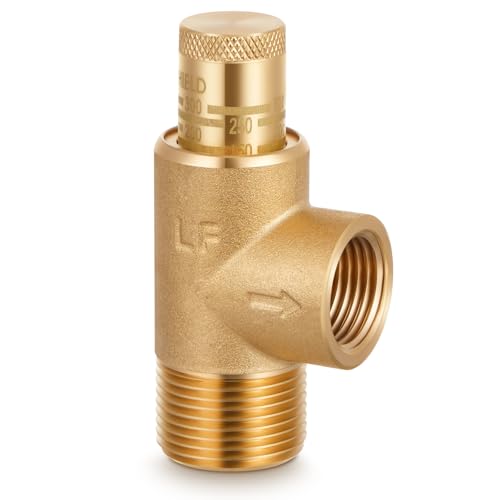
Reference: This adjustable relief valve provides precise pressure control from 100 to 300 psi with a calibrated knob. It uses a brass body and standard NPT threading, making it adaptable to many piping configurations.
Who it’s best for: Projects requiring adjustable relief to tailor pressure protection across variable water systems or seasonal changes.
Why selected: The calibrated adjustment and brass construction offer reliable performance in high-pressure environments.
Caution: Check your system’s maximum pressure and ensure the valve’s range covers your needs; mis-set pressures can cause insufficient protection or leaks.
Watts 0342691 30 PSI Pressure Relief Valve

Reference: A bronze-bodied relief valve designed for straightforward pressure relief at 30 psi. Suitable for residential irrigation lines requiring a simple protective device against overpressure.
Who it’s best for: Buyers needing a compact, low-pressure relief option for small irrigation segments or where a low relief setting is adequate.
Why selected: Bronze construction provides durability in outdoor environments, and the simple 30 psi setting covers many standard lawn irrigation needs.
Caution: If your system routinely exceeds 30 psi, this model may not provide sufficient protection; larger relief range options exist in other products.
Merrill Mfg PRVNL75100 3/4″ Brass Relief Valve

Reference: Lead-free brass with stainless steel springs and IAMPO certification, providing a 3/4″ connection for safer, more durable protection against excessive pressure in well tanks, pumps, and plumbing systems.
Who it’s best for: Homeowners and small professionals managing well water or pump-driven systems where lead-free safety is a priority.
Why selected: Combines lead-free brass with reliable IAPMO-style certification, delivering dependable long-term relief in demanding outdoor water setups.
Caution: Verify your connection size matches 3/4″ NPT; mismatches can require adapters or different valve models.
Buying Guide
What should I consider when choosing a pressure relief valve?
Key factors include connection size (1/2″ vs 3/4″), material (brass vs bronze), pressure range, and whether you need backflow protection in addition to relief. For outdoor irrigation, lead-free brass is a common preference for safety and durability.
Do I need an anti-siphon or backflow preventer?
Anti-siphon devices prevent backflow into potable water supplies, which is important in areas with pressure fluctuations or seasonal use. If your irrigation line runs near a potable water source or is connected to a well or tank, consider an anti-siphon or backflow preventer in addition to a relief valve.
Are adjustable relief valves better than fixed settings?
Adjustable valves offer tailored protection for systems with variable pressure, such as those with pumps or seasonal temperature shifts. Fixed-relief valves provide straightforward protection but may require replacement if your system pressure changes significantly.
What about installation considerations?
Check threading standards (NPT vs other) and ensure compatibility with your piping. Above-ground vs below-ground installation can affect accessibility and maintenance. Consider professional installation if you’re unsure about code requirements in your area.
How do I interpret “PSI” ratings?
PSI indicates the maximum pressure the valve is designed to relieve. For irrigation systems, common ranges span from 30 psi to 100 psi or more. Choose a valve whose relief setting matches or exceeds your normal operating pressure while still protecting lines from overpressure.
What maintenance is needed?
Keep valves clean and free of debris. Periodically verify that the valve seals are intact and that any adjustable settings remain within the intended range. Replace components if springs or seals show signs of wear.
Which option is best for my home lawn?
For simple, steady protection, a fixed-relief valve like the Watts 30 psi or Merrill PRVNL50 provides reliable coverage. If your system experiences pump surges or seasonal pressure changes, an adjustable option such as the Otoolling relief valve offers flexibility. Anti-siphon or backflow preventers, like Orbit 57623, add an extra layer of protection when backflow risk is a concern.
FAQ
- Q: Do I need both a relief valve and a backflow preventer? A: It depends on your local codes and system design. Relief valves protect against overpressure; backflow preventers protect potable water from contamination. In many setups, both are used.
- Q: What size should I choose? A: Match the valve’s inlet/outlet sizes to your piping (commonly 1/2″ or 3/4″ NPT). Ingress compatibility reduces leaks and installation time.
- Q: Is lead-free brass necessary? A: For outdoor irrigation, lead-free brass is preferred for safety and regulatory compliance in many regions.
- Q: Can I install these valves myself? A: Simple assemblies can be DIY, but ensure you follow local codes and verify threading and pressure ratings. Consider a professional if uncertain.
- Q: How do I know the right pressure setting? A: Use system operating pressure as a baseline. Choose a relief valve with a setting slightly above normal operating pressure but below the pipe’s maximum rating.
- Q: How often should I inspect valves? A: Inspect annually or after major system changes, ensuring no leaks and that settings remain correct.