Choosing the right pot is essential for bonsai health and aesthetics. The ideal pot supports drainage, aeration, and the tree’s growth stage while complementing its design. This guide highlights five top pots that balance craftsmanship, durability, and practicality for American bonsai enthusiasts. Whether you prefer unglazed clay, modern ceramic, or durable plastic, these options offer reliable drainage, breathable interiors, and stable trays to help trees thrive.
| Product | Brand | Key Benefit |
|---|---|---|
| MUZHI Round Unglazed Ceramic Bonsai Pot | MUZHI | High-temperature unglazed ceramic; breathable and rustic look |
| Bonsai Outlet Training Pots with Humidity Trays | Bonsai Outlet | Integrated mesh, shatter-proof plastic, durable trays |
| LANIAKEA 12 Pack Bonsai Pot with Trays | LANIAKEA | Durable plastic with built-in drainage and trays |
| Villa Como Succulent Planters Bonsai Pots | Villa Como | Real ceramic, shallow design, good for refined bonsai |
| G EPGardening Bonsai Pots 8 Inch | G EPGardening | Premium ceramic with blue glaze and breathable interior |
MUZHI Round Unglazed Ceramic Bonsai Pot with Bamboo Tray

The MUZHI round pot features a handmade, high-temperature unglazed ceramic body that promotes breathability and healthy root oxygenation. Its rough pottery aesthetic offers a vintage rustic style that complements a variety of bonsai trees. The 8-inch diameter with an 3.5-inch depth provides ample room for developing roots while maintaining a compact profile. A bamboo tray adds a traditional finishing touch and helps stabilize the pot on tabletops or shelves. The included mesh pad assists in drainage, reducing soil clogging and ensuring steady moisture levels.
Bonsai Outlet Training Pots With Humidity Trays

This set of three training pots emphasizes durability and practicality. Made from shatter-proof poly-resin plastic, each pot includes a built-in drainage mesh and humidity tray. The design minimizes soil loss through drainage holes, while the heavy-duty plastic resists cracking if bumped or dropped. Ideal for early training stages, these pots support consistent moisture control and simplify re-potting as your bonsai develops. They’re well-suited for indoor spaces, patios, or greenhouses where reliability and low maintenance matter most.
LANIAKEA 12 Pack Bonsai Pot With Trays

LANIAKEA offers a 12-pack of black, durable plastic nursery pots designed for early bonsai training. Each pot includes a built-in mesh drainage system and a matching tray, promoting airflow to the root zone while preventing soil from escaping. The 6.5 inch diameter and 4.7 inch height provide a compact footprint suitable for seedlings, cuttings, or smaller bonsai varieties. The design blends practicality with a modern aesthetic, making it a versatile choice for home gardeners and classroom setups alike.
Villa Como Succulent Planters Bonsai Pots Set Of 2

Villa Como offers a pair of shallow, real ceramic pots crafted from high-fired stoneware and porcelain clays. Their blue-toned glaze withstands temperature extremes and sun exposure, making them suitable for both indoor and outdoor display. The shallow design is ideal for refined bonsai that require restricted growth space, encouraging measured development and reduced repotting frequency. Each pot is paired with a drainage capability that helps prevent root saturation and maintains soil discipline, preserving tree health over time.
G EPGardening Bonsai Pots 8 Inch Ceramic Planter
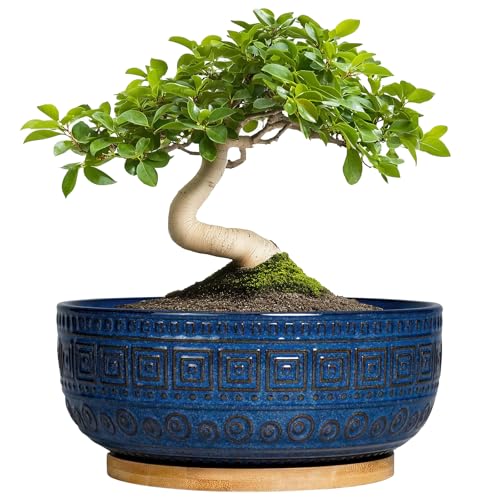
The G EPGardening 8-inch bonsai pot stands out with a deep blue glaze over premium ceramic. Its raised patterns add a touch of Boho charm while maintaining a clean, modern silhouette. The pot is fired at high temperatures for durability and features a breathable interior conducive to robust root health. Included is a drainage system that helps prevent waterlogging, making it suitable for a range of indoor and outdoor bonsai species, from ficus to junipers. The glaze resists fading and provides a timeless look that complements various decor styles.
Buying Guide: Key Considerations For Bonsai Pots
- Material and Breathability: Unglazed ceramic and high-fired stoneware are highly breathable, supporting root oxygenation. Glazed interiors can help with moisture retention but may reduce porosity.
- Drainage System: Look for built-in drainage holes, mesh pads, and saucers to regulate moisture and prevent root rot. Tray compatibility aids in table cleanliness and placement.
- Size And Depth: Choose pot dimensions that suit the tree’s root volume and growth stage. Shallow pots are ideal for refined bonsai, while deeper pots offer more soil for younger trees.
- Weight And Stability: Heavier ceramic pots stay steadier in windy or busy indoor spaces; lighter plastic pots are easier to move for pruning and repotting.
- Aesthetic Alignment: Pot color, glaze, and texture should complement the tree’s foliage and overall design without overpowering the specimen.
- Durability And Weather Resistance: Outdoor housings should tolerate sun, rain, and temperature fluctuations. Indoor choices can prioritize appearance and ease of cleaning.
- Maintenance: Consider ease of cleaning, drainage clog resistance, and whether the pot includes or accommodates a saucer and mesh pads for ongoing care.
Additional Perspectives
For beginners, plastic training pots with integrated trays offer affordable, low-maintenance options that still enable proper root growth. Experienced bonsai practitioners may prefer unglazed ceramic or high-fired stoneware for their superior breathability and aesthetic authenticity. When selecting pots for outdoor bonsai, prioritize weather resistance and drainage to prevent root issues during wet seasons. A shallow, wide pot supports development of refined aesthetics, while modular sets enable experimentation with different layouts and species. Always align pot shape and color with your bonsai’s style, branch structure, and growth cycle for a cohesive presentation.