Whether you’re growing vegetables in fabric grow bags, sprucing up outdoor planters, or planting aquatic lilies in a pond, these options offer reliable drainage, sturdy construction, and easy handling. This guide highlights five top products that balance durability, ease of use, and value for different planting needs. The buyers most likely to benefit are container gardeners, small- to mid-size pond keepers, and homeowners looking for decorative yet practical planters for indoor or outdoor use.
Summary table of selected products
| Product | Best For | Key Benefit |
|---|---|---|
| Cavisoo 5-Pack 10 Gallon Potato Grow Bags | Vegetable growers, large container gardens | Thick nonwoven fabric, reinforced handles |
| ZtohPyo 15 Gallon Plant Grow Bags | Balconies and patios with limited space | Large capacity with 360-degree ventilation |
| Pynqdfu 60 Pcs 1 Gallon Nursery Pots | Seedlings, cuttings, small herbs | Durable, reusable plastic with drainage holes |
| RooTrimmer 3 Gallon Plastic Nursery Pots | Nursery projects, transplanting | Lightweight, easy to handle, durable rims |
| Laguna Lily Planting Tub | Aquatic lilies and bog plants | Deep, spacious tub for water gardens |
Cavisoo 5-Pack 10 Gallon Potato Grow Bags
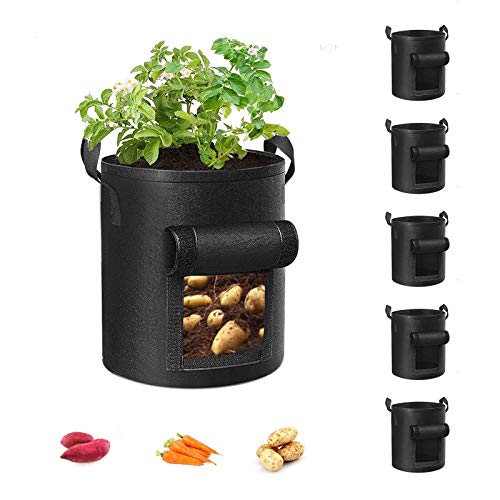
Cavisoo’s 10-gallon grow bags use a 300g thick non-woven fabric designed for reuse over several seasons. The fabric is breathable to promote drainage and air exposure to roots, while reinforced polypropylene handles provide sturdy lifting and movement. Best for home vegetable setups, especially tomato, potato, and other vegetables in limited-space gardens. A caution: nonwoven fabric bags may require careful handling to avoid tears during heavy use.
ZtohPyo 15 Gallon Plant Grow Bags

These 15-gallon fabric grow bags offer a large plantable area with a 360-degree ventilation system. Thickened non-woven fabric and reinforced stitching ensure durability for long-term use, making them suitable for balconies, backyards, terraces, or patios. Best for larger plants, root expansion, or when you need generous space in a portable container. Better for users needing substantial root room and easy relocation, though they are bulkier than smaller pots.
Pynqdfu 60 Pcs 1 Gallon Nursery Pots

This bundle provides 60 small one-gallon plastic nursery pots with drainage holes. The lightweight, flexible material is reusable and washable, making it ideal for starting herbs, succulents, cuttings, or transplants. Best for initial propagation and root development in compact spaces, but note the small size means limited growth for mature plants.
RooTrimmer 3 Gallon Plastic Nursery Pots

Ten 3-gallon plastic pots provide ample space for growing plants or multiple transplant projects. The soft body and reinforced rims ease handling and transplanting. Each pot includes drainage holes to prevent waterlogging and support healthy root systems. Best for nursery settings, but avoid overfilling to prevent root-bound conditions in taller plants.
Laguna Lily Planting Tub

This 19-1/2-inch, 9-gallon tub is designed for aquatic plants like lilies and bog species. It provides a deep, spacious container without holes, which helps keep soil and moisture contained in pond settings. Best for pond owners seeking a stable, large planting area that minimizes soil leakage into water features. Limitation: not designed for drainage; additional external supports or liners may be needed for heavy planting.
Buying Guide
What planting goal do you have?
For vegetable gardens and large plants, fabric grow bags (like the Cavisoo and ZtohPyo options) offer excellent drainage and air pruning of roots. For seed starting or small herbs, plastic nursery pots (Pynqdfu, RooTrimmer) provide affordable, reusable containers. For water gardens, dedicated planting tubs or baskets (Laguna Lily Tub) ensure root stability and proper moisture control in aquatic setups.
How much space is available?
Use larger capacities (15 gallons or more) for shrubs or heavy vegetables, and smaller 1-gallon pots for seedlings. Fabric bags are space-efficient and easily moved, but bulkier tubs are less portable once filled.
Material and durability considerations
Nonwoven fabric bags are durable and reusable but require careful handling to prevent tears. Plastic nursery pots are lightweight and easy to clean but may become brittle in extreme temperatures. Metal pots offer style and durability but may need drainage planning and rust resistance in wet environments.
Drainage and aeration needs
Drainage holes and fabric breathability prevent waterlogging and promote healthy root systems. If a pot lacks drainage, consider drilling holes or selecting a model with built-in drainage features. Aquatic planting tubs focus on soil containment and moisture balance rather than drainage.
Maintenance and reuse expectations
Fabric bags can last several seasons with care; plastic pots can be washed and reused long-term; metal planters require rust resistance and occasional sealing. Consider how often you relocate plants and how easy it is to clean containers between uses.
Ease of use and mobility
Handles and reinforced edges simplify transport for outdoor arrangements or seasonal changes. Lightweight plastic pots are easy to carry, while large fabric bags are best for ground-level setups that don’t require frequent relocation.
Frequently Asked Questions
- Are fabric grow bags better than plastic pots for vegetables? Fabric grow bags promote air pruning and drainage, which can lead to healthier root systems and less soil compaction, especially in limited-space gardens.
- Can I reuse nursery pots after transplanting? Yes. Plastic nursery pots are designed to be reusable. Clean thoroughly between uses to prevent disease transfer.
- Do planting tubs in ponds need drainage? Planting tubs for ponds are typically designed to contain soil rather than drain water, reducing sediment leakage into the pond. Ensure proper placement and liner support as needed.
- What size pot should I use for seedlings? Start with 1-gallon pots or smaller for seedlings and transplant as the plant grows to prevent root crowding.
- Are there any maintenance tips for metal planters? Check for rust, especially in damp climates. If needed, apply a protective coating and choose pots with rust-resistant finishes.