For aquaponics success, choose an air pump that delivers reliable aeration, quiet operation, and durable construction. This guide highlights five top options suited for small to mid-size systems, whether starting with a home setup or expanding a pond or grow bed. Each product is described for who it’s best for, plus practical pros, limits, and usage tips to help you pick confidently.
Buyer summary table: a quick reference of the five selected pumps, their air flow, noise level considerations, and best-use scenarios. Use this at a glance to compare core differences before reading deeper into each product’s details.
| Product | Air Flow | Best For | Notes |
|---|---|---|---|
| AQUANEAT Aquarium Air Pump 300GPH | 300 GPH | Mid-sized tanks and multiple aeration devices | Four outlets; adjustable airflow; quiet with rubber feet |
| Uniclife 64 GPH Aquarium Air Pump | 64 GPH | Small to medium tanks (10–100 gal) | Dual outlets; very quiet; adjustable flow |
| AquaMiracle 600GPH Air Pump | 600 GPH | Medium to larger aquariums or hydroponic setups | Aluminum housing; high pressure; energy efficient |
| VIVOSUN 634GPH 6 Outlet | 634 GPH | Hydroponics and larger aquariums | 6 outlets; robust heat dissipation; durable |
| Pawfly Aquarium Air Pump 50 GPH | 50 GPH | Small tanks and simple aeration setups | Adjustable flow; ultra-quiet; compact |
AQUANEAT Aquarium Air Pump 300GPH

Best for mid-sized systems with multiple devices, this AQUANEAT pump delivers 300 GPH and includes four outlets. Its adjustable airflow lets you fine-tune oxygen delivery to sponge filters, air stones, or bubbler decorations. The unit is compact and fits typical sump or cabinet spaces. Caution: ensure adequate ventilation to maintain performance and longevity.
Uniclife 64 GPH Aquarium Air Pump
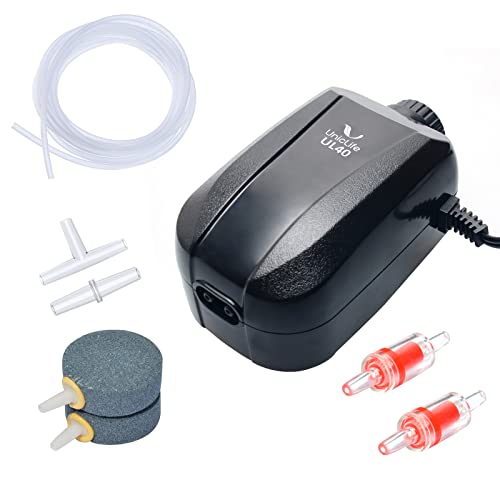
Ideal for small to medium 10–100 gallon tanks, the Uniclife pump provides a steady 64 GPH with two adjustable outlets. It’s particularly suited for hobbyists prioritizing quiet operation and ease of setup. Best for: smaller systems or as a backup aeration unit. Limitation: airflow may require periodic maintenance to maintain efficiency if intake material accumulates.
AquaMiracle Aquarium Air Pump
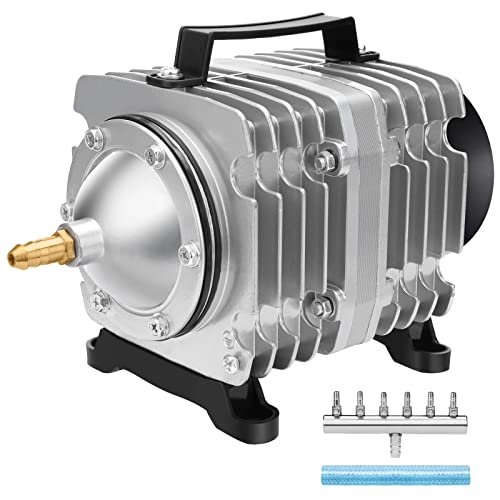
Best for larger aquariums or hydroponic systems, this 18W, 600 GPH air pump uses an aluminum housing for better heat dissipation and longevity. It offers strong output and rated efficiency, with the caveat that placement in a well-ventilated area improves performance and life span. Choose this if you need high flow with robust build quality.
VIVOSUN 634GPH 6 Outlet Pump
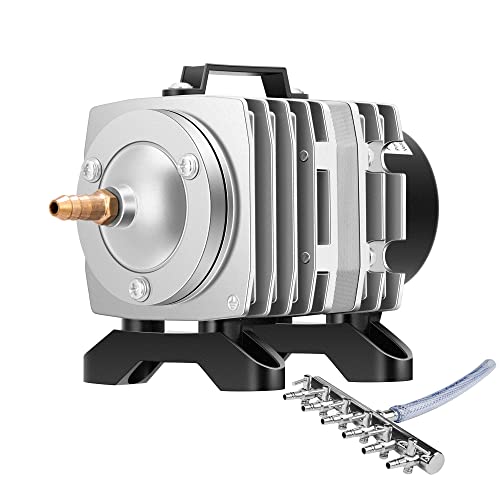
Best for hydroponic systems or medium-to-large aquariums, the VIVOSUN 634GPH pump delivers 0.03 MPa pressure and six adjustable outlets. Its aluminum heat-dissipation design supports longer operation with less risk of overheating. Best for: continuous operation in demanding setups. Caution: ensure all outlets are used with proper airline tubing to prevent leaks that reduce efficiency.
Pawfly Aquarium Air Pump 50 GPH

Best for small tanks and simple setups, this Pawfly pump provides 50 GPH with adjustable airflow. It’s compact and quiet, with a rotatable knob to tailor oxygen delivery. Suitable for 10–60 gallon tanks; best avoided in larger systems where higher flow is needed. Note: may deliver less power for heavily stocked or larger grow beds.
Buying Guide: Key Considerations For Aquaponics Air Pumps
Air pump selection depends on system size, desired aeration, and maintenance preferences. Consider these factors to tailor your choice to your setup.
- Tank size and number of zones: Larger tanks or multiple grow beds benefit from pumps with multiple outlets and higher GPH. Separate zones help balance oxygen distribution and water circulation.
- Flow control: Adjustable airflow lets you dial in the precise oxygenation and gas exchange your fish and plants require. This is important for delicate species or high stocking densities.
- Noise and vibration: Quiet operation is essential in living spaces. Pumps with rubber feet or vibration dampening reduce disturbances.
- Power efficiency and heat management: Pumps with energy-efficient motors and better heat dissipation extend life and reduce running costs. Aluminum housings typically help dissipate heat better than plastic alternatives.
- Maintenance needs: Some units require routine cleaning or replacement of intake materials to maintain flow. Lubricant-free designs tend to require less maintenance.
- Placement considerations: Place pumps in ventilated areas to avoid heat buildup. Ensure cords and outlets meet electrical safety requirements in aquaponics setups.
FAQ
- What size air pump do I need for a 40 gallon aquaponics system?
- Should I use a high-flow pump for hydroponics or a standard aquarium pump?
- Is noise a major concern in aquaponics pumps?
- How important is heat dissipation for air pumps?
- Can I run multiple pumps to cover a large system?
- What maintenance should I expect for these pumps?
A 40 gallon system typically benefits from a pump in the 60–150 GPH range, depending on how many outlets and second-stage devices you plan to run. For multiple devices, choose a model offering at least two outlets and adjustable airflow.
High-flow pumps provide more oxygenation and backup aeration for larger setups or heavy plant growth. For smaller systems with simple needs, a standard aquarium pump with adjustable flow is often sufficient.
Yes. Look for pumps with rubber feet, quiet motors, and low dB ratings. Quiet operation reduces stress for both fish and humans working nearby.
Important in continuous operation. Pumps with aluminum housings or robust heat management perform better in long-running setups and are less prone to overheating.
Yes. Using multiple pumps or a pump with several outlets can distribute airflow across different zones (filters, air stones, and grow beds). Ensure electrical safety and proper plumbed connections.
Periodically check for clogs, replace intake materials as needed, and clean outlets and tubing. Lubricant-free designs typically require less maintenance.