Answering the question, these soap sprays are practical for indoor plant care by helping control pests with minimal impact on beneficials. They are best for budget-conscious buyers, apartment gardeners, and hobbyists seeking non-toxic pest control. This guide highlights five effective soap-based or botanical spray options ideal for indoor use, with clear reasons to choose each one and practical cautions for application. Use this to compare treatment targets, safety, and versatility across common houseplants.
Summary of Selected Products
| Product | Best For | Notes |
|---|---|---|
| Bonide Insecticidal Soap (32 oz) | Aphids, mites, caterpillars on indoor/outdoor plants | Direct contact and ingestion kill; suitable for organic gardening routines |
| Natria Insecticidal Soap (24 oz) | Aphids, mealybugs, mites on indoor plants | Ready-to-use; organic gardening compatible |
| Bonide Captain Jack’s Insecticidal Super Soap (32 oz) | Selective pests on outdoor and certain indoor setups | Dual-action kill; outdoor emphasis with indoor potential |
| Neem Oil Spray for Plants – Big Leaf Energy (16 oz) | Broad pests with a natural oil base | 4-in-1 leaf spray; plant resilience and shine |
| Earth’s Ally 3-in-1 Plant Spray (32 oz) | Insects and diseases; general indoor/outdoor use | OMRI-listed; insecticide, fungicide, miticide in one |
Bonide Insecticidal Soap, 32 oz Ready-to-Use
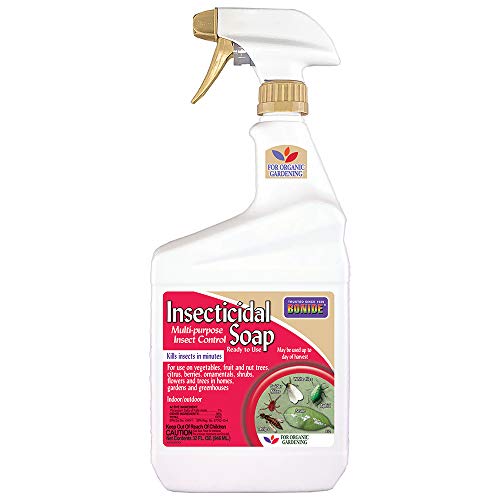
Best for: Indoor plants facing common soft-bodied pests like aphids, small caterpillars, and mites. This soap is designed to kill by direct contact and ingestion when insects feed on leaf surfaces, aligning with routine indoor care. The product is also suitable for organic gardening setups, making it attractive for eco-conscious households.
Why selected: It covers a broad range of pests and provides a straightforward spray method for indoor use. The dual-action kill mechanism (contact and ingestion) helps when pests feed on leaf tissue, which is common on houseplants such as ficus, sansevieria, and herbs.
Limitations: Outdoor-heavy formulation emphasis means best results may occur with indoor applications when used as directed; avoid applying on delicate foliage under bright sun to prevent leaf burn. Always test on a small area first.
Natria Insecticidal Soap for Indoor Plants

Best for: Indoor plant care with a focus on aphids, mealybugs, and mites. The ready-to-use formula is convenient for quick applications around houseplants and can be used up to harvest if fruiting crops are involved.
Why selected: Easy-to-use spray bottle design makes application simple for beginners and frequent plant caregivers. Suitable for a variety of indoor species, including leafy ornamentals and small fruiting plants used indoors.
Limitations: Some sensitive foliage may react to soap formulations; always shake well and test on a leaf before widespread use. Avoid applying during very hot days or under intense indoor lighting to minimize leaf stress.
Bonide Captain Jack’s Insecticidal Super Soap

Best for: Pests on outdoor plants, with potential indoor use for hardy houseplants or greenhouse environments. The product targets a wide pest spectrum including aphids, mites, caterpillars, and thrips by direct contact and ingestion.
Why selected: Its broad pest range and dual-action mode make it versatile for mixed indoor-outdoor setups, especially for growers who move plants between spaces or manage a sunroom with growing plants year-round.
Limitations: Primarily formulated for outdoor use; ensure proper ventilation and avoid oversaturation on indoor foliage to prevent residue buildup on indoor surfaces.
Neem Oil Spray for Plants – Big Leaf Energy

Best for: Indoor plants requiring a natural preventive and treatment against a broad range of pests with added leaf care benefits. Neem oil blends support plant resilience and leaf cleanliness, beneficial for tropical houseplants and herbs.
Why selected: Combines neem oil with a balanced botanical blend, offering a 4-in-1 approach—pest control, leaf shine, cleanliness, and resilience. The ready-to-use formula simplifies routine houseplant maintenance.
Caution: Natural separation or thickening may occur in colder temperatures. Shake well before use and follow dilution requirements if needed for sensitive species.
Earth’s Ally 3-in-1 Plant Spray

Best for: Indoor and outdoor use where a combination of insect control and disease suppression is desired. Suitable for common houseplants susceptible to aphids, whiteflies, powdery mildew, and leaf spot diseases.
Why selected: This 3-in-1 formula provides insecticide, miticide, and fungicide benefits in one spray, appealing to buyers looking to reduce product clutter while maintaining pest and disease management. OMRI-listed status supports organic garden considerations.
Limitation: As a multi-purpose spray, it may require careful timing to prevent phytotoxicity on sensitive foliage; test on a small area first and follow label directions for indoor use.
Buying Guide: Soap-Based And Botanical Sprays For Indoor Plants
- What pest problems do you commonly face indoors? Identify whether aphids, mites, whiteflies, or scale are present. Choose a spray with a proven track record against those pests.
- Are you prioritizing organic or conventional approaches? Soap sprays and neem-based products align with organic gardening, reducing synthetic chemical exposure for homes with children or pets.
- Are there sensitive plants in your collection? Some plants react to soaps more than others. Always test on a small leaf before full application.
- Do you want a multi-purpose spray? A 3-in-1 product (insecticide, miticide, fungicide) can simplify care, especially for mixed indoor plant collections prone to both pests and diseases.
- What is your preferred spray format? Ready-to-use bottles are convenient for quick fixes, while concentrates may reduce waste for larger collections. Consider storage and shelf life as well.
Frequently Asked Questions
- Can I use these soaps on all indoor plants? Most are suitable for many common houseplants, but some foliage can be sensitive. Always perform a leaf test and follow label directions.
- How often should I apply soap sprays indoors? Apply on pest-affected days, typically every 5–7 days as needed, ensuring the plant has time to dry between applications.
- Will these sprays harm beneficial insects outdoors? When used outdoors, avoid spraying when pollinators are active or directly on beneficial insects. Indoors, pollinator concerns are minimal but still consider ventilation.
- Do these products leave visible residues? Soap-based sprays can leave a temporary film on leaves; rinse with water if residue is heavy or causing leaf fatigue.
- Can I mix these with other plant care products? Do not mix without consulting the label. Soap sprays can interact with other chemicals and may cause phytotoxicity.
- Are there safety considerations for pets? Keep sprays out of reach of pets during application and allow foliage to dry before allowing access to plants.