Answering the need for compact, productive blueberry options, this guide highlights half-high or semi-dwarf blueberry plants ideal for patios, balconies, and small gardens. These selections balance size with fruit quality, making them suitable for city gardeners and homeowners seeking manageable blueberry beds. The top picks cover a range of climates, from mild-winter regions to sun-drenched yards. Each option includes why it’s best for a specific buyer profile and practical growing notes to help you decide.
Buyer snapshot: the right half-high blueberry plant fits bundles of space, ease of care, and reliable fruit. For container gardeners, look for compact or semi-dwarf varieties. For edible landscapes, choose cultivars with good berry size and late-season vigor. For beginners, prioritize plants with strong root systems and simple soil needs. The table below compares the five highlighted products at a glance.
| Product | Best for | Key Benefit | Notable Limitation |
|---|---|---|---|
| Blueberry Plants Collection (4 Pack) — Fam Plants | Small-space edible gardeners | Mixed varieties boost cross-pollination | Seasonal stock varies |
| Sunshine Blue Blueberry Plants 2-Pack | Patio containers | Compact semi-dwarf, self-pollinating | Smaller berries when container-grown |
| Bluecrop Bare Root Blueberry Plant | Established garden beds | High yield, strong flavor | Three-year-old maturity, larger initial planting |
| Blueberry Tree Seedlings — 2 Plants | Backyard orchards in tight spaces | Rooted saplings with quick establishment | Tree-like growth requires pruning |
| Blueberry Plant BLUERAY — Extra-Large Fruit | Fresh-eating and preserving lovers | Very large berries, versatile uses | Requires ample sun for best size |
Blueberry Plants Collection (4 Pack) — Fam Plants
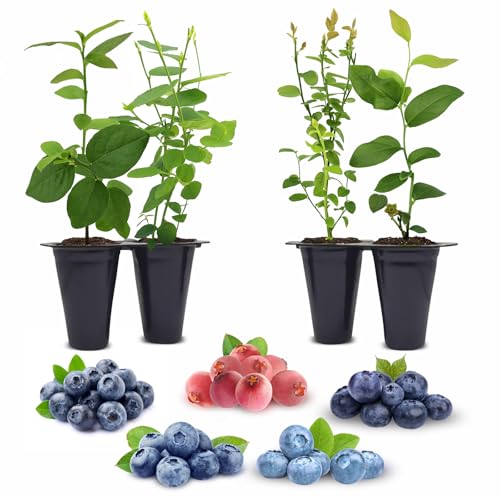
Best for mixed-pollination success and starter berry production in small plots. This 4-pack includes assorted varieties such as Emerald, Jewel, Legacy, and more, with stock changing by season. Plant at least two different cultivars to boost cross-pollination and overall yield. The collection suits homeowners who want a quick-start berry patch without choosing single-variety inventories.
- Delivery likely includes four live starter plants in assorted varieties.
- Cross-pollination increases berry size and total yield when more than one cultivar is planted.
- Soil preference: acidic, well-drained soil with pH around 4.0–5.2; keep roots evenly moist and mulch to protect shallow roots.
Best for: buyers seeking a diverse starting set for a small edible garden. Choose this if you want multiple flavors and improved pollination in a limited space. Caution: availability varies by season, so stock may differ from shown varieties.
Sunshine Blue Blueberry Plants 5-9″ — 2-Pack

Best for container gardeners and urban patios, Sunshine Blue is a semi-dwarf cultivar designed for small spaces. The two-pack stays compact (roughly 3-4 feet tall) and is self-pollinating, making it an ideal first blueberry plant for balconies and decks. Its pink spring flowers and burgundy foliage add ornamental value while producing edible fruit.
- Pack includes two healthy starter plants, 5-9 inches tall.
- Compact growth makes it ideal for containers and small yards.
- Ornamental value with pink flowers and attractive foliage, besides fruit.
Best for: buyers seeking a self-contained, decorative container berry patch with reliable fruit. Better for: small spaces where maintenance and pruning are minimal. Caution: fruit size may be smaller in container environments, and watering needs are consistent to prevent stress.
Bluecrop Bare Root Blueberry Plant, 3-Year Old

Best for established garden beds seeking dependable yields and flavor, Bluecrop is a classic choice with a long track record. As a mid-season variety, it offers robust berry production and disease resistance. The 3-year-old mature plant is ready to establish quickly and start fruiting sooner than smaller plug-plants.
- Large, flavorful berries with strong overall performance.
- Established maturity helps with faster fruiting in the first season after planting.
- Mid-season harvest window provides steady supply through the growing year.
Best for: buyers who want reliable fruit with established vigor in garden beds. Better for: more experienced gardeners who can provide acidic soil and consistent moisture. Caution: fewer transplant shocks at this stage, but still requires proper care for best fruiting results.
Blueberry Tree Seedlings — 2 Plants

Best for backyard orchards and tight spaces, these two rooted saplings provide a quick-start option for a blue-berry landscape. Rooted and ready to transplant, they suit gardeners who want a tree-like blueberry presence with fruit-producing roots that mature into sizeable bushes.
- Two healthy rooted saplings ready for transplanting.
- Strong root systems designed to establish quickly after planting.
- Ideal for home gardens, small spaces, and container use with proper pruning.
Best for: buyers who want a faster route to fruit with a compact tree-like form. Better for: gardeners who can provide regular pruning and sun exposure. Caution: tree-form growth requires ongoing maintenance to manage size and shape.
Blueberry Plant BLUERAY — Extra-Large Fruit

Best for fresh-eating enthusiasts and preservation lovers, BLUERAY promises extra-large berries with robust flavor. This variety supports a versatile use profile, including fresh snacking, canning, freezing, and baking. It thrives in sunny locations with well-drained soil and adequate moisture.
- Extra-large berries with excellent flavor.
- Versatile uses from fresh eating to preserves and baking.
- Requires ample sun to reach maximum fruit size and quality.
Best for: buyers prioritizing fruit size and culinary versatility. Better for: sun-rich gardens and prepared soil with good drainage. Caution: large fruit can increase plant energy demand; ensure consistent irrigation during fruiting.
Buying Guide: Half-High Blueberry Plants for Every Garden
What matters most when choosing half-high blueberries? Consider climate, space, soil, and care requirements. Here are practical questions and answers to help you compare options quickly.
- What size will the plant reach in your space? Choose semi-dwarf varieties (3-5 feet) for patios; larger shrub forms fit garden beds with room for root growth.
- Do you need self-pollinating or cross-pollination benefits? Self-pollinating types work well in tiny spaces, but mixing cultivars boosts berry size and yield.
- What soil conditions are essential? Blueberries require acidic soil with pH 4.0–5.2 and well-drained beds; mulching helps protect shallow roots.
- How much sun is needed? Full sun tends to maximize fruit size and yield; shade reduces production.
- How hard is maintenance? Containers need regular water under hot conditions; pruning helps shape and encourages fruiting wood.
- Are there ornamental benefits? Some varieties offer attractive foliage and blossoms, adding landscape value beyond fruit.
Frequently Asked Questions
- What is a half-high blueberry plant?
A half-high blueberry plant refers to a semi-dwarf variety that stays more compact than standard highbush types, suitable for small spaces and containers. - Which blueberry plant is best for containers?
Semi-dwarf or compact varieties like Sunshine Blue are designed for pots and small patios, offering self-pollinating fruit. - Do blueberries need cross-pollination?
Cross-pollination by at least two cultivars can improve yield and fruit size, especially for plants grown in the ground. Some self-pollinating varieties still fruit well on their own. - When do blueberries fruit?
Most mid-season cultivars begin fruiting in late spring to early summer, with fruit sizes varying by variety and growing conditions. - What soil pH is ideal?
A soil pH between 4.0 and 5.2 is ideal for blueberries to access essential nutrients. - Can I plant multiple blueberry varieties in one pot?
Yes, but ensure the pot is large enough and has good drainage; mixing varieties can improve pollination and yields.