Best brush cutter saw blades are essential for turning thick brush, saplings, and stubborn weeds into clean, manageable cuts. This guide highlights five top options, explains who they’re best for, and helps you compare features like arbor size, material, and RPM compatibility. Ideal buyers include homeowners tackling backyard overgrowth, landscapers needing faster clearing, and DIYers upgrading from standard trimmer heads.
Product Comparison at a Glance
| Product | Arbor & Size | Material | Best For | Notes |
|---|---|---|---|---|
| Forester 9in x 20T | 1″ arbor; 20mm bushing | Carbide teeth / steel | Heavy brush and saplings | Conversion kit required for some trimmers |
| ATIE 8″ x 80T | 1″ or 20 mm arbor | Carbide tipped | Long-lasting, tougher cuts | Estimated longer life vs plain steel |
| AR-PRO (2-Set) 10″ x 80T | 1″ or 20 mm arbor | Carbon steel with carbide tips | Professional-grade pruning and trimming | Durable, mid-to-high RPM use |
| CALPALMY (2-Set) 9″ x 20T | 1″ arbor; 20 mm compatibility | Carbon steel with carbide teeth | Broad compatibility with major brands | Includes 2 blades and accessories |
| Dunhi 9″ x 20T | 1″ arbor | Carbon steel | Budget-friendly option for large brush | Valid for trimmers with standard arbor |
Forester 9in Brush Cutter Blade With File Set

Forester’s 9-inch brush cutter blade features 20 chainsaw teeth designed to cut through saplings and thick brush. It fits most straight shaft trimmers and includes a 20mm bushing for versatile fit, with a 1-inch arbor hole to accommodate common adapters. This option is best for heavy-duty work and when speed is a priority, but a conversion kit may be required for certain trimmer configurations. The blade is ideal for users who want a chainsaw-like cut without carrying a separate saw.
ATIE 8″ 80T Carbide Tip Brush Cutter Blade
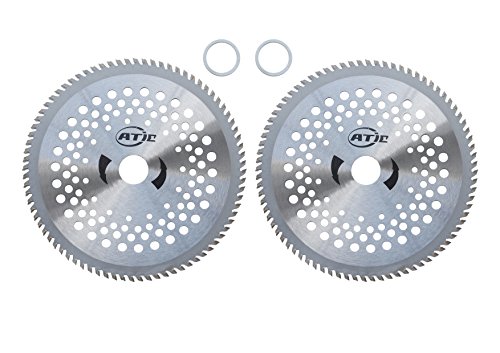
This 8-inch blade with 80 carbide-tipped teeth provides a longer service life than plain steel blades. It offers universal fit for 1″ or 20 mm arbors and is designed to handle tough materials. Choose this if you want a lightweight option with extended durability, suitable for frequent trimming tasks where speed matters more than max cutting width. Caution: verify your trimmer’s arbor compatibility before purchasing.
AR-PRO 10″ x 80T Carbide Tip Brush Blades (2-Set)

AR-PRO’s 10-inch blades come in a 2-pack with 80 teeth and carbide tips, designed for compatibility with 1″ or 20 mm arbors. Made from carbon steel, these blades aim to balance durability with cutting efficiency. Best for landscapers and serious DIYers who need multi-blade options for back-to-back sessions. The set is easy to rotate and replace, reducing downtime between tasks. Note: blades should be used within the recommended RPM range of your trimmer to avoid overheating.
CALPALMY 9″ x 20T 2-Set Chainsaw Tooth Blades
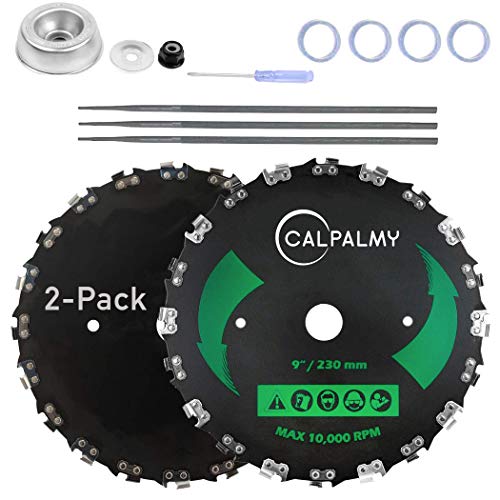
CALPALMY’s 9-inch, 20-tooth blades are carbon steel with carbide teeth, offering robust performance on straight-shaft trimmers. The 1″ arbor and 20 mm options provide broad compatibility with leading brands like Husqvarna, Stihl, Ego, Oregon, and Hitachi. The two-blade set increases replacement readiness for heavy workload days. Best for homeowners needing reliable, budget-conscious replacements that still provide strong cutting performance. Caution: ensure RPM compatibility to avoid blade wear or failure.
Dunhi Brush Cutter Blade Kit – 2 Pack
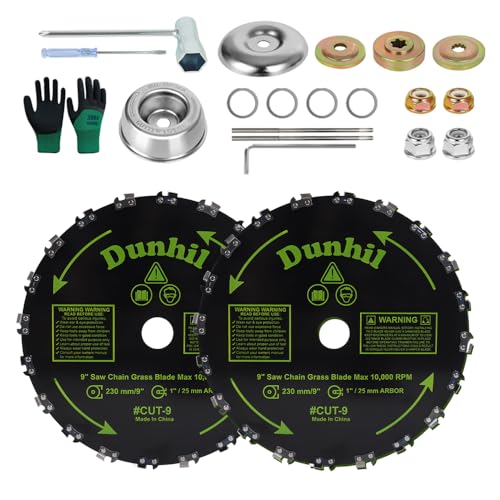
Dunhi offers a 2-pack of 9-inch, 20-tooth blades designed for straight shaft trimmers with a 1″ arbor. Made from carbon steel, these blades are positioned as an economical choice for large brush and weed clearing. Best for budget-minded buyers who still want carbide-like performance benefits without premium pricing. Limitation: compatibility lies with straight-shaft models; confirm your machine’s arbor and RPM specifications before use.
Buying Guide: Key Considerations for Brush Cutter Blades
- Arbor size and adapter compatibility: Most blades in this category fit a 1″ (25.4 mm) or 20 mm arbor. Verify your trimmer’s arbor size and whether a bushing or conversion kit is required for a safe fit.
- Blade material and teeth: Carbide-tipped teeth last longer and stay sharp, but carbon steel blades are typically adequate for routine clearing. More teeth (80T vs 20T) provide finer cuts but can require more power.
- Diameter and RPM: Blade diameter affects cutting width. Ensure your trimmer’s maximum RPM aligns with the blade’s rated RPM (often around 10,000 RPM in this market).
- Weight and balance: Heavier blades reduce control; lighter options improve maneuverability for long sessions.
- Conversion needs: Some blades require a conversion kit to attach to standard trimmer heads. Check manufacturer recommendations for safe installation.
- Intended use: For thick brush and saplings, carbide tips and larger diameters offer faster, cleaner cuts. For light trimming, smaller blades with fewer teeth may be sufficient.
FAQ: Quick Answers for Buyer Intent
- What blade size should I choose for a 1″ arbor trimmer?
Choose blades explicitly listed for a 1″ arbor or those with universal fit (1″ or 20 mm) and use the proper bushing if needed. - Are carbide-tipped blades worth the extra cost?
Yes for frequent heavy-duty use; they last longer and stay sharp under tougher materials, reducing downtime. - Can I use a brush cutter blade on a standard string trimmer?
Only if the trimmer supports brush cutter heads and is compatible with the blade’s arbor size and RPM. Check the manufacturer’s guidance and adapters. - What is the best blade for clearing thick brush quickly?
A larger diameter blade with carbide teeth and higher tooth count typically clears faster, provided your trimmer can safely handle the RPM and weight. - How often should I replace blades?
Replace when teeth become dull or damaged. Carbide blades last longer, but performance declines with visible wear. - Is a conversion kit always required?
Not always; some trimmers come configured as brush cutters. If not, a compatible conversion kit is necessary for safe operation.