Need to remove weeds from crevices quickly and effectively? This guide highlights five top tools designed to clear cracks between pavers, bricks, and stones. Each option targets tight spaces, reduces bending, and helps you keep outdoor surfaces neat. The best pick depends on your space size, comfort with extension handles, and how stubborn the growth is. The following table summarizes each product to help you compare at a glance.
| Product | Best For | Key Benefit |
|---|---|---|
| BARAYSTUS Crack Weeder Long Handle 3-in-1 | Maintenance on wide driveways; long reach | Three tools in one for versatile crevice cleaning |
| BARAYSTUS Crack Weeder, Stainless Steel | Deep, narrow gaps; simple, effective removal | Sharp L-shaped blades for deep penetration |
| WORKPRO Crack Weeder, 12.5″ | General-purpose crevice removal; comfortable grip | Ergonomic soft handle and sturdy stainless steel |
| Mitclear Weed Moss Remover Brush | Rooftops, decks, and raised surfaces | Long 50″ handle with a V-shaped wire brush |
| Viscogrip Crack Weeder Tool Set | Dual-tool versatility for cracks and moss | Two tools in one set with adjustable handle |
BARAYSTUS Crack Weeder Long Handle 3-in-1

Best for gardeners who want flexibility in one tool without constantly switching implements. The 3-in-1 design includes a curved scraper for narrow gaps, a triangular scraper for wider crevices, and a sturdy metal wire weed brush to remove moss, lichen, and dirt. The 0.08″ thick stainless steel blade is sharp and rust-resistant, making it suitable for concrete, brick, or tile joints. The handle adjusts to 30.7″, 44.5″, and 58.6″ to reduce bending and protect the back during extended sessions.
Who it’s best for: homeowners with mixed spaces (driveways, patios, and sidewalks) who want a single tool that can handle both narrow and wide crevices. Why it’s selected: the 3-in-1 setup covers most common crevice cleaning tasks, and the adjustable handle supports comfort for different heights. Caution: the curved scraper’s minimum gap width is 0.08″ and maximum depth is 1.5″, so extremely deep or very tight gaps may require additional tools.
BARAYSTUS Crack Weeder, Stainless Steel Manual Crevice Weeding Tool

Better for precise work in tight joints and for those who want a dedicated L-shaped blade approach. This model uses a durable high-carbon steel construction with an anti-rust coating, designed to pierce into soil and tear out roots. The sharp L-shaped blades can push, pull, dig, and cut, making it effective for deep crevices and stubborn weeds. Its coated blade wipes clean easily, contributing to longer tool life in wet conditions.
Who it’s best for: users who spend time in narrow crevices and want a robust blade that can slice through compacted soil. Why it’s selected: the L-shaped blade design excels at penetrating tight gaps from multiple angles. Caution: its single-blade design means you might need to rotate the tool to reach awkward angles in very irregular crevices.
WORKPRO Crack Weeder, 12.5″ Stainless Steel
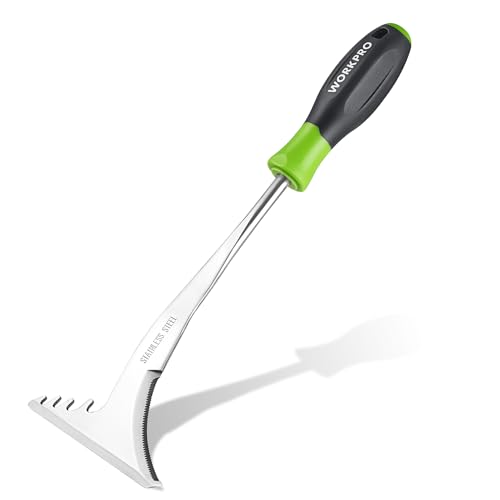
Best for general outdoor use where comfort and durability matter. The L-shaped blade cuts turf in different directions and tears hard soil, while the weeding barb reaches weeds from roots. The tool is made from high-hardness polished stainless steel to resist rust and bending. The non-slip soft-grip handle reduces hand fatigue, and the hanging hole supports easy storage after use.
Who it’s best for: casual to frequent gardeners seeking a sturdy, ergonomic crEvice weeder for a range of surfaces. Why it’s selected: combination of a versatile blade, robust stainless steel, and a comfortable grip. Caution: the tool’s length and blade geometry may require adjustments for very narrow gaps or exceptionally deep crevices.
Mitclear Weed Moss Remover Brush with Long Handle

Best for multi-surface moss and weed removal where you want extended reach and a combination of brush and scraper. This tool features a V-shaped brass wire brush on a wooden head, designed to precisely remove moss and weeds from roofs, corners, and narrow gaps between paving stones. A curved metal blade scraper assists with roots and stubborn patches, while the four-section, extendable steel poles make it possible to clean without bending.
Who it’s best for: users with rooftop or elevated deck areas, or anyone needing relief from back-straining bending. Why it’s selected: its extendable 4-section handle and dual-action design cover both surface cleaning and edging. Caution: brass bristles are softer than steel, so very tough moss may require additional scrubbing or a second pass.
Viscogrip Crack Weeder Tool Set

Best for a two-tool approach where you want dedicated crevice and surface moss removal in one purchase. The set includes a crevice weeder and a moss removal brush, both constructed from durable stainless steel for corrosion resistance. The adjustable handle adds versatility, allowing you to work in wide patios or narrow garden paths with a comfortable grip. This arrangement supports targeted weed removal and broader surface cleaning in one kit.
Who it’s best for: homeowners who prefer a compact kit with complementary tools for cracks and moss. Why it’s selected: the dual-tool setup improves efficiency, making it easy to switch tasks without swapping entire tools. Caution: assembly and storage may require more space due to two pieces in the kit.
Buying Guide
What should you consider when choosing a crevice weeder?
- Reach and ergonomics: If you have wide driveways or tall edges, an adjustable or long-handle tool reduces bending and back strain.
- Crevice size suitability: Tools with curved or L-shaped blades suit narrow gaps; check the minimum gap width they can handle.
- Material and durability: Stainless steel resists rust; high-carbon steel blades stay sharp longer but may require rust protection.
- Tool versatility: 3-in-1 designs or tool sets can save space and time, especially for mixed surfaces like stone, brick, and concrete.
- Maintenance: Look for blades that wipe clean easily and coatings that resist moisture exposure.
- Weight and storage: Lighter tools reduce fatigue; hanging grips and storage holes help keep tools organized.
Usage tips for best results
- Start with gentle scraping to loosen roots, then follow with a weeding brush to lift debris from joints.
- Angle blades to match the crevice orientation to maximize penetration while avoiding surface damage.
- Clean tools after use to prevent rust buildup; dry before storage.
- For heavy growth, repeated passes over multiple sessions reduce strain and improve outcomes.
FAQ
- Q: Can these tools damage the surrounding stones or pavers?
A: Choose a tool with appropriately angled blades and avoid excessive pressure. For delicate layouts, test on a small area first. - Q: Are these tools suitable for moss and lichen removal on roofs?
A: Some models, like the Mitclear set, are designed for roof crevices and corners, but always follow roofing safety practices. - Q: Do the handles extend for tall edges?
A: Several options offer adjustable or long handles to minimize bending and suit different heights. - Q: How do I prevent rust on metal blades?
A: Wipe blades dry after use and store in a dry place. Some models include rust-resistant coatings for longevity. - Q: Is a set or a single tool better for beginners?
A: A two-tool set or a 3-in-1 tool is often best for flexibility and learning which blade works best in different crevices. - Q: What maintenance do these tools require?
A: Regularly clean off dirt, dry thoroughly, and apply light oil to moving parts if applicable.