Answering the common question: the best light for indoor growing is a full-spectrum grow light that covers the photosynthetically active wavelengths (approximately 380–760 nm) and offers adjustable intensity and timers. The recommended products below suit different plant types and space needs, from compact seedlings to standing setups. This guide highlights five options ideal for small herb starts, succulents, tropical houseplants, and flowering plants.
Buyer profiles: hobbyists with limited space may prefer clamp-on or flexible gooseneck models; taller or multi-plant setups benefit from taller stands or multiple-head configurations. The table below summarizes the top picks and their strongest fits.
| Product | Best For | Key Benefit |
|---|---|---|
| GooingTop LED Grow Light | Compact desks and shelves | 5-level dimming and 4/8/12H timer with flexible gooseneck |
| LEOTER Grow Light for Indoor Plants | All-around growth and flowering | 80 LEDs with full spectrum, red/blue accents, 10 dimmable modes |
| bseah Grow Light | Budget-conscious setups | Full spectrum with yellow/white, 10 dimmable levels, auto timer |
| Juhefa Grow Light | Seedlings and small starts | 40W equivalent, 5 dimming levels, auto on/off timer |
| yentbokj Grow Lights | Flexible multi-head with tripod | Five heads, 3 spectral modes, 4/8/12H timer, remote control |
GooingTop LED Grow Light, 6000K Full Spectrum Clip Plant Lamp
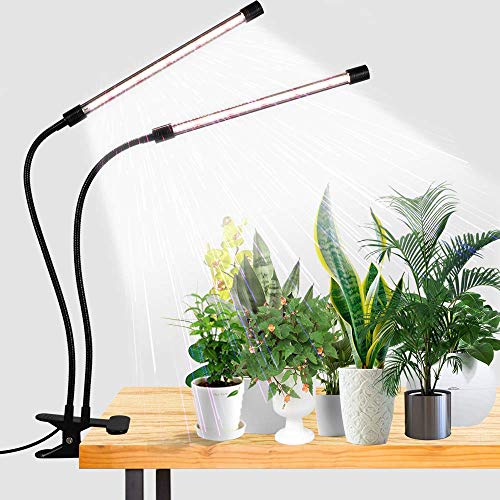
Best for small desks and tight spaces, this clip-on light uses 10 red and 74 white LEDs to deliver a 6000K full spectrum. The light is designed to resemble noonday sun to support vegetative growth and is suitable for reading as a secondary benefit. A high color rendering index (CRI) of up to 95 indicates vivid color rendition of plants, which helps in spotting nutrient deficiencies. The unit includes a flexible gooseneck and a clamp for versatile positioning. Timers offer 4/8/12-hour options within a 24-hour cycle, so you can automate daily lighting. The device can be powered through USB or an AC plug.
Who this is best for: Small-space growers, desk plants, herbs, and beginners who want an easy, plug-and-play option with adjustable timing. Limitations: Higher power consumption may be noticeable if used for extended hours or larger plant areas beyond a single small plant.
LEOTER Grow Light for Indoor Plants – Upgraded 80 LED Lamp
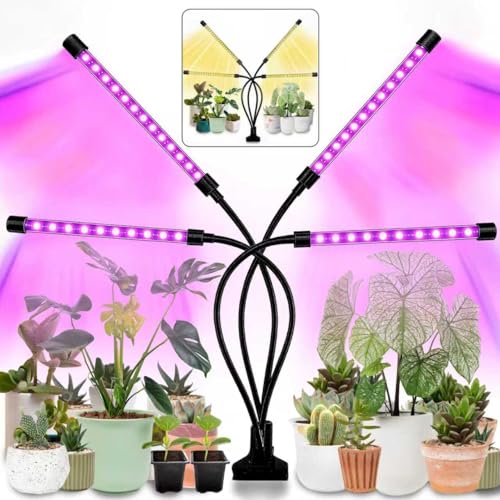
Best for all-around growth and flowering, this fixture combines 80 efficient LEDs (32 red, 12 blue, 36 full spectrum) to cover full-spectrum needs from germination to fruiting. The combination supports different growth stages with three spectral modes and ten dimmable levels. The memory timer can automate daily on/off cycles with 3H/9H/12H options, reducing daily maintenance. Timers require a power cycle to reset if power is fully interrupted.
Who this is best for: Growers seeking a versatile setup that supports multiple growth stages with customizable light intensity. Limitation: Timer settings reset after power-off require reconfiguration.
bseah Grow Light Plant Lights for Indoor Plants
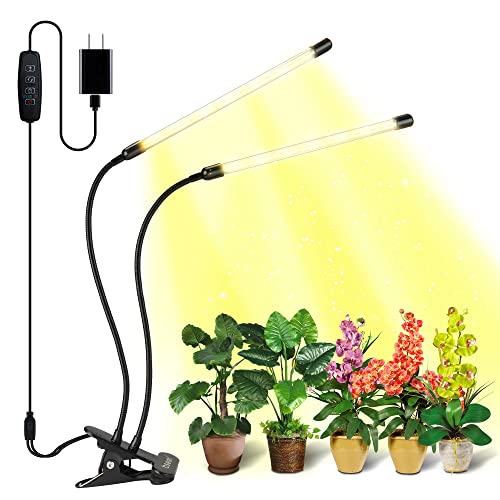
Best for budget-conscious setups, this full-spectrum LED provides a yellow and white combination aimed at promoting photosynthesis through germination and fruiting. It includes auto turn-on/off with a 3/9/12-hour timer for consistent daily cycles, plus 10 dimmable levels and three switch modes to meet different plant needs across seasons.
Who this is best for: Growers who want a straightforward, cost-effective option with reliable auto-timing. Limitation: Fewer advanced features compared to higher-end models.
Juhefa Grow Light for Indoor Plants
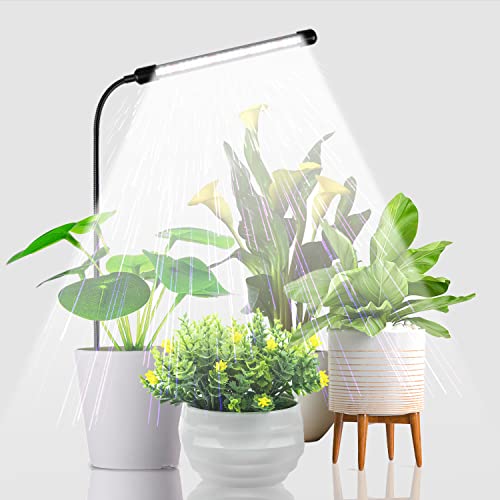
Best for seedlings, succulents, and small plants, this 6000K full-spectrum lamp includes 40 white and 8 red LEDs to mimic natural daylight. The 5-dimming levels let you tailor brightness for delicate starts, while the auto on/off timer ensures regular cycles during work or travel. Its compact design makes it ideal for plant shelves or desktops.
Who this is best for: New gardeners and seed starters needing a simple, reliable light with a gentle spectrum. Limitation: Not ideal for larger plants or dense canopies due to limited head count.
yentbokj Grow Lights with Tripod Stand
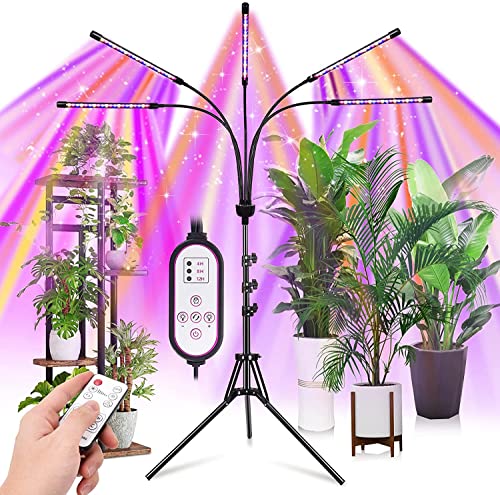
Best for adjustable multi-head setups, this five-head system provides 3 spectral modes and 10 brightness levels. The tripod stand extends from 15″ to 63″ and offers 360-degree head rotation for precise illumination across plants. Inline and RF remote controls support flexible scheduling using 4H/8H/12H intervals. Each head can be controlled independently, enabling targeted lighting for diverse plant arrangements.
Who this is best for: Hobbyists growing clusters of plants or needing adjustable height for varying plant sizes. Limitation: Higher setup complexity may require more space and initial adjustment time.
Kullsinss Grow Lights with Wood Grain Design
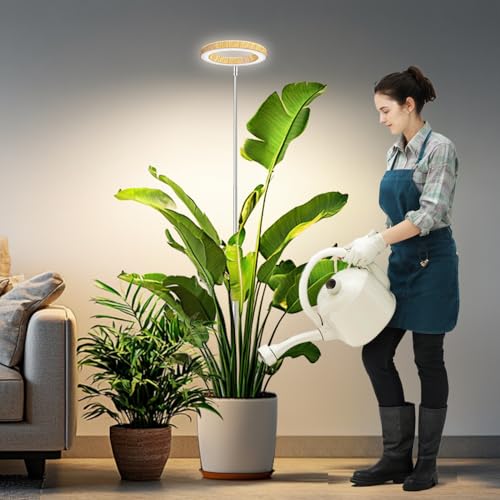
Best for a stylish, wood-like aesthetic and full-spectrum performance, this halo light uses 80 LEDs (380–760 nm) to cover all growth stages. It features five dimmable levels, three spectral modes, and a smart controller that manages 6/12/16-hour auto on/off timers. The faux woodgrain design blends with interior decor while delivering plant-boosting light.
Who this is best for: Plant lovers who want a visually pleasing lamp that can support ongoing growth across a variety of species. Limitation: The woodgrain housing is decorative and may be bulkier than clip-on options.
LBW Grow Lights for Indoor Plants with Stand

Best for standing, floor-based setups, this 214-LED lamp uses a full-spectrum blend (cold white, warm white, red, and natural light) to support photosynthesis. The built-in timer offers 4/8/12-hour cycles, and the six brightness levels let you tailor output for different plant needs. A tall tripod and wide footprint enable illumination of larger plant groups or tall specimens.
Who this is best for: Growers seeking a taller, freestanding option to illuminate larger plant collections. Limitation: May require more floor space than clip-on or tabletop models.
Buying Guide: Light For Indoor Growing
- Light Spectrum Look for full-spectrum lights covering 380–760 nm. Red and blue wavelengths support photosynthesis and flowering; white and warm-white tones can improve plant color and user comfort.
- Intensity and Coverage Match light intensity to plant type and canopy size. Consider diodes, PPFD data, and whether multiple heads or adjustable stands are needed for broader coverage.
- Adjustability Dimming, spectral modes, and timers help tailor light to growth stages and energy usage. Timers are valuable for consistency and automation during work or travel.
- Placement and Mounting Choose based on space: clip-on, gooseneck, tripod, or floor-standing models. Ensure stable mounting and flexibility in height and angle.
- Energy Use and Heat LED grow lights are energy-efficient but consider heat dissipation and run-time. A model with built-in heat management may extend lifespan.
- Durability and Aesthetics Some designs incorporate decorative housing or woodgrain; choose according to space aesthetics if visible in living areas.
Frequently Asked Questions
- What is the essential spectrum for grow lights? Full-spectrum (approximately 380–760 nm) supports most stages of plant growth, from seedling to fruiting.
- How long should indoor plants be lit each day? Timers typically offer 4–12 hours per day, varying by species and growth stage; avoid excessive light to prevent stress.
- Do I need a stand or tripod? Stands and tripods help position lights correctly over plants and allow height adjustments as plants grow.
- Can I use grow lights as a reading lamp? Some lights have high CRI and neutral white, making them suitable for reading—though designed primarily for plants.
- How do I choose between single-head and multi-head lights? Multi-head options are better for larger or multiple plants, while single-head models suit compact spaces.
- Do grow lights require special installation? Most are plug-and-play with simple mounting; some require assembly or power cycling for timers to start correctly after power loss.