Compact CFL grow lights offer efficient, space-saving options for indoor gardening, seed starting, or supplementing natural light. This guide highlights five reliable options suited for small spaces, hobbyists, and budget-conscious growers. Each product is evaluated for energy use, light output, and practicality in typical home setups. Read on to find which CFL fixture best matches your plants, space, and daily routine.
| Product | Light Output / Warmth | Best For | Why It Stands Out |
|---|---|---|---|
| Hydrofarm Agrobrite FLC32D | 32W, 6400K | Compact starters and tight spaces | Low-profile 6400K daylight, fits standard fixtures, long-lasting |
| SunBlaster SL0900151 13W Set | 13W per bulb, 6400K, 4 bulbs | Year-round indoor greens | Energy-efficient, four-bulb kit increases light coverage |
| HAKUTATZ 105W CFL Grow Light | 105W, 5500K | Heavier light needs in small spaces | Instant-start energy saving, daylight balance |
| Hydrofarm Agrobrite FLC26D | 26W, 6400K | Ultra-compact setups | 130W incandescent equivalence, energy-efficient spiral |
| Sunlite Quad Tube CFL (FML27/65K) | 27W, 6500K | Desk lamps and small benches | Quad-tube design for broader diffusion |
Hydrofarm Agrobrite FLC32D Compact CFL Grow Light
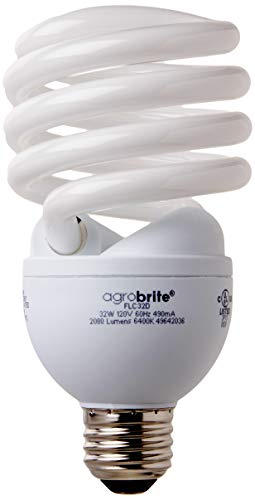
32-watt flip-ready daylight CFL, 6400K, designed for compact fixtures. It produces about 1800 lumens and offers a typical service life near 10,000 hours. Best for: beginners and small herb/spinach starts in compact fixtures. Limitation: lower total light output than higher-wattage CFLs; best used in close-range applications.
SunBlaster SL0900151 13W Indoor CFL Set

Includes four 13-watt CFL bulbs at 6400K. This set is energy-efficient and ideal for year-round indoor growing, seed starting, or supplementary lighting for small herb gardens. Best for: users needing broader coverage with multiple compact bulbs. Limitation: requires multiple sockets or a kit with compatible fixtures.
HAKUTATZ 105W High Power CFL Grow Light
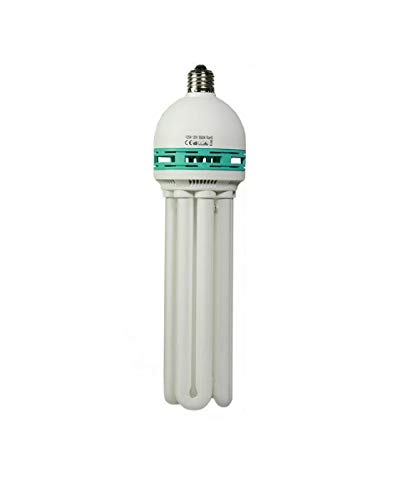
105-watt daylight CFL bulb with 5500K color temperature. Designed for instant-start and mounting on standard outlets. Best for: growers needing a stronger CFL option in tight spaces. Limitation: higher power means more heat and electricity use in small enclosures.
Hydrofarm Agrobrite FLC26D 26-Watt CFL
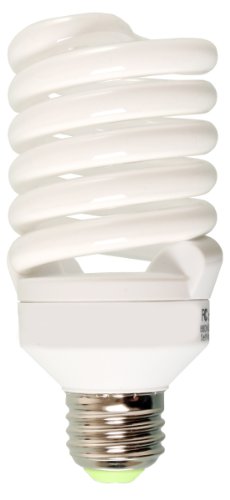
26-watt spiral CFL bulb with 6400K, equivalent to a 130-watt incandescent. Compact, energy-saving design suitable for small grow boxes or tent setups. Best for: budget-friendly, space-constrained gardens. Limitation: lower overall light output compared to high-wattage CFLs; may require closer proximity to plants.
Sunlite Quad Tube CFL Grow Light (FML27/65K)

Quad-tube CFL lamp delivering 1500 lumens at 27 watts with a 6500K daylight temp. The four-tube design promotes broader light distribution in small fixtures. Best for: compact desks, benches, and reading lamps that double as grow light sources. Limitation: still relatively low wattage; may be insufficient for dense foliage or larger starts.
Buying Guide: Choosing The Right Compact CFL Grow Light
- Light output vs. space: For tiny grow boxes, 26–32W bulbs with 6400K light are usually adequate. If you need more coverage, consider multi-bulb kits like the 4-bulb SunBlaster set.
- Color temperature matters: 6400K is a daylight spectrum ideal for vegetative growth, while 5500K is a common daylight balance suitable for most greens and herbs. Match color temperature to your plant stage and goals.
- Fixture compatibility: Check that the bulb base (often medium base or E26/E27) matches your fixture. Some products are designed to fit standard household sockets, which makes setup easier.
- Energy efficiency: CFLs are generally efficient, but wattage matters. Higher-watt CFLs deliver more lumens but also generate more heat and require more electricity.
- Longevity and replacement: Look for bulbs with longer rated lifespans (often 8,000–10,000 hours) to minimize replacements in tight spaces.
- Practical placement: Position CFL bulbs a few inches from the plant canopy to maximize light capture while avoiding heat stress. For multi-bulb kits, angle bulbs to reduce shading.
- Budget and ongoing costs: Spiral CFLs save energy and space but may require careful positioning. If you only need light in a small starter box, a single 32W bulb can be sufficient.
Frequently Asked Questions
- What is considered the best CFL wattage for small herb gardens?
– Typically 26–32W per bulb with 6400K daylight is a good starting point for small herb gardens in compact enclosures. - Can I use CFLs for fruiting plants?
– CFLs support vegetative growth and can assist early stages; for fruiting, higher intensity or supplemental lighting may be helpful depending on plant type. - How close should CFL lights be to plants?
– Place bulbs about 6–12 inches from the canopy to avoid heat stress while maximizing light absorption. - Do I need more than one CFL bulb for a small seed starting tray?
– If coverage is limited, using a multi-bulb kit (such as a 4-bulb set) can improve uniformity and reduce shading in a tray. - Are CFLs energy-efficient for year-round use?
– Yes, CFLs are designed to be energy-efficient, especially when used in well-ventilated, compact fixtures and with appropriate photoperiod timing. - What color temperature should I choose for seedlings?
– A daylight balance in the 6400K range is generally suitable for robust seedling development and compact vegetative growth.