Answering your irrigation needs, these 160 psi-rated tubes and hoses are designed for strong water flow and long-term durability. This guide highlights five top options suited for residential lawns, gardens, farms, and DIY systems. Choose this list if you need high-pressure reliability, compatibility with common drip emitters, or flexible tubing for complex layouts. The top picks balance safety for drinking-water applications, durability, and ease of installation. See a quick comparison table below to help you decide which fits your setup.
Quick Comparison Table
| Product | Best For | Key Benefit | Limitation |
|---|---|---|---|
| Cresline 3/4″ x 400′ 160 PSI | Comprehensive irrigation mains | Long run, NSF-grade potable suitability | Large-diameter pipe may require adapters |
| Cresline 1-1/4″ x 100′ 160 PSI | Drinking-water compliant irrigation | High-pressure, flexible HDPE | Smaller overall length |
| Cresline 3/4″ x 100′ Flexible Pipe | Farm/ranch and conduit uses | Versatile, 160 psi | Flexible, not ideal as primary mainline in long runs |
| Araiozora 1/4″ Drip Tubing 500ft | DIY drip and hydroponics | UV-resistant, kink-free, cut-to-fit | Smaller diameter, not for main supply |
| Raindrip 1/2″ Drip Tubing 500ft | General drip systems | Versatile, multiple uses | Not all fittings included |
Cresline Polyethylene Pipe 3/4″ x 400′ 160 Psi For Drinking Water

This 3/4-inch Cresline pipe is a high-pressure HD160 (SIDR-9) polyethylene line designed for potable water delivery in residential and light commercial settings. Best for long mains in a fixed irrigation layout or as a primary distribution run in larger landscapes. The NSF-aligned material reinforces safety for drinking-water applications while supporting reliable flow at up to 160 psi. Use this where a rigid, semi-rigid mainline is needed to deliver consistent water to distant zones.
Best for: Homeowners and small commercial properties needing a sturdy mainline that handles higher pressure and potable-water suitability.
Why selected: The 400-foot length provides substantial routing options, reducing joints. The pipe’s HDPE construction resists cracking and corrosion, contributing to durable service in outdoor irrigation mains.
Limitations: It is a longer, more rigid option that may require appropriate fittings and secure routing to avoid kinks or sagging over long runs.
Cresline Polyethylene Pipe 1-1/4″ x 100′ 160 Psi For Drinking Water

This 1.25-inch Cresline pipe is designed for potable water applications with a 160 psi rating, making it suitable for residential or commercial irrigation systems. The high-density polyethylene construction offers durability and flexibility for longer runs and varied terrain. NSF standards support safe water delivery in demanding irrigation layouts, including well-water or garden irrigation mains. It pairs well with high-flow emitters and barbed fittings.
Best for: Systems needing a higher-capacity mainline with drinking-water assurances in smaller footprints.
Why selected: Its mid-size diameter provides a balance between flow rate and ease of handling for mid-length runs. The 100-foot length simplifies shorter installations or replacements.
Limitations: Shorter length means more joints if you have a large area to cover; ensure compatible fittings are on hand.
Cresline 18105 Flexible Pipe, 3/4″ x 100′, 160 psi
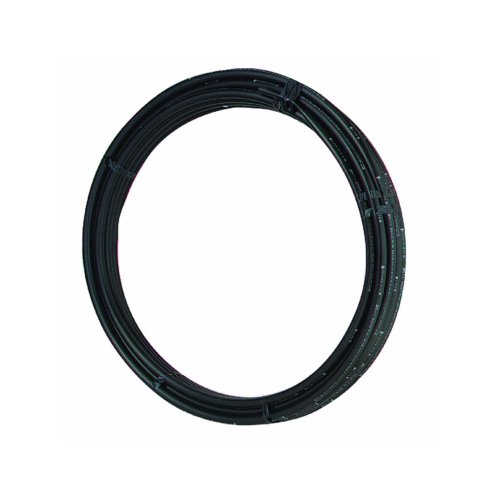
This flexible 3/4-inch Cresline pipe is designed for drinking-water use and supports 160 psi. It’s particularly well-suited for farm or ranch water systems and can also serve as conduit or protective routing for electrical or cable TV. The flexible HDPE construction reduces installation friction in uneven terrains and helps minimize pressure losses along shorter to mid-length runs.
Best for: Rural water systems and multi-purpose conduit applications where flexibility matters.
Why selected: NSF-approved drinking-water compatibility adds safety for potable water lines used in irrigation contexts. The pipe’s flexibility helps navigate around obstacles without excessive fittings.
Limitations: It’s best for shorter segments or runs with manageable curves; for long mains, a stiffer pipe may be preferred to reduce sagging risk.
Araiozora 1/4in Drip Irrigation Tubing 500ft

This 1/4-inch drip irrigation tubing is designed for indoor and outdoor watering projects including hydroponics, greenhouse misting, and low-volume distribution. It boasts UV resistance and a kink-free design, making it suitable for extended outdoor use. The tubing is cut-to-fit and easy to install, ideal for hobby gardens and compact plant setups requiring precise emitter placement.
Best for: DIY drip and hydroponic systems where precision distribution and flexibility are key.
Why selected: The UV-resistant reinforced polymer and smooth inner walls reduce clogging and improve longevity in sun-exposed gardens. The length (500 ft) supports substantial layouts with minimal restocking.
Limitations: Small diameter limits overall water flow; not intended as a main supply line for large irrigation zones.
Raindrip 052050 1/2-Inch Drip Tubing 500-Foot
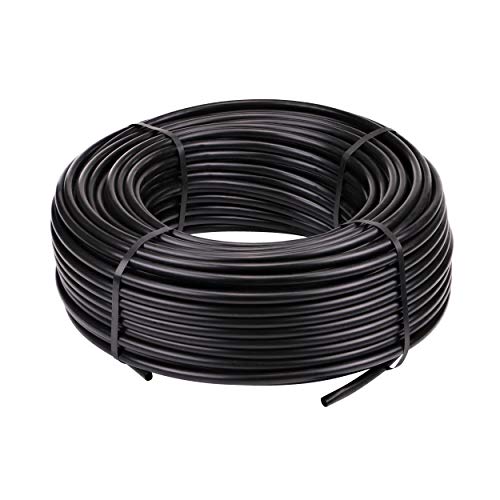
Raindrip 1/2-inch tubing is a versatile solution for drip systems, suitable as a main supply line or a feeder line that branches to emitters. It supports multiple uses across trees, shrubs, flower beds, vegetable gardens, and pots. The outer diameter is 0.62 inches and the inner diameter is 0.52 inches, influencing flow and compatibility with common drip fittings.
Best for: Flexible drip layouts with emitters and multiple distribution points.
Why selected: Its adaptability makes it a standard choice for many drip irrigation projects, including border beds and container setups.
Limitations: Ensure your fittings and emitters match the tubing size to avoid leaks or loose connections.
Joyfolk 200 ft 5/16″ Drip Tubing

This 5/16-inch tubing provides a compact option for tight spaces and curved garden beds. At 200 feet, it suits narrow borders, container groups, or small raised beds where flexibility and ease of routing matter. The tubing is designed to withstand outdoor conditions and can be used for burying or surface placement without significant wear.
Best for: Small-scale or intricate irrigation layouts with many bends.
Why selected: Its smaller diameter improves placement near plant clusters and allows efficient distribution in tight spaces.
Limitations: Not intended as a main line for high-flow zones; use as a distribution or emitter-fed segment instead.
Carpathen 50 ft 1/2″ Irrigation Tubing Mainline

Carpathen offers a 50-foot mainline tubing at 1/2 inch with a 0.5-inch ID and 0.7-inch OD. This tubing is designed for quick-connect irrigation systems and can serve as a central supply line for drip systems. It is described as easy to assemble, cut-to-length, and compatible with 1/2-inch drip fittings, supporting efficient irrigation for raised beds, rows, and borders.
Best for: DIY mainline replacement or addition in small to medium garden projects.
Why selected: The short length and straightforward assembly reduce setup time and complexity for homeowners building a home irrigation kit.
Limitations: Its 50-foot length may require more joins for large yards or expansive beds.
52 Ft 1/2” PVC Garden Irrigation Tubing

This 52-foot PVC drip tubing kit provides a compact, ready-to-use option for smaller garden projects. The package includes fittings such as switch valves, tees, elbows, and adapters, enabling a quick DIY installation for basic irrigation needs. PVC construction offers rigidity for dependable mainline runs in compact layouts.
Best for: Small patios, raised beds, or starter irrigation projects needing a simple, all-in-one kit.
Why selected: A bundled kit reduces the number of separate purchases, helping ensure compatibility of fittings and tubing in short, straightforward setups.
Limitations: The included fittings may limit expansion beyond basic configurations without additional parts.
Buying Guide
Key purchase considerations for 160 psi irrigation tubing:
- Purpose and mainline vs. drip segments: Use larger diameters for mains and smaller tubes for emitters and branches.
- Pressure rating and safety: 160 psi indicates strong performance for demanding layouts; confirm compatibility with your water source and emitters.
- Material and drinking-water suitability: NSF approval supports potable-water use; important for systems delivering water to buildings or drinking zones.
- Flexibility and length: Flexible hoses adapt to curves and obstacles; longer runs reduce joints but require proper layout planning.
- Fittings and accessories: Ensure the tubing size matches existing fittings, emitters, and connectors to avoid leaks.
- UV resistance and outdoor durability: UV-stable materials extend life in sun-exposed areas.
Frequently Asked Questions
- What is the meaning of 160 psi for irrigation tubing?
It indicates the maximum pressure the tubing is designed to withstand without leaking or bursting, suitable for higher-pressure systems. - Can 160 psi tubing be used for potable water indoors?
Yes, if NSF-approved for drinking water, it is appropriate for potable-water applications in some irrigation scenarios. - Is larger diameter always better for irrigation mains?
Not always; larger diameters reduce friction and allow higher flow, but require compatible fittings and may be unnecessary for smaller gardens. - Should I use PVC or HDPE for mainlines?
HDPE is flexible and durable for outdoor mains, while PVC can be rigid and easier to install in clean, straight runs; choose based on layout needs. - Do these tubes come with fittings?
Some kits include fittings; confirm what is included and what must be purchased separately for complete installation. - How do I determine the right tubing size for emitters?
Match the tubing ID to the emitter barb size and ensure pressure and flow requirements align with your system design.