Answering the need for a reliable, affordable, and easy-to-use two-frame honey extractor, this guide highlights five top models. These selections suit hobbyist beekeepers, small apiaries, and home enthusiasts who want to maximize honey yield while protecting comb integrity. Each product is evaluated for frame compatibility, build quality, ease of use, and practical limitations. Read on to compare features, choose the right extractor for your operation, and discover practical considerations for your apiary workflow.
Buyer’s quick-look summary table:
| Product | Frames Supported | Material | Key Benefit | Best For |
|---|---|---|---|---|
| VINGLI 2 Frames Manual | 2 frames | Stainless steel | Durable, easy to clean | Small hobbyist setups |
| VEVOR 2/4 Frame Manual | 2 or 4 frames | Stainless steel | Flexible capacity | Growing hobbyists |
| VEVOR 3 Frame Manual | 3 frames | Stainless steel | Large batch processing | Home apiaries, small farms |
| VIVO 2 Frame Rack | 2 frames | Stainless steel | Compact design | Tight spaces, beginners |
| VEVOR 2 Frame Manual / With Lid | 2 frames | Stainless steel | Clear lid for monitoring | Watchful processing |
VINGLI 2 Frames Manual Honey Extractor

The VINGLI extractor uses a food-grade stainless steel frame designed to resist rust and simplify cleaning. It serves two standard frames with an inner basket that protects combs from damage during extraction. An upgraded crank with a square screw dent aims to provide smooth torque, suitable for both hobbyists and small-scale operation. The enclosed gears help keep honey from contacting moving parts, and the height-adjustable stands accommodate different user heights and container placements.
Best for: Small beekeeping setups or first-time beekeepers who value a sturdy, rust-resistant unit that is easy to sanitize between uses. Limitations: Manual cranking requires some effort; ensure proper grip and safety when rotating.
VEVOR Honey Extractor, 2/4 Frame Manual

This VEVOR model offers adjustable frame capacity from 2 to 4 frames with a polished stainless steel build. It supports shallow, medium, and deep frames and includes a transparent lid for monitoring. The ergonomic hand crank reduces effort and is suitable for beekeepers who perform extractions by hand. The combination of rust-resistant construction and predictable dimensions makes it adaptable for kitchens, garages, or barns.
Best for: Beekeepers who want flexible capacity without buying a larger machine. Limitations: As a manual model, it still requires physical effort for each extraction session.
VEVOR 3 Frame Honey Extractor

Designed to hold up to three deep, medium, and shallow frames, this extractor suits growing hobbyists or small apiaries. It uses a stainless steel drum with standard frame sizes and an ergonomic crank designed to minimize wrist fatigue. The enclosed gears help keep honey clean and the overall construction aims for durability across seasons.
Best for: Homesteads expanding their beekeeping workflow with a medium-capacity extractor. Limitations: Slightly larger footprint than a 2-frame unit; needs adequate setup space.
VIVO Honey Extractor 2 Frame
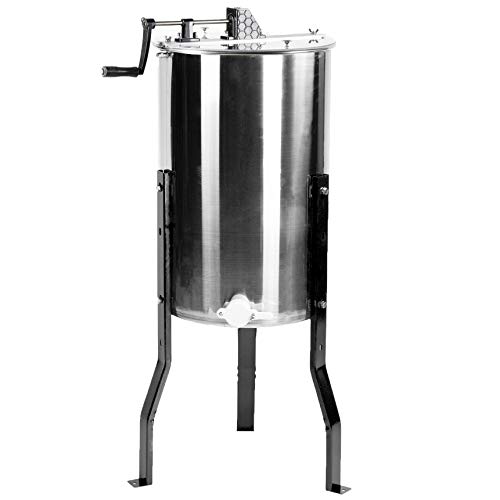
The VIVO 2 Frame Rack emphasizes a compact stainless steel drum that stands 24.7 inches tall with a 15-inch diameter, making it spacious enough for high-volume extractions yet manageable in smaller spaces. It accommodates shallow, medium, and deep frames while keeping gears enclosed to maintain cleanliness. The design elevates the honey gate above the floor, simplifying drips and cleanup.
Best for: Small workshops or home apiaries where space matters but larger batches are still desirable. Limitations: Fixed height may require careful bucket positioning for some users.
VEVOR Honey Extractor with Transparent Lid
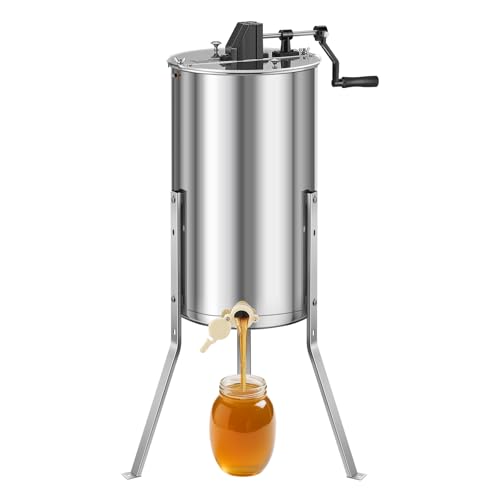
This VEVOR model provides a transparent acrylic lid to monitor the extraction process without opening the drum. It supports a 2-frame capacity with a stable, triangular three-leg stand that offers height adjustability from about 11.81 to 14.96 inches. The enclosed metal gears keep honey away from moving parts, and the design aims to minimize wobble during operation.
Best for: Beekeepers who want to observe the extraction process while maintaining a clean environment. Limitations: Slightly more complex assembly due to the adjustable stand.
BeeTech 2/4 Frames Manual Extractor Kit

The BeeTech kit bundles a manual honey extractor with frame grips, an uncapping knife, a double sieve, and a honey gate. Reinforced leg design minimizes shaking, and the height is adjustable to fit user preferences and bucket sizes. It can hold up to 4 medium frames or 2 deep frames plus 2 medium frames, enabling efficient harvests for several frames at once.
Best for: Beekeepers seeking an all-in-one starter kit that reduces additional accessory purchases. Limitations: Heavier setup due to kit components; ensure workspace supports multi-frame processing.
FOHERE 3 Frame Honey Extractor
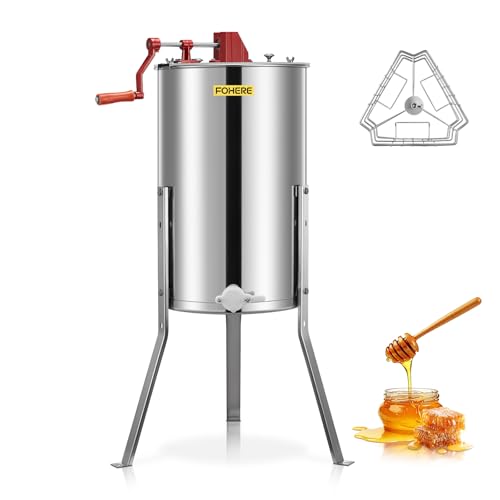
The FOHERE model handles up to three frames with a 24.7 by 15-inch stainless steel drum to process larger batches in one go. The design emphasizes ergonomic operation and long-term durability with rust-resistant steel. It supports uninterrupted honey flow while protecting combs during extraction, enabling reuse across seasons.
Best for: Hobbyists who want a high-capacity 3-frame extractor for batch processing. Limitations: Larger footprint may require more workspace and stable positioning.
Buying Guide: How to Choose a Two-Frame Honey Extractor
- Frame compatibility: Verify it supports the frame sizes you use (deep, medium, shallow). Some models are 2-frame only, while others support 3 or more with optional configurations.
- Material and build: Stainless steel offers rust resistance and easier cleaning, crucial for food-grade safety and longevity in damp apiaries.
- Manual vs. electric: Manual extractors are simple, portable, and quiet but require physical effort. Electric models save time at the expense of power requirements and potential maintenance.
- Gasket-free vs enclosed gears: Enclosed gears prevent honey buildup and simplify cleaning, while exposed mechanisms can require more meticulous maintenance.
- Height and stability: Adjustable stands improve ergonomics and reduce spills. A stable three-legged design minimizes wobble during spinning.
- Lid visibility: A transparent lid lets you monitor extraction without opening, reducing contamination risk.
- Space considerations: Larger capacities require more workspace. Measure your area to ensure compatibility with doorways and tables.
- Upgrades and kits: Some models come as kits with frames, uncapping tools, and sieves. If you’re starting out, a kit can save incremental purchases.
FAQ
Do two-frame extractors work for large harvests?
Yes, 2-frame extractors are suitable for small apiaries or home setups, especially when paired with additional drying and storage solutions. For busier operations, consider a 3-frame or 4-frame model.
Is a transparent lid necessary?
Not strictly necessary, but a transparent lid helps monitor extraction progress and reduces the chance of contamination by allowing observation without opening the drum.
Are manual extractors harder to use than electric ones?
Manual extractors require physical effort, which can be tiring during long sessions. Electric models automate rotation but require power access and may be heavier.
What maintenance is needed after harvest?
Rinse with warm, soapy water and dry thoroughly. Remove honey residue from gears and seals, and store in a dry area to prevent corrosion.
Can I reuse frames after extraction?
Yes. One of the advantages of proper centrifugal extraction is preserving combs so they can be reused in the next honey season.
Which extractor is best for beginners?
Generally, a 2-frame extractor with rust-resistant stainless steel and an ergonomic crank offers a balance of price, usability, and durability for newcomers.