Answering the most common buyer question: which foam edge forms deliver reliable edges, easy handling, and long-term reuse for concrete countertops? This guide highlights five top options for American DIYers, contractors, and interior designers. Each pick suits different project sizes, edge styles, and budget considerations. Use the quick-buy table to compare core specs at a glance, then dive into details to find the best match for your project needs.
| Product | Length / Size | ||
|---|---|---|---|
| Concrete Countertop Edge Form – Standard Split Stone (Walttools) | Split stone edge | Standard profile; up to 1/2″ relief | Smaller runs, tight radii, budget-conscious projects |
| CE Form Liner (RimCereal) Stone Rock Edge | 2.17″ W x 89.37″ L x 0.98″ T | Long, continuous runs; varied surface texture | |
| Concrete Countertop Edge Form – CEF 7010 (GlobMarble) | 96″ x 2″ | Ultra-flexible, complex edges; easy DIY use | |
| Stone Master Molds Chiseled Edge (120″) | 120″ L x 4″ W x 1.75″ D | Long, seamless runs; high durability | |
| SDIWJWISD Concrete Edge Mold | 2.36″ W x 91″ L x 0.98″ T | Versatile, durable, easy to reuse |
Concrete Countertop Edge Form – Standard Split Stone
The Walttools Standard Split Stone edge form provides a standard stone-like profile with up to a 1/2″ src=”https://m.media-amazon.com/images/I/21OPu7YCxoL._SL500_.jpg”>
Who it’s best for: DIYers or small workshops seeking a dependable, reusable edge form without complex setup. Why selected: its combination of flexibility, ease of use, and compatibility with continuous runs makes it a reliable baseline option. Caution: the relief is limited to about 1/2″, which may not suit every decorative edge requirement.
RimCereal Concrete Stone Rock Edge Form Liner

This RimCereal edge liner uses a PU-based material to deliver a long-lasting, reusable solution. Its 2.17″ width and 89.37″ length provide ample coverage for longer projects, and the liner design supports repeated use without wearing down quickly. This option is well-suited for projects that demand a textured, stone-like edge without committing to a thicker mold system. Best for: longer, continuous runs with a textured finish. Caution: limited width may not suit very narrow edge profiles.
Concrete Countertop Forms – CEF 7010 (GlobMarble)
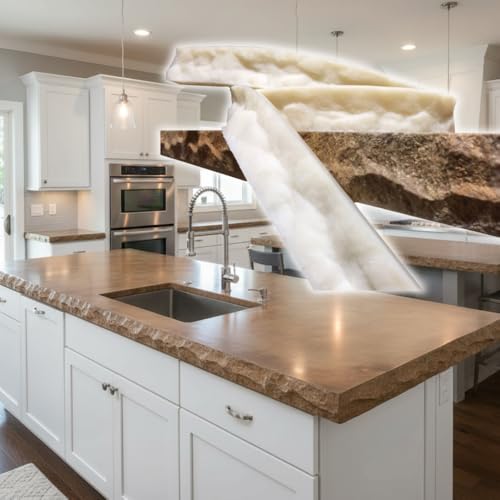
GlobMarble’s CEF 7010 series offers an ultra-flexible urethane rubber edge form using a 96″ x 2″ footprint, designed to wrap around inside and outside corners without mitering. It’s ideal for custom shapes and curves and can be trimmed to fit a standard substrate. This makes it a strong pick for kitchens with unique edge configurations or freeform countertop projects. Best for: complex shapes and DIY enthusiasts who want easy trimming and precise curves. Caution: urethane rubber requires proper care to maximize life and release performance.
Stone Master Molds Chiseled Edge (120″)

The Stone Master Molds edge form liner delivers a true chiseled edge across a 120″ length by 4″ width and 1.75″ thickness. It’s designed to be fastened directly to the substrate with no silicone required, and it eliminates the need for release agents, saving time and cleanup. Production-quality molds can be reused hundreds of times, making this option appealing for projects requiring long, continuous edges. Best for: large-format projects with a chiseled look and high reuse potential. Caution: longer lengths may require more careful handling during installation.
2 x 94 Inch Concrete Form Edge Molding (Ropoana)

Ropoana’s 2 x 94 inch edge molding provides a robust option built from high-class PU for durability and longevity. It emphasizes a three-dimensional, well-defined edge that mimics traditional rock patterns, delivering a realistic surface for countertops, steps, or benches. It’s cost-effective because the material supports many reuse cycles at 20 mm thickness, reducing waste over time. Best for: budget-conscious teams needing repetitive, durable edges. Caution: identical lengths may require careful seam management for seamless looks.
Concrete Edge Mold – CEF 7017 (GlobMarble)

GlobMarble’s CEF 7017 is designed for commercial, industrial, and residential use across a variety of custom edge designs. Made from high-strength 40 Durometer urethane rubber, these edge forms wrap around corners without mitering and trim easily with a razor knife. With a focus on long life and versatility, it supports both pre-cast and cast-in-place applications. Best for: professionals seeking durable, long-lasting edge forms for repeated use. Caution: urethane care is required to maintain release and shape integrity over time.
Buying Guide: Key Considerations For Edge Form Selection
What edge profile best fits your project?
Edge profiles range from simple split stone to detailed chiseled or rope patterns. Choose based on the countertop style you want and how closely it needs to match surrounding surfaces. For tight radii and smaller runs, a flexible form like the Standard Split Stone often works best. For larger, continuous runs, heavier-duty liners or rigid edge forms can deliver cleaner seams.
Material durability and reuse life
Materials include flexible polyurethane, PU liners, and urethane rubber. Flexible forms excel in complex curves, while high-durability forms wear better under repeated use. If you plan multiple projects or long-term workshop use, favor forms designed for hundreds of reuse cycles with minimal tear.
Ease of use and installation
Look for forms that trim to fit, wrap around corners without mitering, and require minimal release agents. Quick-release features and straightforward attachment to substrates save time and reduce mess during release and cleanup.
Project scale and length
Long, continuous runs benefit from extended lengths like 89″ to 120″ forms. For shorter projects or tight interiors, compact, flexible options provide more control and less waste. Consider whether you’ll need to join multiple segments for one continuous edge.
Cost vs. value
Durable, reusable forms deliver better long-term value for frequent projects. For one-off or small-scale jobs, budget-friendly options may suffice. Factor in release ease, cleanup time, and the potential for reuse when evaluating cost.
Care and maintenance
Most edge forms require relatively simple care: clean after use, avoid sharp impacts, and store flat or properly rolled. Some high-durability forms retain release properties longer and reduce maintenance needs over time.
FAQ
- What is the best edge form for a simple, classic countertop edge? A standard split stone edge form offers a reliable, classic look with straightforward installation and good reuse potential.
- Which edge form is best for long, continuous runs? Longer liners or urethane edge forms designed for seamless, continuous edges are ideal for long countertops or feature walls.
- Can I use these edge forms for outdoors or wet environments? Most PU and urethane edge forms perform well outdoors if kept dry and properly maintained; verify the product’s outdoor suitability with the seller when in doubt.
- Are release agents necessary with these forms? Many advanced liners and high-quality molds claim no silicone release needed, which saves time. However, follow the manufacturer’s recommendations for best results.
- How many times can I reuse a concrete edge form? It varies by material and usage, but premium molds are designed for hundreds of uses with proper care.
- Should I choose a textured edge or a smooth edge? Choose textured edges (rock, rope, chiseled) for more character; smooth edges are easier to clean and pair with minimalist designs.