Startup gardeners and hobby growers can quickly improve germination and reduce transplant shock with peat-based seed starter strips and pots. This guide highlights five practical options built around peat strips and biodegradable starter pots. Each product targets different needs—bulk quantity, ease of use, or stronger root protection—so you can choose what fits your project. The top picks cover large kits for beginners, compact setups for balcony gardening, and durable trays for greenhouse use. Use this guide to compare packaging, cell counts, and suitability for indoor or outdoor starts.
Buyer notes: the products listed here are designed to simplify seed starting, minimize root disturbance, and promote healthy transplanting. Best for new gardeners who want ready-to-use containers, and for experienced growers who need scalable kits for multiple species. The following table provides a quick snapshot of the featured items and their key strengths.
| Product | ||
|---|---|---|
| Jiffy Seed Starting Strips – 50 Strips | Peat strips with ten pots each | Bulk starts, diverse seeds, indoor sowing |
| Ferry Morse Jiffy Seed Starting Strips – 100 Strips | Ten pots per strip, 100 strips | Large tray setups, greenhouse starter projects |
| Jiffy Seed Starting Tray – 20 Strips | 20 peat strips, 200 cells total | Compact indoor germination, small home setups |
| Jiffy-Strips Peat Plant Pots | Peat strips and plant pots | All-in-one strip-based planting |
| Jiffy Strip 8 Cells Starter Pots | 8-cell strip pots, 2.5″ x 3.0″ | Small to medium seed batches, easy transplant |
Jiffy Seed Starting Strips – Biodegradable, 50 Strips

The Jiffy Seed Starting Strips kit offers 50 peat strips, with ten seedling starter pots per strip, totaling 500 biodegradable pots. This high-volume option is ideal for gardeners starting a wide range of seeds or running multiple trays at once. The peat cells naturally integrate with the root ball, promoting aeration and easier transplanting without disturbing roots. It is best for indoor seed starting and for gardeners who want to minimize root disturbance during transplant. Note that the kit requires a base tray to manage water and soil spillage for a clean workspace.
Who it’s best for: beginners and hobbyists who plant many varieties or run small seed trials. It’s also suitable for classrooms or community gardens where multiple starter setups are needed.
Why selected: high quantity, straightforward setup, and consistent cell structure for reliable germination. The integrated root-friendly peat aids healthy establishment after transplant.
Caution/limitation: Larger quantities mean more storage space and more cleanup time. Consider a base tray to manage spills and to keep work areas tidy.
Jiffy Seed Starting Tray – 200 Cells
This kit includes 20 peat strips, with ten biodegradable plant starter pots per strip, totaling 200 cells. The tray design makes indoor seed starting clean and manageable, as it helps contain soil and moisture while you nurture seedlings. It’s a practical choice for small spaces or first-time seed starters who want an organized system without a lot of extra materials.
Who it’s best for: urban gardeners and small-space growers who want a compact, tidy seed-starting solution.
Why selected: balanced cell count for moderate seed runs, with easy setup and compatible with indoor staging.
Caution/limitation: Smaller runs may require more frequent replenishment if you’re starting many plant varieties.
GCVOPTON 10 Pack Peat Pots With 120 Cells
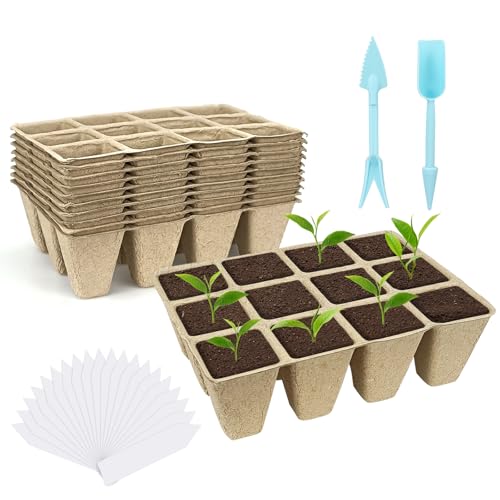
The GCVOPTON kit provides a 120-cell biodegradable seedling starter tray, using peat pots designed for indoor and outdoor use. The tray and pots are made from corrugated pulp, which is environmentally friendly and fully recyclable. The pots are compact (pot size around 1.6 inches square) and suitable for a variety of seedlings, including flowers and vegetables. This kit can be a solid choice for growers who want a fuller tray with a durable build that remains stable during early growth.
Who it’s best for: gardeners seeking a compact, all-in-one tray with a larger cell count for bigger starter batches.
Why selected: strong, durable structure in a biodegradable format, with easy recycling options after transplanting.
Caution/limitation: Some users may prefer pre-formed individual pots rather than strips, depending on transplant technique preferences.
Biodegradable Peat Pots Set (10-Piece)

The 10-piece Biodegradable Peat Pots Set from Garden Depot emphasizes 100% biodegradable pulp material, ideal for seed starting and transplanting. The pots can be planted directly into soil without disturbing roots, thanks to the natural degradation of the material. This option is best for gardeners who prefer simple, minimal handling during transplant and want to avoid plastic containers altogether.
Who it’s best for: gardeners who value fully biodegradable options and straightforward transplanting.
Why selected: simplicity and environmental friendliness. The compact set is easy to store and use for small projects.
Buying Guide: How to Choose The Right Peat Strips And Seed Starter Pots
What should you look for when selecting peat strips or seed starter pots? Consider these pragmatic factors to ensure you pick a setup that matches your growing space and seed goals.
- Cell count and strip format: Larger kits save time when starting many varieties; smaller trays are great for space-constrained areas.
- Material and biodegradability: Peat-based pots break down over time; some kits use corrugated pulp. Choose based on transplanting preferences and environmental considerations.
- Root protection: Look for pots designed to minimize root disturbance during transplant. This is especially important if you’re moving seedlings to outdoor gardens or larger pots.
- Indoor vs. outdoor use: Indoor setups require tray basins to manage water and soil spillage. Outdoor kits should be sturdy enough to withstand weather changes.
- Durability and structure: Some trays are more rigid; others rely on the peat potency for stability. Consider how you’ll handle and transport seedlings.
- Compatibility with potting mix: Ensure the strips or pots fit the containers you plan to use and work well with your preferred seed-starting soil.
Practical Tips For Using Peat Strips And Seed Starter Pots
- Plan spacing: Label trays clearly to avoid mixing up fast-m growers and slow-growers.
- Water management: Use a base tray to catch runoff and prevent soil spills on surfaces.
- Transplant strategy: For biodegradable pots, transplant by retaining the peat structure around the root ball to minimize root disturbance.
- Storage: Keep unused strips and pots in a dry, cool place to prevent mold and premature degradation.
FAQ
- Are peat strips actually biodegradable? Yes, most peat strips are designed to break down in soil, aiding root growth and reducing transplant shock.
- Can I reuse seed starter trays? Some trays with peat materials are not intended for reuse; check product guidance for each kit to avoid mold or instability.
- Do peat pots require a separate tray? Indoor use typically requires a base tray to manage moisture and soil, while outdoor starts can use perforated or raised trays depending on setup.
- Which kit is best for beginners? Starter strips in larger bundles, such as the 50-strip option, provide a simple, low-maintenance path for first-time seed starters.
- What plants work well with peat pots? Most common vegetables, herbs, and flowers work well; moisture management and soil type will influence outcomes.
- Is a larger strip count always better? Not always; choose a size that matches your seed variety range and available growing space.