Answering the question “which algae treatment for lakes works best?” this guide highlights five proven products designed for large water bodies like lakes and ponds. Each option targets common algae types (planktonic, filamentous, chara) and offers clear usage guidance for different water conditions. This helps lake managers, HOA maintenance teams, and property owners choose the right product based on algae type, water body size, and safety considerations for wildlife and irrigation. The selected products emphasize fast action, broad-spectrum control, and practical application in real-world lake environments.
Below is a quick buying snapshot to help compare key points. The table lists product name, main use case, and a primary benefit.
| Product | Best For | Key Benefit |
|---|---|---|
| Airmax Algae Defense | Floating algae & chara in lakes | Fast-acting broad-spectrum algaecide |
| Crystal Plex | Planktonic, filamentous algae | Copper-based, broad-spectrum control |
| Cutrine-Plus | Chara and deep-water algae | Fast-acting, EPA-approved copper formula |
| Captain Liquid Copper | Algae across lake systems | EPA-approved, fast-acting with broad reach |
| Airmax EasyKlear | Bottom-growing algae & submerged weeds | Granular, easy application |
Airmax Algae Defense for Lakes
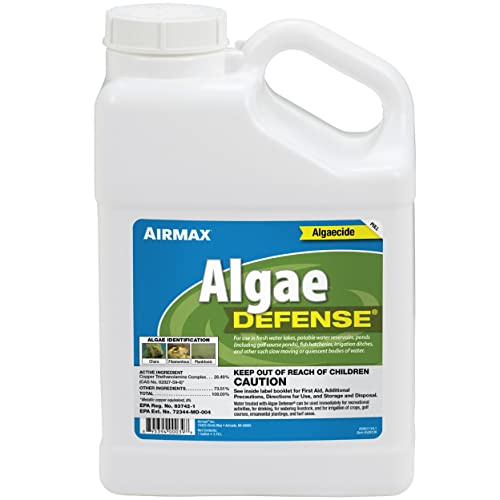
Airmax Algae Defense is a liquid algaecide designed to kill a broad spectrum of algae, including floating mats and bottom-growing chara. It is intended for use in fresh water lakes, large ponds, and similar slow-moving water bodies. The product is applied directly to visible algae blooms via a pressurized sprayer, making targeted treatment efficient for shorelines and problem zones. This option is best for lake managers seeking rapid control of surface algae and green water. A potential limitation is the need for direct spraying to affected areas and subsequent removal of dead organic matter after treatment.
Best for: Lakes and large ponds with visible floating algae and chara zones. Choose this if you want fast, spray-onto-algae action without extensive mechanical removal right away.
Considerations: Direct application is required; plan shoreline cleanup after treatment to prevent decaying matter from impacting water quality.
Crystal Plex Lake & Pond Algaecide

Crystal Plex provides a liquid copper algaecide aimed at multiple algae types, including planktonic, filamentous, chara, and swimmers itch. It is designed for treating up to a wide area and is positioned as safe for humans, fish, livestock, and irrigation when used as directed. It carries a caution: not suitable for koi, goldfish, or trout ponds. This option is best for lake managers seeking broad-spectrum control with a treatment that remains manageable in residential or agricultural water uses.
Best for: Lakes needing broad-spectrum copper-based control with a caution about sensitive fish species; suitable where irrigation and irrigation-water reuse are considerations.
Limitations: Not suitable for certain sensitive fish species (e.g., koi, goldfish, trout) as noted in the product guidance.
Cutrine-Plus Liquid Algaecide
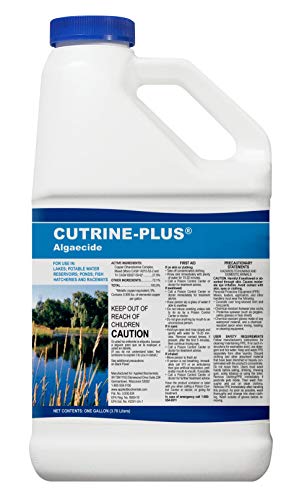
Cutrine-Plus is an EPA-approved copper-based algaecide designed to target planktonic, filamentous, and chara algae. It is marketed for fast results in ponds, lakes, hatcheries, and irrigation systems. The product claims that reductions in algae growth can be observed within 1-2 days. It emphasizes safety for wildlife and livestock when used as directed. A notable caution is to avoid use in waterbodies with copper-sensitive fish such as koi or trout. This option is best for managers who want a proven copper-based solution with quick turnaround.
Best for: Quick reduction of diverse algae types in lakes and ponds with minimal downtime for wildlife and livestock. Choose this if you need rapid action and are mindful of copper-sensitivity in fish.
Considerations: Avoid use in copper-sensitive species; follow label directions to minimize impacts on non-target organisms.
Captain Liquid Copper Algaecide
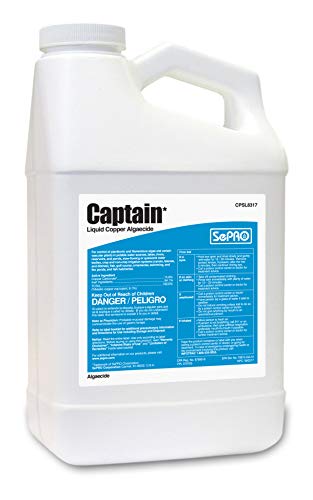
Captain Liquid Copper is an EPA-approved copper algaecide formulated for fast algae control in lakes, ponds, and reservoirs. It targets major algae types—planktonic, filamentous, and chara—providing rapid results and broad coverage. Like other copper-based products, it is suitable for use around livestock, wildlife, and irrigation when applied according to label directions. A common limitation is potential sensitivity in copper-averse fish species, so avoid use in waters with koi or trout if applicable. This option is well-suited for large-scale lake operations needing dependable copper-based algaecide performance.
Best for: Lakes requiring broad-spectrum, fast-acting algaecide with proven copper chemistry. Choose this if you manage large water bodies and need reliable results across algae types.
Airmax EasyKlear Pond & Lake Algae & Weed Control

EasyKlear Defense combines a broad-spectrum algaecide with an aquatic herbicide in a granular formulation. It is designed to eliminate both algae and submerged weeds, including bottom-growing chara, with a simple application that sinks to target zones. The product is noted for long-lasting results and ease of use, minimizing mixing requirements. A practical caveat is the need to apply with a spreader and monitor the release of treated material as it settles. This option is best when you want a single product addressing both algae and submerged weeds with straightforward application.
Best for: Lakes needing an all-in-one granular solution for both algae and submerged weeds. Choose this if you prefer a simple spread-and-tinish approach without complex mixing steps.
Buying Guide: Key Considerations For Algae Treatments In Lakes
- Algae type and target — Identify whether the problem is primarily floating algae, filamentous forms, or bottom-growing chara to match the product’s spectrum.
- Water body size — Choose products that specify coverage or treat up to a certain acreage, ensuring enough volume for your lake or pond.
- Safety and use around wildlife — Review label directions for safe use near fish, livestock, birds, and irrigation water. Copper-based products require extra caution with copper-sensitive species.
- Application method — Determine whether you need a direct spray (Airmax Algae Defense), granular spread (EasyKlear), or a mixed formulation for weeds and algae (EasyKlear or similar).
- Environmental impact — Consider the potential effects on beneficial bacteria, clarifiers, and natural microbial communities in the lake ecosystem.
- Post-treatment cleanup — Plan for removing dead algae and organics after treatment to prevent muck buildup and secondary nutrient release.
- Combination strategies — For persistent problems, pairing algaecides with clarifiers or dye-based shade strategies can improve water clarity and inhibit regrowth.
Frequently Asked Questions
- Which algaecide works fastest for lake algae? Several products report rapid action within 1-2 days, particularly copper-based solutions like Cutrine-Plus and Captain Liquid Copper.
- Is it safe to use algaecides near fish and wildlife? Yes, when applied as directed on the label. Some products have restrictions for copper-sensitive fish; avoid those ponds if species such as koi or trout are present.
- Can algaecides be used in irrigation water? Some formulations are labeled for irrigation use if specified. Always follow labeling and check local regulations before applying near water intakes or irrigation systems.
- Should I combine algaecide with other lake treatments? It can be effective to pair an algaecide with clarifiers or shade-inducing dyes, but ensure compatibility and avoid over-application that could disrupt the ecosystem.
- How should I handle dead algae after treatment? Remove dead organic matter promptly from shorelines to reduce nutrient release and prevent new algae blooms.
- What should I consider when choosing a product? Consider algae type, water body size, safety for local species, application method, and whether you need a single-product solution or a targeted approach.