Whether you are a professional agronomist, a serious gardener, or a farm owner, the right soil sampling tool helps you collect consistent, representative samples for precise analysis. This guide highlights five reliable options that balance durability, ease of use, and sampling depth. Each product is suitable for different soil conditions and project scopes, so you can pick what fits your needs best.
Summary Table
| Product | Best For | Key Benefit | Limitations |
|---|---|---|---|
| Collect-N-Go Soil Sample Kit (CNG-1) | Home gardeners and small lots | Simple, ready-to-use kit for basic sampling | Limited depth guidance |
| 36 Inch Soil Sampler Probe (AUZEKER) | Longer-depth sampling for lawns and farms | Heavy-duty stainless steel with easy removal | Basic ejector mechanism may require manual assistance |
| 40 Inches Professional Stainless Steel Soil Sampler (HiHydro) | Professional-grade field work | Extended sampling depth and sturdy build | Higher price point |
| MySoil Soil Test Kit | Comprehensive lab-based nutrient analysis | 13 plant-available nutrients with tailored recommendations | Turnaround time and mail-in process involved |
| Soil Sampler Stainless Steel T Handle (Segrehy) | Durable, reusable sampling with bags | Includes reusable bags and ergonomic design | Basic specs; depth guidance may vary by use |
Collect-N-Go Soil Sample Kit (CNG-1)

The Collect-N-Go CNG-1 is a compact kit designed for straightforward soil sampling. This option is best for hobbyists, home gardeners, or small plots that require quick, repeatable sampling without high upfront costs. The kit emphasizes ease of use and portability, helping you collect representative samples for routine soil testing.
Who it’s best for: gardeners and smallholders who want a simple, all-in-one sampling solution without extra equipment. Why chosen: its compact design and accessibility make it a reliable starter kit for basic soil analysis. Caution: its depth guidance may be less extensive than longer probes.
36 Inch Soil Sampler Probe (AUZEKER)
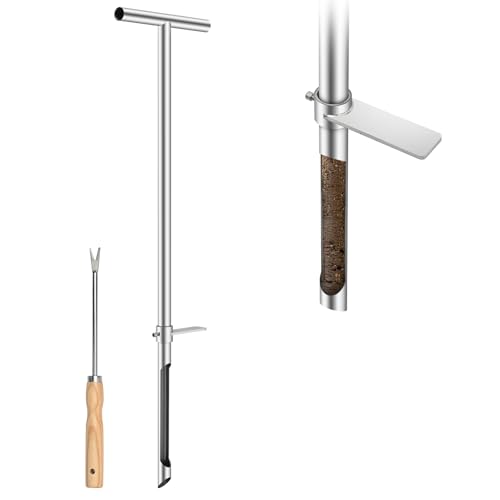
The AUZEKER 36 Inch Soil Sampler offers deeper sampling with a heavy-duty stainless steel build. It is well-suited for larger lawns, gardens, and farm plots where deeper soil profiles matter for testing and monitoring. Its rugged construction supports repeated use in varied soil conditions.
Best for: larger areas and deeper soil profiles. Why chosen: long, robust design facilitates deeper core samples. Caution: the ejector mechanism may require manual assistance for removing thick cores in tough soils.
40 Inches Professional Stainless Steel Soil Sampler (HiHydro)

The HiHydro 40 Inch model is designed for professional field work. Its stainless steel construction and long sampling depth enable precise texture and nutrient assessments across larger properties. The included foot pedal and easy operation support efficient sampling in tough soils.
Best for: professional agronomy or large-scale soil surveys. Why chosen: extended depth and durable stainless steel construction suit demanding environments. Caution: premium build may come with a higher price point; ensure you need deeper cores before buying.
MySoil Soil Test Kit
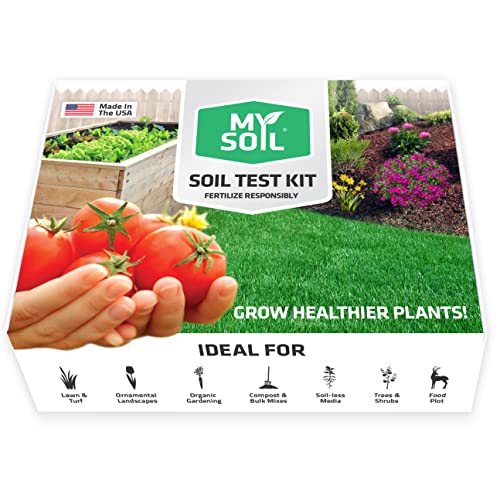
The MySoil test kit emphasizes laboratory-based accuracy with a mail-in analysis that reports 13 plant-available nutrients plus pH. This kit is best for growers who want actionable recommendations based on a professional lab analysis rather than home-test strips. Turnaround is typically 6–8 days after submission.
Best for: growers seeking comprehensive, lab-based nutrient data. Why chosen: the kit pairs soil testing with tailored recommendations. Caution: it requires mailing samples and waiting for lab results, not instant feedback.
Soil Sampler Stainless Steel T Handle (Segrehy)

The Segrehy stainless steel T-handle sampler focuses on durability and ease of use. It includes two reusable sampling bags for neat collection and cleaning, making it well-suited for gardeners and small-scale farmers who value reusable components and tidy sample handling.
Best for: repeat sampling with easy storage. Why chosen: the included reusable bags help streamline sampling and cleanup. Caution: deeper soil exploration may require longer handles or additional accessories in some soils.
Buying Guide: Practical Considerations for GPS Soil Sampling Equipment
- Depth requirements: If you need deep cores to assess subsoil conditions, choose products with longer shafts (e.g., 36–40 inches) or modular extensions.
- Material and durability: Stainless steel probes resist corrosion and heavy use. For frequent fieldwork, durability reduces replacement costs over time.
- Ease of sample removal: Ejector mechanisms and foot pedals can speed up sampling, but some models rely on manual extraction. Consider how much effort you’re willing to expend.
- Sample handling: Reusable sampling bags and cleanable components help maintain sample integrity and reduce waste. Look for kits that include bag options if you plan multiple samples.
- Lab vs. field results: If you need rapid feedback, field kits with quick testing are useful. For precise nutrient analysis, lab-based kits (mail-in) offer detailed results and recommendations.
- Soil type compatibility: Some probes perform better in compacted or organic-rich soils. Check the build and diameter that matches your typical soil texture.
- Support and accessories: A kit with extra bags, cleaning tools, or depth markers can save time and improve consistency across samples.
Frequently Asked Questions
- What is the main purpose of a soil sampling kit?
To collect representative soil cores for testing and analysis, ensuring more accurate nutrient and pH assessments. - Should I choose a longer probe for my lawn?
Yes, a longer probe allows deeper sampling of root zones and subsoil, which can be important for lawn health and fertilizer decisions. - Are lab-based soil tests worth it?
For detailed nutrient data and tailored recommendations, lab-based tests offer more accuracy than basic home kits. - What is the advantage of a stainless steel sampler?
Durability, rust resistance, and longevity in varied soil conditions, especially for repeated field use. - Can I reuse sample bags, and how should I clean them?
Some kits include reusable bags. Rinse and dry them between samples to avoid cross-contamination. - How do I choose between field testing and lab testing?
If you need quick answers for ongoing field work, field tests help. If you require precise nutrient breakdowns and guidance, lab testing is preferred.