Looking for plastic bee hive components from reliable suppliers? This guide highlights five solid options that balance durability, bee-friendliness, and ease of use. It’s tailored for backyard beekeepers, small commercial operations, and hobbyists who want quick, low-maintenance hive parts. Each product is selected for clear benefits in framing, feeding, or hive management. The quick facts table below helps compare core details at a glance.
Quick comparison table
| Product | Best For | Key Benefit | Notable Limitation |
|---|---|---|---|
| Mann Lake Waxed Plastic Frames | Frames and direct usability | All-in-one design, no assembly | Waxed, could be harder to adapt to unwaxed needs |
| DoubleFill Plastic Frames with Beeswax Foundations | Deep brood hives | Beeswax coated foundation for natural comb-building | Color variation may affect visibility in some hives |
| Foxhound Front Entrance Feeder (4 Pack) | Feeding bees from the front | Versatile front-entry design, fits many hives | Plastic components may wear with heavy use |
| AukBeeFun Mason Jar Lid Feeders (4 Pack) | No-disturbance feeding | Vacuum-sealed, drip-free feeding with mason jars | Requires standard jar compatibility |
| Aukbeefun Upgraded 4 Pack Feeders | Easy external feeding | Vacuum-driven drip control, simple installation | Plastic base, may require periodic inspection |
Mann Lake Waxed Plastic Frames For Beehives

Product summary: Waxed Plastic Frames for Beehives in a standard 9 1/8″ size come as a complete, ready-to-use package. The all-in-one design includes the frame and foundation with no assembly required. The waxed finish is designed to support the natural honeycomb process while offering sturdy structure. This makes the frames well suited for beekeepers who prioritize quick setup and reduced handling steps. The option to order unwaxed provides a path to custom finishing or specific management needs.
Who this is best for: New hobbyists who want a straightforward setup and seasoned keepers who value time-saving components. Best for operations where quick hive installation matters and where standard deep brood frames are the norm. The no-assembly feature helps reduce pre-season setup time and potential misalignment during installation.
Why selected: This product is purpose-built for immediate use in Langstroth hives with standard 9 1/8″ frames. The integrated design minimizes material handling and mitigates damage risk during extraction thanks to a robust, single-piece concept. The waxed surface supports natural comb drawing and helps align with common beekeeping practices.
Caution or limitation: Some users may prefer unwaxed frames for certain management strategies or cosmetic reasons. The waxed finish can impact foundation substitution if you plan to switch to a different foundation type mid-season.
DoubleFill 10 Pack Plastic Frames With Bee Foundations

Product summary: This 10-pack features plastic frames with beeswax coated foundations designed for deep brood frames. The beeswax coating provides a natural base for honeycomb, facilitating smooth honey production and improving acceptance by bees. The frames are described as durable and less prone to deformation, which supports longer service life in busy hives. The product is sized at 9 1/8 inches to fit standard deep brood hives, helping ensure compatibility with common deep hive configurations.
Who this is best for: Beekeepers who want to encourage natural comb-building while maintaining a strong, durable frame system. It’s ideal for operations that manage deep brood hives and aim to optimize honey production without frequent frame replacements.
Why selected: The combination of plastic durability with a beeswax foundation blends ease of use with a bee-friendly foundation, helping bees accept the foundation quickly. The size fits standard deep brood equipment, reducing compatibility concerns during hive expansion or requeening.
Caution or limitation: Beeswax coatings can be sensitive to temperature fluctuations and handling; some users may prefer unwaxed frames in cooler climates or for long-term storage.
Foxhound Bee Company Front Entrance Feeder And Lid (4 Pack)

Product summary: This 4-pack offers a popular front entrance feeder design that fits most Langstroth bottom boards and several hive brands. The feeders are intended to simplify feeding with water or sugar syrup by placing two entrance feeders in the hive entrance. The design emphasizes time savings and cost efficiency by using your own jars paired with lids that are included in the kit. The dimensions of the feeder bases and lids are clearly specified to help you verify compatibility with existing equipment.
Who this is best for: Beekeepers who require flexible feeding options at the hive entrance and want to minimize disruption during feeding. It’s suitable for both hobbyists and small-scale commercial operations that manage multiple hives and need to streamline feeding tasks.
Why selected: The versatile entrance-feeder concept supports different hive brands and configurations, enabling a practical feeding strategy without needing to open the hive. The ability to use common jars with included lids adds to the adaptability and cost savings.
Caution or limitation: Plastic components may wear over time with frequent use or harsh weather. Regular inspection is recommended to prevent cracking or leakage that could disturb feeding reliability.
AukBeeFun Mason Jar Lid Feeders For Beehives

Product summary: This 4-pack of mason jar lid feeders emphasizes zero-disturbance feeding. The design allows you to feed bees without opening the hive, making it suitable for nervous beginners and busy commercial beekeepers. The feeders utilize a smart vacuum approach with a premium aluminum cap and built-in vacuum seal to minimize drips. They are designed for easy setup with standard mason jars, enabling quick filling and installation.
Who this is best for: Beekeepers seeking a low-disruption feeding option that reduces hive disturbance, particularly in beginner settings, cold seasons, or busy operations where minimizing hive openings is advantageous.
Why selected: The zero-disturbance concept addresses common beekeeper pain points by keeping bees calm while providing reliable feeding. The vacuum seal helps prevent messy spills, which can reduce floor cleanup and maintain hive hygiene.
Caution or limitation: Compatibility depends on using standard mason jars. If you use non-standard containers, performance may vary, and the vacuum seal may be less effective.
Aukbeefun Upgraded 4 Pack Bee Feeders
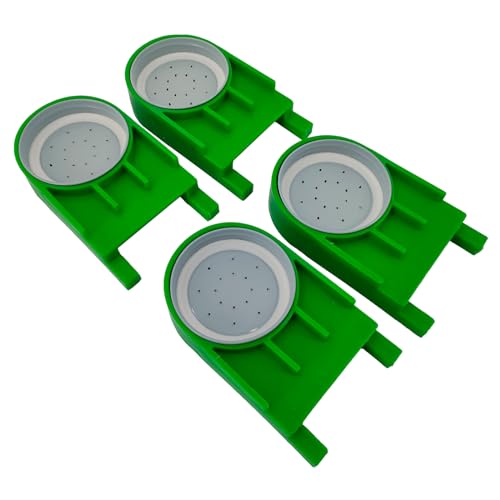
Product summary: This upgraded 4-pack centers on an easy, exterior feeder system that works with mason jars or similar containers. The design uses a vacuum-driven mechanism to control dripping, ensuring a steady supply of water or sugar syrup to bees without overheating or wetting the hive interior. The plastic base provides lightweight durability, while an aluminum cover adds long-term usability.
Who this is best for: Beekeepers who want a straightforward, spill-resistant feeding solution that minimizes hive disturbance and allows quick replenishment in the field. It is also suitable for beginners looking for a simple installation process.
Why selected: The combination of a user-friendly setup with effective drip control makes it a practical option for maintaining steady nutrition during nectar stress. The kit’s lightweight materials help manage transports and seasonal hive moves.
Caution or limitation: As with many external feeders, periodic checks for seal integrity and fit with your jar size are advised to maintain optimal performance.
Buying Guide: Key Considerations For Plastic Hive Components
What should I consider when choosing plastic frames?
Look for a complete frame and foundation package that matches your hive size (9 1/8″ depth is common for standard deep brood). Consider whether you prefer waxed versus unwaxed surfaces, and note that waxed frames can aid natural comb development but may limit later foundation changes. Durability and ease of cleaning are important for long-term use in busy apiaries.
Are bees receptive to plastics?
Many beekeepers report good acceptance of plastic frames and foundations when properly sized and correctly installed. Bees may adapt more quickly to beeswax-coated foundations, while unwaxed plastic frames can be easier to inspect and re-purpose. Consider your local climate and storage conditions, which can influence frame longevity and wax stability.
What feeding options work best for different hives?
Front entrance feeders and mason jar lid feeders provide different feeding experiences. Front-entry feeders are versatile and compatible with many hive brands but may require regular monitoring for clogs. Mason jar lid feeders minimize hive disturbance but rely on jar compatibility and a good seal to prevent leaks. Drip-free designs help keep the hive neat and reduce floor cleanup.
How to evaluate durability and maintenance needs?
Plastic components should be inspected for deformation, cracks, or warping, especially in extreme temperatures. Look for features like reinforced bases, sturdy lids, and secure seals to minimize drip and seepage. Consider whether the product offers easy replacement parts or compatibility with your existing equipment.
What about compatibility with your hive configuration?
Standard Langstroth frames and bottom boards are common, but always verify dimensions and interlock mechanisms. Some feeders and frames are designed to fit multiple brands, while others work best with specific systems. Confirm the package includes everything you need for immediate installation, such as lids or brackets where applicable.
Safety and regulatory notes
Choose products made from BPA/BPS-free plastics and food-grade materials where possible. Ensure that any coatings, such as beeswax finishes, are food-safe and suitable for contact with bees. Regular cleaning and proper storage help prevent contamination and microbial growth inside the hive.
Maintenance routines for plastic hive parts
Develop a simple maintenance schedule: inspect frames and foundations for cracks after transport or hive inspections, clean feeders to prevent mold, and replace worn components promptly. Having spare frames and lids on hand can reduce downtime between hive checks and seasonal changes.
FAQ: Quick Answers For Plastic Hive Components
- Are plastic frames as durable as wood? Plastic frames are designed for longevity and easier cleaning, though some beekeepers prefer wood for known long-term resilience. Choose based on your climate and maintenance preferences.
- Will bees accept plastic foundations? In most cases, yes, especially when the foundation matches standard frame sizes and is properly installed. Bees may draw comb more readily on beeswax-coated foundations.
- Can I mix plastic frames with wooden frames? Many beekeepers mix materials, but ensure uniform frame depth and compatibility with your supers and brood chambers to avoid alignment issues.
- Do plastic feeders attract pests? Properly sealed feeders minimize drip and spillage, reducing sugar spills that attract pests. Regular inspection helps keep the hive clean.
- What maintenance do these feeders require? Check seals and lids for wear, clean residue to avoid mold, and verify jar compatibility to prevent leaks.
- Are wax-coated frames worth it? Wax coatings help natural comb formation and acceptance by bees, especially in new colonies or during early nectar flows.