Answering the need for compact, easy-to-maneuver tillers, these small tillers are ideal for flower beds and raised beds. They’re best for gardeners who want cordless freedom, minimal setup, and the ability to reach tight spaces without heavy equipment. Ideal buyers include beginners tending new flower beds, seniors needing lighter tools, and hobbyists maintaining small urban plots. The following picks focus on 9-inch to 9.5-inch tilling widths, 6–7 inch depths, and dependable torque without gas-powered bulk. Below, a quick comparison table highlights core specs to help you choose at a glance.
- Best for: compact spaces, flower beds with tight corners
- Better for: light soil, moderate aeration, and quick bed prep
- Choose this if: you prefer cordless operation and simple use
| Product | Battery/Power | Width x Depth | Tine Count | Best For |
|---|---|---|---|---|
| Alloyman 20V Cordless Tiller | 2×4.0Ah Batteries | 9 in x 6 in | 4 steel tines | Small flower beds, tight spaces |
| Muylux 20V Cordless Tiller | 2×2.0Ah Batteries | 9 in x 4 in | 2 steel tines | Light soil, quick bed prep |
| TaskStar 21V Cordless Tiller | 48 tines, 21V battery | 9 in x 7 in | 48 steel tines | Dense or mixed soil |
| SOARFLY 20V Cordless Tiller | 2×2.0Ah Batteries | 9 in x 6.6 in | 48 steel tines | General bed prep, compost mixing |
| Patoolio 20V Tiller | 2×2.0Ah Batteries | 9 in x 6.6 in | 48 steel tines | Raised beds, flower beds |
Alloyman 20V Cordless Tiller Cultivator
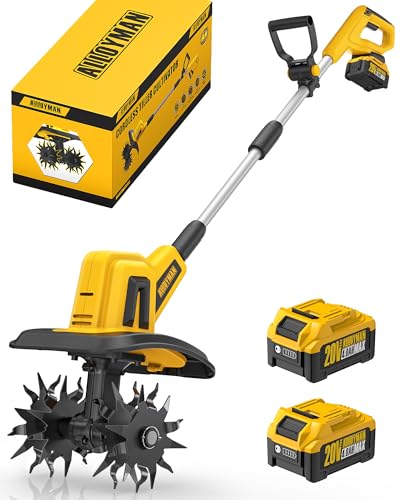
The Alloyman cordless tiller is designed for maneuverability in small spaces. It uses a 20V cordless setup with two 4.0Ah batteries for extended runtime. With 360 RPM and 9-inch tilling width, it can cover bed margins quickly and reach edges in flower beds. Best for gardeners who want freedom from power outlets and easy handling in raised or irregular beds.
- Best for: small flower beds, tight corners, and portability
- Why selected: cordless convenience paired with a compact 9″ width
- Caution: the 6-inch depth may be shallower than large plots, so plan for multiple passes in dense soil
Muylux 20V Cordless Tiller Cultivator

Muylux’s compact tiller is ideal for gardeners who want a lightweight option with reliable cordless operation. It features two 2.0Ah batteries and a 360 RPM motor to loosen soil up to 4 inches deep. The ergonomic grip supports comfortable use across longer sessions in small beds or raised beds.
- Best for: light soil, quick bed prep, and beginner gardeners
- Why selected: portability and simple two-battery setup
- Caution: shallower till depth may require multiple passes for dense clay soils
TaskStar 21V Cordless Tiller

The TaskStar tiller uses a high-torque 360 RPM motor with 48 steel tines, delivering robust soil disruption. The 9-inch width and 7-inch depth are well-suited for mixed soils in flower beds, compost blending, and preparing beds for planting. It’s a strong choice for gardeners who need reliable power in a compact frame.
- Best for: denser, mixed soils and beds with roots to work around
- Why selected: higher tine count enables thorough mixing and aeration
- Caution: heavier than ultra-light models; consider shoulder fatigue for extended use
SOARFLY Upgraded Cordless Tiller
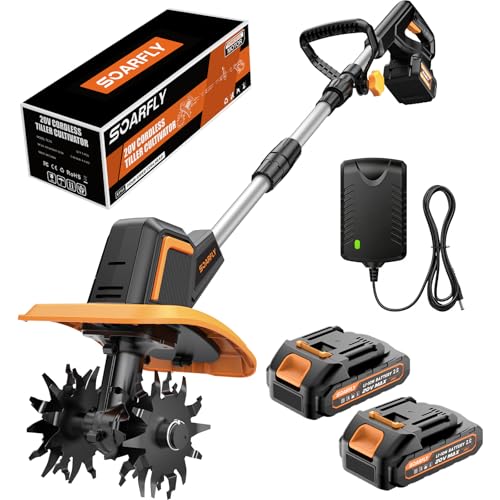
SOARFLY offers an upgraded cordless design with dual 2.0Ah batteries and a 360 RPM copper motor. Its 9-inch width and 6.6-inch depth are suitable for regular bed prep, soil mixing, and light composting. The adjustable handle height improves comfort for users of varying statures.
- Best for: extended sessions in small to medium beds
- Why selected: adjustable handles and longer runtime from dual batteries
- Caution: 60-minute runtime is approximate and can vary with soil density
Patoolio 20V Cordless Tiller
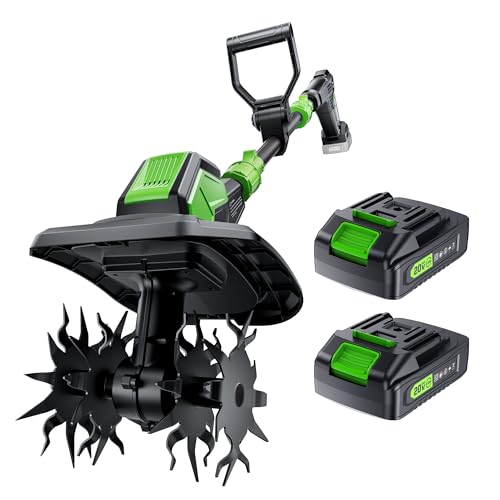
The Patoolio model uses a 20V system with two 2.0Ah batteries and 48 steel tines. It provides a 9-inch tilling width and 6.6-inch depth, making it a practical option for preparing bed edges and mid-bed plots without cords. It’s especially useful for raised beds and flower beds where precise tilling around plants is required.
- Best for: raised beds and edge work in flower beds
- Why selected: balanced width and depth for general bed prep
- Caution: battery runtime depends on soil hardness and user technique
Buying Guide
What to consider when choosing a small tiller for flower beds:
- Power source: Cordless models offer mobility and ease of use; ensure batteries provide enough runtime for your typical tasks
- Tilling width and depth: 9-inch width is common for flower beds; deeper tilling is helpful for hard soils but increases effort
- Tine design: More tines (like 48) can aerate and mix soil faster but may add weight; four tines are lighter but may require more passes
- Weight and ergonomics: Look for adjustable handles and balanced design to reduce fatigue during long tasks
- Maintenance: Electric tillers require less maintenance than gas models but keep blades sharp and clean
- Usage scenarios: Raised beds, tight corners, and beds with existing plantings benefit from compact, precise tillers
Frequently Asked Questions
- What size tiller is best for flower beds?
A tiller with about 9-inch width and 6–7 inch depth is ideal for most flower beds, offering adequate soil disruption without overworking root zones. - Are cordless tillers powerful enough for clay soil?
Many 360 RPM cordless tillers can handle light to moderate clay with multiple passes and proper technique; for very dense clay, a model with more tine density or deeper depth may help. - How long do batteries last in small tillers?
Runtime varies by soil type and battery capacity. Models with two batteries typically offer 30–60 minutes of use per battery, with swaps extending total runtime. - Can I use these tillers around existing plants?
Yes, but proceed carefully. Use shallow passes and avoid roots of delicate perennials to prevent damage. - Do they require maintenance?
Minimal maintenance is needed beyond keeping tines clean and sharp; no gas mixing or oil changes are required for these electric models.