When Japanese beetles threaten your roses, trees, and ornamental plants, the right insecticide can protect blooms and reduce damage. This guide focuses on reliable options available on Amazon, highlighting who each product is best for, how it works, and practical limits. Whether you want a quick-contact kill, a long-lasting treatment, or a natural approach, these selections serve different needs—home gardeners, balcony planters, and landscape professionals alike. The top picks below help you decide which solution fits your garden, climate, and beetle pressure.
Summary of chosen products:
| Product | Best For | Key Benefit | Limitations |
|---|---|---|---|
| Bonide Japanese Beetle Killer Ready-to-Use Spray | General homeowners, vegetable and ornamental beds | Fast-acting contact kill for beetles and other pests | Ready-to-use; may require reapplication after rain |
| Bonide 428 Eight Insect Control Garden & Home | Outdoor gardens, lawns, and landscape beds | Broad-spectrum insect control | Not listed for indoor use |
| Spectracide Bag-A-Bug Japanese Beetle Trap | Burdened yards with severe beetle populations | Prevents beetles from feeding by trapping them | Traps are attractants; placement matters |
| Organic Insecticide For Roses & Flowers – ARBER | Organic-focused gardeners | Neem-based, low-odor, broad pest control | May require more frequent applications; weather dependent |
| Pro Grub Control – Liquid Harvest | Trees, shrubs, and landscape ornamentals | Systemic control through root absorption | Concentration; follow label for turf use |
Bonide Japanese Beetle Killer Ready-to-Use Spray
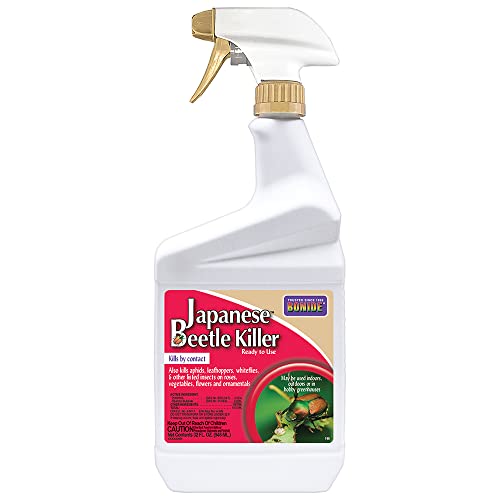
Best for: Homeowners who want a fast, ready-to-use solution for vegetables, flowers, ornamentals, and fruit trees. This spray targets Japanese beetles and additional pests on contact, providing quick relief from feeding and damage.
Why selected: The product is designed for indoor or outdoor residential use, offering convenient, on-demand application without mixing. Its versatility makes it a go-to option for small to medium gardens that experience beetle pressure across multiple plant types.
Strengths: Kills by contact and protects foliage, making it suitable for busy gardeners who need immediate results. It also covers a broad pest spectrum beyond Japanese beetles, which helps in mixed-infestation scenarios.
Limitations: Effectiveness depends on direct contact; rain or high rainfalls may necessitate reapplication. Not ideal as a sole long-term strategy in heavy beetle seasons—incorporate complementary controls for sustained suppression.
Bonide 428 Eight Insect Control Garden & Home

Best for: Outdoor landscapes, vegetable plots, roses, lawns and shrubs where a broad spectrum insecticide is desired. Suitable for moderate to large garden spaces with diverse pest pressure.
Why selected: This product targets more than 130 pests, offering broad coverage where multiple bug types threaten plant health. The broad label makes it a practical option for gardeners who manage several plant groups at once.
Strengths: Strong on-contact action and residual control help reduce new arrivals of pests after treatment. It’s tailored for outdoor applications, making it a robust option for yards and garden beds.
Caution: Eight Garden & Home is not listed for indoor use. Use it only in outdoor spaces to avoid indoor exposure and label violations.
Spectracide Bag-A-Bug Japanese Beetle Trap

Best for: Yards experiencing high beetle populations and wanting to reduce beetle numbers before they feed on prized plants. Particularly useful when roses, grapes, and fruit trees are at risk.
Why selected: The trap uses a dual lure system to attract more beetles, offering a proactive control method that complements preventive sprays. It’s a practical add-on to reduce beetle pressure in larger landscapes.
Strengths: Covers up to a 5,000 square foot area and maintains beetle capture throughout the season, helping protect valuable ornamental and edible plants.
Limitation: Traps can attract beetles to the area; placement away from targeted plants is important to avoid drawing beetles directly onto susceptible blooms.
Organic Insecticide For Roses & Flowers – ARBER

Best for: Organic gardeners seeking a natural approach to pest control that includes Japanese beetles and a broad range of garden pests. Ideal for roses, ornamentals, and container plants.
Why selected: This organic formula attaches to hose-end sprays for even coverage and reduces reinfestation by targeting multiple pests while maintaining a lower odor profile for outdoor use.
Strengths: EPA-registered and designed for straightforward application with hose-end convenience. It treats beds, borders, and containers efficiently without heavy equipment.
Limitation: Effectiveness can depend on environmental conditions; some pests may require repeat applications for sustained suppression.
Pro Grub Control – Liquid Harvest

Best for: Trees, shrubs, and landscape ornamentals that need systemic coverage to curb root-feeding pests including Japanese beetles, aphids, and weevils.
Why selected: This product uses a systemic approach, moving through the plant to provide long-lasting protection. It’s a solid choice for landscapes where root-system uptake is practical and beneficial.
Strengths: Foliar and soil applications expand flexibility for different plant types and infestation patterns. It offers protection against a broad range of insects that affect woody plants.
Limitation: Concentrated formulation requires proper measurement and following label directions to avoid over- or under-application, particularly in turf areas.
Buying Guide: Key Purchase Considerations
- Garden size and beetle pressure: For small gardens with light beetle pressure, a ready-to-use spray may be sufficient. For larger landscapes, combined strategies, including traps and systemic treatments, can provide broader protection.
- Indoor vs. outdoor needs: Some products are labeled for indoor use only, while others are for outdoor use or greenhouses. Match the label to your space to ensure safe and legal application.
- Mode of action: Contact kill products deliver rapid relief, while systemic and preventive options provide longer-term protection. A combination approach can balance quick results with ongoing suppression.
- Organic vs. synthetic: Organic options (like neem-based or plant-derived formulations) appeal to organic gardeners but may require more frequent applications. Synthetic and concentrated products often offer stronger spectrum and longer residuals.
- Seasonality and reapplication: Beetle activity varies by climate. Check the product’s rainfast time and reapplication guidelines to maintain protection through peak beetle seasons.
- Plant safety: Always test spray on a small plant area first if possible. Some products may affect sensitive ornamental species or flowering crops; follow label directions for targeted crops.
Frequently Asked Questions
What is the most effective treatment for Japanese beetles?
Effectiveness depends on beetle pressure and garden size. A combination of a contact-kill spray and a preventive or systemic treatment often provides quick relief and longer-term suppression.
Can I use beetle traps without harming my plants?
Yes, traps can reduce beetle numbers but should be placed away from prized plants to avoid drawing beetles toward them. They work best as part of an integrated approach.
Are organic insecticides as effective as synthetic ones?
Organic options can be very effective but may require more frequent applications. They are preferred for organic gardens and insect-friendly landscapes, where synthetic residues are a concern.
How often should I reapply after rain?
Reapplication timing depends on the product label and rainfall. Most sprays require reapplication after heavy rain or as directed on the label to maintain control.
Is a systemic insecticide better for trees?
Systemic products can provide year-long protection for trees and shrubs, as the active ingredient moves through the plant. They are beneficial for hard-to-reach feeding pests but should be used per label instructions.
Can these products harm beneficial insects?
Some broad-spectrum products may affect beneficial insects. Use targeted applications and follow label directions to minimize impacts on pollinators and natural pest predators.