Answer: The best lawn care soil test kits help you measure soil pH and key nutrients at home, guiding precise amendments for healthier grass, flowers, and vegetables. This guide highlights five top options, each suited to different needs—from quick pH checks to comprehensive nutrient analysis. Use these picks to tailor your lawn care plan and avoid guesswork.
| Product | What It Best For | Why It Stands Out |
|---|---|---|
| Rapitest Soil Test Kit | Home gardeners seeking quick results | Simple capsule system with color comparators; tests pH, N, P, K for up to 20 tests |
| MySoil Soil Test Kit | Lawn and garden projects requiring lab-grade insight | Professional-style analysis of 13 plant-available nutrients with turnover in days |
| Sunday Garden Soil Test Kit | Long-term planning for gardens with local climate integration | Tailored nutrient delivery based on climate data and 3–4 week turnaround |
| Leaping Lynx Complete Soil Test Kit | All-in-one home monitoring for multiple bed types | 4-parameter kit with quick soil checks and easy-to-read results |
| NewTest Soil pH Test Kit | Beginners needing reliable pH strips | 125 strips with measuring cylinders for precise pH values |
Rapitest Soil Test Kit For Gardens

This kit provides quick, at-home results for soil pH, nitrogen, phosphorous, and potash. It uses an easy-to-use capsule system with patented color comparators and includes components for 20 tests (5 for each variable). Best for gardeners who want a straightforward, budget-friendly way to monitor major soil nutrients in multiple spots across a lawn or garden.
Best for: Home gardeners who want fast, repeatable checks without sending samples to a lab. It allows you to test several yard locations and track changes over a growing season.
Limitation: It measures primary nutrients and pH with color charts, which can be less precise than lab-based analyses for some soils.
MySoil Soil Test Kit
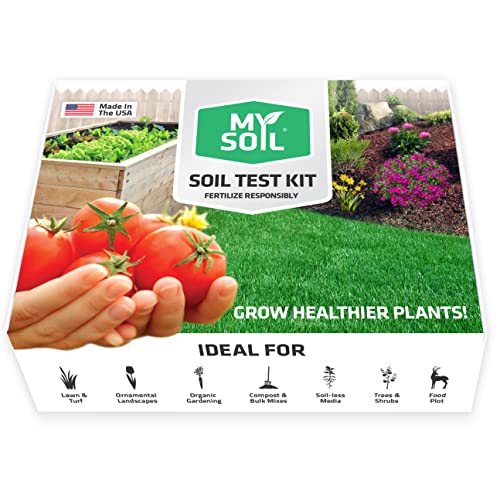
This kit targets lawn and garden projects with a professional-grade approach. It delivers a complete nutrient and pH analysis of 13 plant-available nutrient levels, with results typically provided in 6–8 days. It is designed for any soil type and growing condition, including turf, vegetables, flowers, and containers.
Best for: Anyone pursuing precise soil management and tailored recommendations, especially when soil conditions vary across a landscape.
Caution: It relies on mail-in lab analysis, so results take several days, which may delay immediate adjustments.
Sunday Garden Soil Test Kit

This kit focuses on tailoring garden care by testing soil pH and nutrient levels, combined with local climate data for nutrient delivery timing. It emphasizes planning and precise feeding schedules to maximize blooms and resilience while minimizing over-fertilization.
Best for: Gardeners who want climate-informed guidance and a structured plan before applying nutrients.
Limitation: The kit centers on planning and delivery rather than instantaneous results, with a broader emphasis on long-term soil health rather than quick fixes.
Leaping Lynx Complete Soil Test Kit

The Leaping Lynx kit provides a complete soil analysis for pH, nitrogen, phosphorus, and potassium, with over 100 tests per kit. It aims to be an all-in-one option for gardeners who want ongoing monitoring across multiple beds and containers. Results are presented in a plain, easy-to-interpret format for practical adjustments.
Best for: Practically minded homeowners who want ongoing monitoring with a broad testing toolkit and plenty of test material for frequent checks.
Caution: The kit focuses on color-chart results, which may be less precise than lab-grade analyses for advanced gardeners seeking granular nutrient data.
NewTest Soil pH Test Kit

The NewTest kit includes upgraded pH test strips with measuring cylinders and clear instructions for professional testing methods. It emphasizes accuracy in soil pH assessment through 125 test strips, making it suitable for diverse areas like gardens, lawns, and compost piles. It helps beginners obtain reliable pH values with guided steps and color references.
Best for: Beginners who want a high-volume, easy-to-use pH testing kit with a clear measurement process.
Caution: It focuses primarily on pH; users seeking comprehensive nutrient data should pair it with another kit for a fuller soil picture.
Buying Guide
What should I test first on my lawn?
Start with soil pH to determine lime or sulfur needs. Then assess key nutrients (N, P, K) to guide fertilizer choices. For long-term planning or diverse plantings, consider a kit that includes multi-nutrient analyses and climate-based recommendations.
Which kit is best for quick results?
The Rapitest kit provides rapid at-home results for multiple variables with simple color comparisons. It suits users who want immediate feedback across several spots in the yard.
Which kit suits professional or precise nutrient reporting?
The MySoil kit offers a professional-style lab-like analysis of 13 plant-available nutrients with a relatively quick turnaround. It’s ideal for gardeners who need detailed data to optimize feeding plans.
What’s the value of a climate-informed kit?
Kits like Sunday Garden leverage local climate data to tailor nutrient delivery timing, reducing waste and environmental impact while improving plant performance over a growing season.
How many tests should I perform per season?
For a typical home lawn, testing at least two or three representative areas per season provides a baseline. If you see nutrient deficiency symptoms or soil variability, test more spots to map variability.
Are at-home test results sufficient for lawn care decisions?
Home tests provide actionable guidance for most standard lawn care tasks. For critical fertilization decisions or unusual soil conditions, consider sending samples to a professional lab for confirmatory analysis.
Practical considerations
- Storage and longevity: Keep test components dry and within the expiration window of any reagents.
- Consistency: Use the same method and multiple spots to compare updates across seasons.
- Documentation: Record test results with location notes to track soil changes over time.
FAQ
- What is the quickest way to improve lawn soil after a test?
Answer: Apply amendments according to the kit’s guidelines or lab report, then re-test after several weeks to confirm improvements in pH and nutrient balance. - Do I need a lab test if my soil looks healthy?
Answer: Visual health isn’t always a reliable indicator of nutrient or pH balance. A test helps verify necessary adjustments and prevent deficiencies. - Can I test compost or potting mix with these kits?
Answer: Some kits are designed for in-ground soil; check each product’s guidance to confirm suitability for compost, potting soil, or hydroponic media. - How often should I retest my lawn soil?
Answer: Retest every 1–2 years, or after major changes in fertilizer use, or if you notice changing plant vigor or color. - Which kit offers the best value for frequent testing?
Answer: Kits with a large number of tests per kit (e.g., 100+ tests) provide more cost-per-test value for frequent monitoring. - Is digital or laboratory testing more accurate?
Answer: Lab analyses typically provide the most precise, comprehensive nutrient data, but well-designed home kits are adequate for routine lawn care decisions.