Answering the right questions for maple enthusiasts: which sap collection kits best support home tapping, family projects, or small-scale sugarings? This guide presents five top options, highlighting who each kit is best for, what comes in the package, and practical buying tips. Whether you’re a first-time tapper or a seasoned sugarmaker, these selections cover a range of tube lengths, bag capacities, and number of taps to suit your goals. Use the comparison notes to decide which kit aligns with your trees, space, and syrup ambitions.
| Product | Best For | Key Benefit |
|---|---|---|
| Dstana Maple Sap Kit | Large, multi-tree setups | 15 taps and 32.8 ft tubing |
| UMONIE 35 PCS Kit | Small groups and families | Foldable 5 L bags and filters |
| Epoacht Starter Set | Beginner-friendly kits | Buckets replace bags for durability |
| Hazzga 15 Sets Kit | Comprehensive beginner-to-intermediate | Perforated and non-perforated lids |
| Oscorna 10/8 L Kit | Medium to large collection | Longer tubing and reusable bags |
Dstana 15 Sets Maple Sap Kit — 15 Trees
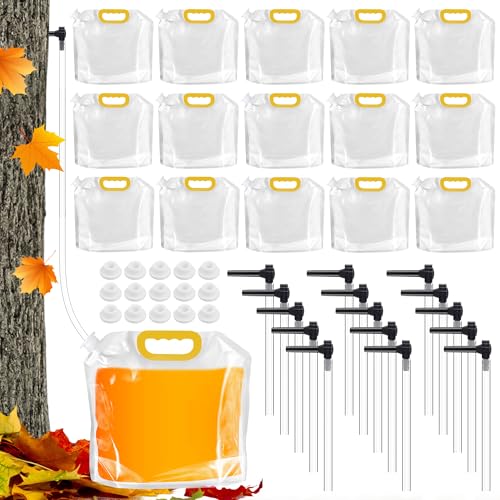
The Dstana kit is a comprehensive multi-tree solution designed for home maple syrup projects that involve tapping up to 15 trees at once. It includes 15 taps, 15 collection bags (5 liters each), lids, silicone plugs, and a long 32.8-foot tube that can be cut to fit your setup. The packaging emphasizes efficient batch collection and dust protection for stored syrup, making it suitable for families or small communities planning a weekend syrup run.
Best for: households or small groups aiming to collect syrup from a sizable number of trees without frequent re-sourcing of parts. Why chosen: it provides a complete set right out of the box and supports straightforward batch collection. Caution: the longer tube requires careful routing to avoid kinks and ensure clean flow from tree to bag.
UMONIE 35 PCS Kit With Tubing

The UMONIE kit bundles 10 taps, 10 pieces of three-foot tubing, 10 foldable 5 L collection bags, five syrup filters, a tapping hammer, and a drill bit. This complete package is built for small groups or family projects and emphasizes efficiency in batch collection with collapsible bags that save storage space. The tubing and bags are described as food-grade and designed to withstand outdoor use, making it a practical choice for beginners who want a straightforward setup.
Best for: families or small groups starting maple syrup collection with a compact footprint. Why chosen: compact kit with essential tools included, reducing the need for separate purchases. Caution: fewer bags and taps compared to larger kits means planning for throughput if you’re tapping many trees at once.
Epoacht Starter Set With Five Buckets

The Epoacht Starter Set is described as beginner-friendly and emphasizes a reliable, tight-seal operation to ensure smooth sap flow. It replaces bags with stable, reusable sap collection buckets, claiming durability that lasts through a season. The kit is pitched as engaging for family projects and kid-friendly, turning maple syrup into a shared outdoor activity. The setup focuses on ease of use and reducing fragility associated with bag-based systems.
Best for: families or first-time sugarers seeking a sturdy, reusable bucket system over bags. Why chosen: durable buckets simplify maintenance and reduce waste, while maintaining straightforward sap collection. Caution: buckets may be heavier to transport than lightweight bag systems, especially on uneven ground.
Hazzga 15 Sets Maple Syrup Kit
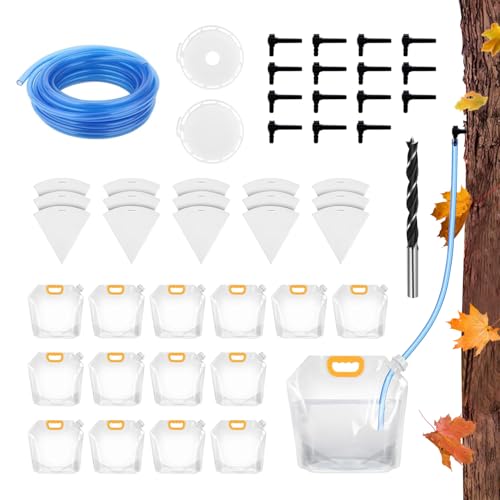
The Hazzga kit emphasizes completeness and flexibility, offering 15 sets of taps, 44.3 feet of tubing, 15 five-liter bags, and a mix of perforated and non-perforated lids. This combination supports both beginner and intermediate users who want options for storage and to manage sap flow efficiently. The long tubing helps reduce spillage and makes it easier to position collectors away from trees.
Best for: those who want a broad, adaptable kit that can scale from solo to small-group tapping. Why chosen: long tubing and mixed bag lids provide options to manage syrup storage and reduce waste. Caution: ensure you have plan for bag drying and hygiene between uses to prevent contamination from dust or mold.
Oscorna Maple Syrup Kit With Bags and Taps

Oscorna offers a complete starter assortment with 10 taps, 10 three-foot tubing lines, 10 eight-liter bags, five syrup filters, a drill bit, and a hammer. The tubing features a blue coating to minimize sap exposure to sunlight and reduce creasing, while the eight-liter bags provide substantial storage. The kit highlights an L-shaped tap design intended to secure a tight seal and steady sap flow, with an emphasis on reuse and long-term durability.
Best for: intermediate users who want a robust, reusable kit with larger bag capacity and filtration options. Why chosen: higher bag capacity and filtration enable smoother processing from sap to syrup. Caution: longer-term maintenance of filters is needed to prevent syrup sediment buildup.
Oscorna Maple Syrup Kit With Bags — 10 Taps
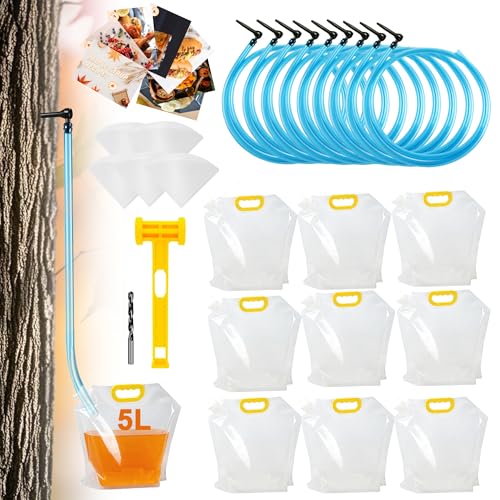
This Oscorna formulation mirrors the prior Oscorna option but emphasizes a 10-tap configuration and includes a set of three-foot tubing and five syrup filters. The blue-coated tubing minimizes sap exposure and reduces creasing across multiple runs, while the included five filters enable a first-pass clarification of sap before bottling. The kit is positioned for users who want an efficient, repeatable process across several trees.
Best for: users who want a compact yet capable multi-tree setup with good filtration options. Why chosen: combination of taps, tubing, and filters supports a smoother workflow from sap to syrup. Caution: ensure the filters are replaced or cleaned appropriately to maintain syrup quality across seasons.
Buying Guide: What to Consider When Choosing Maple Sap Collection Supplies
- Number of trees: Match the kit to the number of trees you plan to tap. Larger kits reduce re-sourcing mid-season but may be more storage-heavy.
- Storage method: Choose between bags and buckets. Bags are lighter and scalable, while buckets offer durability and reuse but can be heavier to handle.
- Tubing length and routing: Longer tubing helps keep sap away from sunlight and debris but requires careful setup to avoid leaks and kinks.
- Bag lids and perforation: Perforated lids aid airflow and drying, while non-perforated lids protect sap from contaminants. Consider local humidity and dust exposure when choosing.
- Material safety: Look for food-grade materials and BPA-free components. This protects sap quality and syrup purity.
- Ease of use: Beginners benefit from all-in-one sets with included taps, drill bits, and hammers. More advanced users may mix and match components for custom setups.
- Reusability and maintenance: Reusable parts reduce waste and provide long-term cost savings, but require cleaning between seasons to prevent spoilage.
- Portability and storage: Foldable or collapsible bags save space for seasonal outdoor use. Rigid buckets can be preferable where weather is harsh or rodents are present.
Frequently Asked Questions
- What is the best kit for a beginner? Answer: A beginner-friendly kit with easy assembly, included drill bits, and stable, reusable collection options—such as a starter set with clear buckets or a simple bag-based system—minimizes setup complexity and discourages leaks.
- How many trees should I start with? Answer: Start with 2–5 trees to learn the process, then scale up if you plan to collect more sap or expand to family or community syrup projects.
- Are bag-based systems better than bucket-based systems? Answer: Bag-based systems are lighter and scalable, while bucket-based systems are durable and long-lasting. The choice depends on local weather, storage, and handling preferences.
- Is longer tubing always better? Answer: Longer tubing helps distance sap collection from the tap, but it must be cut to fit your setup and kept free of kinks to maintain flow efficiency.
- What maintenance is needed for sap collection kits? Answer: Clean all parts with hot water, dry thoroughly, and inspect for cracks or wear. Replace filters as needed to ensure syrup clarity and safety.
- Can these kits be reused year after year? Answer: Many components are designed for reuse, but it’s important to clean and inspect taps, tubing, and bags or buckets between seasons to prevent contamination.