If your pond water has green tint, string algae, or blanketweed, these products offer fast, safe control for different setups. This guide highlights five reliable algaecides that balance effectiveness with safety for fish, plants, and wildlife when used as directed. It’s ideal for hobbyists managing koi ponds, ornamental water gardens, fountains, or birdbaths. Choose based on pond size, water flow, and whether you prefer liquid or granular formats. The list features options that are EPA-registered, copper-free, or specifically formulated to minimize disruption to beneficial bacteria. See the quick reference table below for side-by-side comparisons.
| Product | Best For | Size | Active Type | Notes |
|---|---|---|---|---|
| API POND ALGAEFIX (32 oz) | Medium to large ponds; fast results | 32 fl oz | Copper-free liquid algaecide | Treats up to 9,600 gallons |
| The Pond Guy InstaFix Algae Control (16 oz) | Outdoor water gardens, birdbaths, fountains | 16 oz | Liquid algaecide | Fast-acting; maintenance-friendly |
| CrystalClear Algae D-Solv (1 gallon) | Large ponds, easy-to-use maintenance | 1 gallon | Non-copper liquid algaecide | Good for repeated treatments |
| MICROBE-LIFT Algaway 5.4 (8 oz) | Clear water, string algae control | 8 oz | EPA-registered algaecide | Safe for pond fish and plants |
| Tetra Pond AlgaeControl (16.9 oz) | Ornamental ponds with liners | 16.9 oz | Liquid algaecide | Controls green water and string algae |
Note: Always read product labels for dosage, safety, and pond aeration requirements before use. The best choice depends on pond size, fish presence, water turnover, and whether you prefer ready-to-pour liquids or larger-volume solutions for ongoing maintenance.
API Pond Algaefix Algae Control – 32 Ounce Bottle
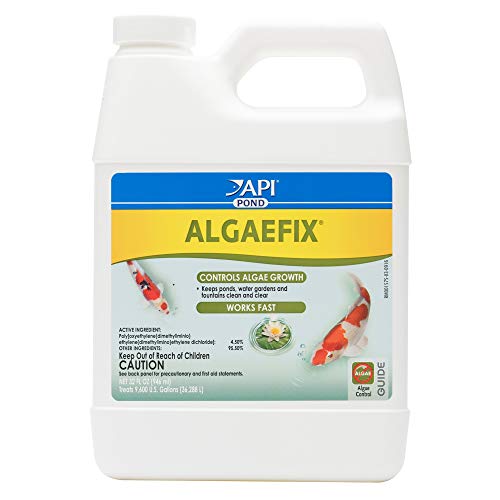
Features include fast algae control with a copper-free formula that safeguards fish, aquatic plants, and wildlife when used as directed. The 32-ounce bottle treats up to 9,600 gallons and covers a broad spectrum of algae types, including green water and blanket weed. This product is EPA-registered and designed to avoid disruption of beneficial bacteria in pond sediment. Best for mid-sized to larger ponds or water features that require quick cleanup after algae blooms. A limitation is that results depend on consistent dosing and proper aeration, especially in low-oxygen conditions. Suitable for koi ponds and outdoor fountains that need rapid algae reduction.
The Pond Guy InstaFix Algae Control – 16 Ounce

InstaFix is marketed for fast-acting algae control in outdoor water gardens, fountains, and birdbaths. It is a liquid algaecide that is easy to apply around the pond edge, making it convenient for frequent maintenance. It’s EPA-registered and aims to address green water, blanketweed, and string algae. Choose this for quick mitigation in smaller water features or when you want a straightforward application method. Caution: avoid over-application around sensitive plantings and ensure good aeration to prevent stress on aquatic life during treatment.
CrystalClear Algae D-Solv Pond Algae Control – 1 Gallon

CrystalClear D-Solv is a fast-acting, broad-spectrum algaecide that treats up to 46,080 gallons in its one-gallon size. It is copper-free and designed to be safe for koi and ornamental plants when used as directed, provided the pond has adequate aeration. This option is well-suited for larger ponds or ongoing maintenance programs where a larger-volume treatment is beneficial. Best for ponds with recurring algae issues and where a simple, high-volume solution is preferred. Limitation: ensure the pond’s aeration is effective to prevent stress on fish during treatment.
MICROBE-LIFT Algaway 5.4 Algae Control – 8 Ounces

Algaway 5.4 emphasizes safety for pond inhabitants and plants, claiming EPA-registration as a beneficial algaecide. It targets string algae and suspended blooms, helping maintain clearer water in ornamental ponds and water features. Best for hobbyists who want a product designed to work with existing pond life and to prevent algal regrowth with regular use. A potential limitation is the need to confirm compatibility with your specific fish and plant mix, as some species have sensitivities when used improperly. The product notes caution on not using with certain crustaceans.
Tetra Pond AlgaeControl – 16.9 Ounces

Tetra Pond AlgaeControl is formulated to address green water and both string and hair algae in ornamental ponds and fountains with liners. It provides a simple usage guideline of 10 mL per 120 gallons, making it a practical choice for hobbyists who manage smaller, established ponds. Best for routine maintenance and keeping water clear after algae blooms. Limitation: effectiveness depends on proper dosing and consistent application; avoid oversaturation that could affect aquatic plants if used incorrectly.
Buying Guide: Key Considerations For Choosing Algae Control
What pond size and water volume require
Large ponds benefit from higher-volume treatments or products designed to treat thousands of gallons, such as CrystalClear D-Solv in gallon sizes. Smaller ponds can use 16–32 ounce bottles with careful dosing. Always match product capacity with your pond’s gallons and keep a log of treatment dates and volumes.
Is copper-free important for your setup?
Copper-based algaecides can harm some fish, plants, or invertebrates. Copper-free formulas reduce this risk and are often preferred for koi ponds and tanks with sensitive plant life. Check the product label to confirm the active ingredients and safety notes before use.
How important is rapid or maintenance-focused control?
Fast-acting products are helpful after a bloom or heavy algae growth. For ongoing maintenance, consider products that are effective with weekly or routine dosing to prevent regrowth. Some brands are explicitly marketed as maintenance solutions, which helps in planning a regular schedule.
Are there aeration and water quality prerequisites?
Most algaecides work best with proper aeration to ensure oxygen levels remain high while algae die-off occurs. A well-aerated pond supports fish health and reduces the risk of stress during treatment. If your pond lacks aeration, add a fountain, waterfall, or air bubbler when applying the product.
Which products are best for specific algae types?
Green water (single-celled algae) responds well to broad-spectrum algaecides. String algae and blanketweed often require treatments that address biofilm and longer exposure. If you know the dominant algae type, prioritize a product advertised to target that category for more effective results.
Maintenance vs. one-time treatment
Decide whether you want a quick fix or a long-term plan. For ongoing control, select a product that offers clear maintenance guidance, such as weekly dosing or gradual reduction of algae over multiple weeks. Keep records of dosing intervals to maintain clear water season after season.
FAQ: Quick Answers For Pond Algae Control
- Is it safe to use algaecides with fish in the pond? Yes, when used as directed and following label instructions. Look for EPA-registered, copper-free formulas and ensure proper aeration during treatment.
- Can I use algaecide and a pond aerator at the same time? Yes. Aeration is recommended to maintain oxygen levels and help fish and plants during treatment. Increase aeration during and after dosing if possible.
- Will algaecide affect beneficial bacteria? Most products are designed to avoid disruption of beneficial bacteria when used as directed. Always follow the label’s dosage and application guidelines.
- How often should I treat my pond for algae? This depends on the product and pond conditions. Some items are for one-time treatment after a bloom, while others support regular maintenance. Refer to the product’s recommended schedule.
- What should I do if algae returns after treatment? Reassess pond factors such as sunlight exposure, nutrient levels, and filtration. Reapply the product according to the label instructions and address underlying causes to prevent recurrence.
- Are there any ponds where algaecides should be avoided? Avoid application in ponds with endangered species, or where aquatic invertebrates and certain crustaceans are present, unless the product explicitly states compatibility.