Choosing the right lawn aeration hand tool can dramatically improve air, water, and nutrient access to roots, leading to thicker, greener turf. This guide highlights five practical hand tools ideal for small to medium lawns and DIY lawn care. Each option is best for different soil types, budgets, and user comfort. Use this overview to match a tool to your lawn’s needs and the tasks you perform most often, from dethatching to core aeration and soil loosening.
A quick summary of recommended products:
| Product | Best For | Key Benefit | Limitations |
|---|---|---|---|
| Walensee Lawn Aerator Spike | Medium to large yards with clay or compacted soil | 15 spikes for high-efficiency aeration | Spike style; no core extraction |
| Manual Core Aerator Lawn Tool (LawnVigor) | Lawn care novices and compacted soil | Three hollow tines for deep cores, clog-free | Requires soil prep when very dry |
| RIFPOD Lawn Aerator | Efficient, heavy-duty homeowners | Dual-spring design with 15 spikes | Complex mechanism may take time to learn |
| GENNICCI 2-in-1 Lawn Aerator | Versatile gardeners wanting modes | Hollow and spike modes for different tasks | Replaceable tines add cost |
| COSITA Lawn Aerator Spike Tool | Large lawns and hard soils | 18 spikes with long reach | Spike-only design |
Walensee Lawn Aerator Spike Metal Manual Dethatching Tool

Best for: Homeowners with moderate to heavy soil compaction who want rapid, hands-on relief. The Walensee aerator uses 15 sharp spikes to loosen soil and thatch, allowing better air, water, and fertilizer penetration to the root zone. The long handle and robust iron construction reduce back strain during extended sessions. It’s a solid pick when you need quick surface aeration and quick lawn revival in a single pass.
Why chosen: The 15-spike design covers more ground per push than typical 4-spike models, boosting efficiency. The powder-coated iron construction resists rust, and the 34.6-inch overall length helps reduce bending. It excels on clay, loam, and sand soils due to its sturdy spikes and broad coverage.
Who it’s best for and why: Best for DIYers who want a straightforward, no-frills tool that delivers visible improvement after dethatching and aeration. Suitable for those prioritizing speed and durability in a single-season project. A potential limitation is that it does not extract soil cores, which some experts prefer for deeper aeration or thatch removal.
Caution: Use on moist soil to prevent wire breakage; overly dry soil may resist penetration and require pre-watering.
Manual Core Aerator Lawn Tool – 3 Hollow Tines
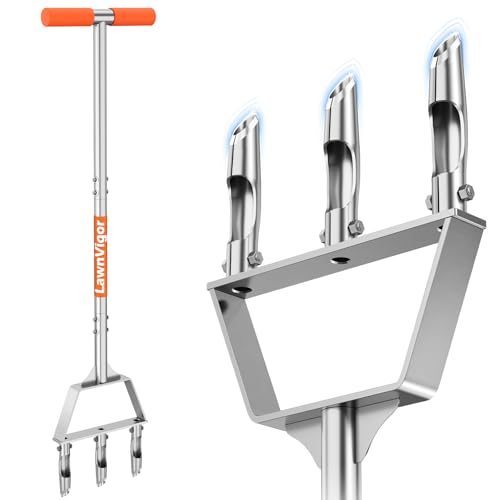
Best for: Budget-conscious homeowners who want deeper soil penetration and better drainage without hiring equipment or renting a core aerator. This tool uses hollow tines to pull cores and create larger holes for easier water infiltration and root growth.
Why chosen: The hollow tines are designed to minimize clogging and are replaceable, which extends tool life. Its three-tine design balances efficiency with simplicity. The tool is well-suited to moderately compacted lawns and can be used on clay, loam, or sandy soils with good results.
Who it’s best for and why: Choose this if you want deeper aeration without a cores-spitting mechanism or heavy machines. It’s less ideal for very hard soil or lawns with extreme compaction that require more aggressive action or multiple passes.
Caution: Water the soil before use for easier penetration; avoid side-to-side rocking to prevent tines from bending or breaking.
RIFPOD Lawn Aerator with 15 Iron Spikes

Best for: Gardeners seeking a durable, heavy-duty tool with a spring-assisted design that helps manage soil loosening and leaf debris post-aeration. The dual-layer spring system is designed to ease post-aeration cleanup and promote efficient lawn cultivation.
Why chosen: The thickened iron construction and rust-resistant finish provide longevity for frequent use. The 15 spikes deliver broad coverage, allowing uniform loosening of the soil and better root access. The height-adjustable design adds versatility for different user heights and lawn scopes.
Who it’s best for and why: Ideal for homeowners who value efficiency and cleaner post-aeration maintenance. It’s less suitable for very small or tightly cropped yards where a lighter tool would suffice. A potential limitation is to learn the dual-spring operation to maximize effectiveness.
Caution: Ensure proper assembly and secure fittings before use to avoid slips or injuries. This tool is best used with steady, downward pressure and consistent passes.
GENNICCI 2-in-1 Lawn Aerator

Best for: Gardeners who want flexibility and longer tool life in a single unit. This tool offers both hollow-tine and spike modes to address soil compaction and surface aeration in one design, making it versatile for different lawn conditions and maintenance tasks.
Why chosen: The replaceable tines extend lifespan, and the tool is engineered for durability with ergonomic, non-slip grips to reduce back strain. The two modes allow you to choose core extraction for deeper aeration or spiking for quick aeration channels depending on the season and soil type.
Who it’s best for and why: Best for prosumers who need a single tool that adapts to clay, loam, and sand; it helps manage drainage and root oxygenation. Limitations include that replacement tines are not included beyond the installed set, which might increase ongoing maintenance cost.
Caution: Use hollow-tine mode when soil is moist enough to extract cores without resistance; otherwise switch to spike mode to avoid tool stress.
COSITA Lawn Aerator Spike Tool (18 Spikes)

Best for: Large lawns with compacted soil and homeowners who prefer a long 38.8-inch reach to reduce bending. The heavy-duty spike design is optimized for penetrating hard ground and delivering quick results across broad areas.
Why chosen: The 18 spikes provide strong surface action, and the all-metal double-pipe handle minimizes flex during use. The long reach enhances user comfort and control while aerating bigger lawns, reducing fatigue over extended sessions.
Who it’s best for and why: Choose this if you need an economical spike-only option that still offers robust performance for large, tough soils. A potential drawback is the lack of hollow cores, which means deeper soil cores are not extracted for nutrient-rich channels.
JouZYA Updated Lawn Aerator Tool With Soil Core Collection Tray

Best for: Gardeners who want to minimize cleanup after aeration and prefer core aeration with easy disposal of soil cores. The tray collects cores automatically, simplifying maintenance tasks on larger lawns.
Why chosen: The four hollow tines deliver efficient core aeration and promote deep moisture and nutrient penetration. The tray feature reduces post-aeration cleanup, saving time and effort on maintenance days. The tool is built with rust-resistant steel and cushioned grips for comfort.
Who it’s best for and why: Ideal for those prioritizing ease of post-aeration cleanup and deeper soil penetration. It’s a versatile option for managing soil compaction and improving drainage. A potential limitation is the tray capacity; very large lawns may still generate significant cores to manage.
Buying Guide: How To Choose The Right Lawn Aeration Hand Tool
What soil type and lawn size do you have? For compacted clay soils, tools with longer spikes or hollow tines that create deeper channels often perform best. For larger yards, look for longer handles and more aggressive spike counts to cover more ground with fewer passes.
What type of aeration do you need? Core aeration (hollow tines) is excellent for reducing thatch and improving drainage, while spike aeration can quickly loosen surface-level soil when cores aren’t necessary. Some tools combine both modes for flexibility.
How important is post-aeration cleanup? Tools with core collection trays or simple, wipe-clean designs save time after aeration. If you value minimal cleanup, consider models with trays or easy-removal cores.
What about durability and comfort? Rust-resistant finishes, robust steel construction, and ergonomic handles reduce fatigue and extend tool life. If you have back or shoulder concerns, opt for a tool with a long handle and adjustable height features.
How long will you use this tool? For occasional maintenance, a lighter spike aerator may suffice. For regular, seasonal aeration, invest in a model with reinforced construction and replaceable parts to extend lifespan.
FAQ
Q: Do I need to aerate every year?
A: Aeration helps improve drainage and root growth, especially in compacted or heavy soils. Frequency depends on soil condition and lawn wear; many homeowners perform it annually or biannually for best results.
Q: Should I water before aerating?
A: Yes. Moist soil is easier to penetrate and yields better core depth. Avoid overwatering immediately before aeration to prevent soft, clumpy soil.
Q: What time of year is best for aeration?
A: Spring or fall are common seasons for aeration in many regions, aligning with peak root growth and favorable weather for seedling recovery.
Q: Can I use a spike aerator on large, compacted lawns?
A: Spike aerators are quick and simple but may not relieve deep compaction as effectively as hollow-tine core aerators. For severe compaction, consider hollow-tine tools or professional core aeration.
Q: Are replaceable tines important?
A: Yes. Replaceable tines extend tool life and allow you to swap worn parts instead of buying a new tool, especially for frequent lawn care.