Natural bug sprays for roses offer a chemical-free approach to protecting blooms from common pests while minimizing harm to beneficial insects and the environment. This guide highlights five effective options and explains who each product is best for, based on pest pressures, plant health goals, and application needs. Whether you’re managing aphids on new growth or defending against powdery mildew, these choices help you keep rose beds vibrant and blooming.
The following table summarizes five natural or near-natural options, focusing on rose care, pest control, and disease protection. Use this quick reference to compare coverage, protection scope, and ideal use scenarios at a glance.
| Product | Best for | Key Benefit |
|---|---|---|
| Organic Insecticide for Roses & Flowers – 16oz Ready-to-Spray (ARBER) | Active infestations; ready-to-spray convenience | Targets 30+ pests with hose-end spray |
| BioAdvanced All-in-One Rose & Flower Plant Care – 24 oz | Integrated insect + fungicide protection | Kills aphids; controls diseases like black spot and powdery mildew |
| Bonide Rose Shield Spray – 128 oz | Broad insect and disease protection | Triple action: contact, systemic insect control, systemic disease control |
| Safer Brand Garden Insect Control Spray – 24 oz | Gentle, plant-safe pest control | Natural oils; safe around children and pets when used as directed |
| Neudorff Plant Fungicide Spray (Copper Soap) – 32 oz | Organic fungicide protection | Controls powdery mildew and a range of diseases |
Organic Insecticide for Roses & Flowers – 16oz Ready-to-Spray

Best for immediate action against active infestations, this hose-end spray is designed to knock down pests on roses and ornamentals and then shield plants to reduce reinfestation. It’s ideal for gardeners who want quick, visible relief from curling leaves or after rainfall when pests surge. The formula is EPA-registered and targets more than 30 pests, including aphids, thrips, mealybugs, spider mites, and Japanese beetles, without lingering odors. Use this when you need fast control and convenient coverage across beds, borders, and containers.
- Best for: Home gardeners dealing with active pest outbreaks on roses and ornamentals.
- Why selected: Combines fast knock-down with ongoing protection and hose-end convenience.
- Caution: Do not apply during bloom opening to avoid potential residue on flowers intended for harvest.
BioAdvanced All-in-One Rose & Flower Plant Care, 24 oz

This ready-to-use formula provides combined protection against insects and common plant diseases. It’s best for gardeners who want an integrated solution that guards roses and flowers from aphids, adult Japanese beetles, whiteflies, and diseases like black spot and powdery mildew. The product simplifies care by delivering both insecticidal and fungicidal action in one spray, reducing the number of products you need. Choose this option when disease pressure is a concern as well as pest pressure.
- Best for: Rose beds and flower borders needing both insect and disease protection.
- Why selected: Combines pest control with fungicidal action to promote overall plant health.
- Caution: May require reapplication after heavy rain; always follow label directions for timing.
BioAdvanced All-in-One Rose & Flower Plant Care, 1 Gal

This larger-volume option is suited for bigger rose beds or frequent application schedules. It provides same versatile protection as the 24-ounce version—water-based insect spray plus fungicide to guard against aphids and common diseases. It’s better for households with extensive plantings or those who prefer fewer, periodic treatments rather than frequent spraying. Best used when you want long-term protection across multiple plantings without constant reordering.
- Best for: Larger rose plots or gardeners prioritizing lower reapplication frequency.
- Why selected: Volume efficiency paired with comprehensive pest and disease protection.
- Caution: Always test on a small leaf area first to check for any phytotoxic reaction on sensitive varieties.
Bonide Rose Shield Spray – 128 oz
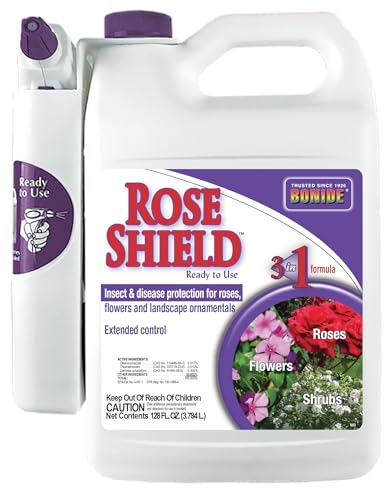
Bonide Rose Shield provides triple-action protection that combines contact and systemic insect control with systemic disease control. It’s best for roses and ornamentals where sustained protection matters, including beds with several plant types. The product is designed to address a broad range of pests such as aphids, leafminers, spider mites, and other common garden pests, while also addressing plant diseases like black spot and powdery mildew. Choose this when you want robust, long-lasting protection from a single spray schedule.
- Best for: Roses and landscape plants needing broad, long-lasting protection.
- Why selected: Triple-action formula covers insect control and disease prevention in one measure.
- Caution: Large-volume container requires careful storage and handling to avoid spills.
Safer Brand Garden Insect Control Spray – 24 oz

This product uses natural oils to kill a wide range of garden insects while remaining gentle on plants. It’s best for gardeners prioritizing safety around children, pets, and edible crops when used as directed. The spray is effective against aphids, beetles, boxelder bugs, caterpillars, earwigs, spider mites, and stink bugs, making it a versatile choice for mixed borders and vegetable-adjacent rose beds. Best for those who want a low-odor, plant-friendly option without harsh chemicals.
- Best for: Families seeking a gentle, natural pest control option for diverse plantings.
- Why selected: Safe around children and pets when used as directed, with minimal odor.
- Caution: Effectiveness may vary with severe infestations; repeat applications as required by label directions.
Neudorff Plant Fungicide Spray – Copper Soap

Neudorff Copper Fungicide is a copper-based option designed for organic gardening and can be used up to the day of harvest on roses, fruits, vegetables, and ornamentals. It’s best for gardeners who want a trusted organic solution to powdery mildew, rust, and other listed diseases, with a focus on preventing disease rather than solely eradicating pests. Choose this when disease prevention is a priority and you prefer an organic-certified approach.
- Best for: Organic growers and gardeners seeking disease control for roses and vegetables.
- Why selected: Broad disease protection with compatibility for organic gardening.
- Caution: Copper products can accumulate in soil; rotate with other modes of action to maintain long-term effectiveness.
Buying Guide: Key Considerations For Rose Pest And Disease Control
- Target pests and diseases: Identify whether aphids, beetles, whiteflies, or fungal diseases are your primary concern, then align with a product that offers specific action against those threats.
- Mode of action: Decide between contact vs. systemic control. Contact products act on contact, while systemic options provide protection after absorption by the plant.
- Application method: Hose-end sprays, ready-to-use bottles, or larger bulk containers affect convenience and frequency of use. Choose based on garden size and labor preferences.
- Safety and compatibility: Consider scent, residue, and safety for family, pets, and pollinators. Natural oil and copper-based products offer different safety profiles and environmental considerations.
- Plant health goals: If disease pressure is high, opt for multi-action formulations that combine both insect and fungicidal properties to minimize spray events.
- Reapplication guidelines: Weather conditions, plant growth stage, and rainfall influence reapplication timing. Always follow label directions for best results.
Frequently Asked Questions
- What is the best natural spray for roses with aphids?
– Look for products labeled as aphid killers with plant-safe components. The BioAdvanced All-in-One line provides integrated insect and disease protection, which helps when aphids are present alongside fungal diseases. - Can I use copper fungicide on flowering roses?
– Yes, copper fungicides like Neudorff Copper Soap are suitable for organic gardening and can be used on roses, including during flowering, though caution is advised to avoid phytotoxicity on sensitive varieties and to follow label directions. - Are natural oils safe for pets and children?
– Formulations based on natural oils, such as Safer Brand, are designed to be gentler and safer when used as directed, but always follow label precautions and keep treated areas away from kids and pets until dry. - Should I apply a fungicide and an insecticide separately?
– If disease pressure is high, a product combining both actions (like BioAdvanced All-in-One) can reduce spray frequency. Otherwise, separate products tailored to current pest or disease issues may be more effective. - Is systemic protection better than contact protection?
– Systemic protection provides longer-lasting effects but can affect non-target organisms. For sensitive pollinator areas, select contact or lower-risk options and apply during times with low pollinator activity. - How often should I spray roses?
– Follow label directions. In typical conditions, applications are every 7–14 days or after rain, but frequency varies by product and pest/disease pressure.