Answer: A digital hose water timer is ideal for minimizing watering guesswork by automating irrigation, saving water, and keeping plants healthy. This guide highlights top models suited for different needs—from simple single-outlet timers for small gardens to rugged, multi-zone timers for larger landscapes. The best picks align with common buyer intents: ease of use, reliability in outdoor conditions, precise scheduling, and clear displays for quick programming. The table below summarizes the five recommended products and who they’re best for.
Product Quick Reference
| Product | Best For | Key Benefit | Outlet |
|---|---|---|---|
| Orbit Programmable Digital Hose Watering Timer – 1 Outlet | Small yards and first-timers | Clear LCD programming, built-in rain delay | 1 |
| RAINPOINT Sprinkler Timer, 1 Outlet | Flexible scheduling with rain delay | Large LCD display, customizable durations | 1 |
| Orbit 62067 1-Outlet Programmable Digital Timer | Two-pack value for multiple zones | Retains programming when batteries change | 1 |
| Insoma Outdoor Garden Hose Faucet Timer | Durable, heavy-use environments | 3 watering modes, rain delay, bigger LCD | 1 |
| Sprobil Sprinkler Timer, 1 Outlet | Budget-friendly, versatile outdoor watering | Rain delay, manual mode, clear LCD | 1 |
Orbit Programmable Digital Hose Watering Timer – 1 Outlet
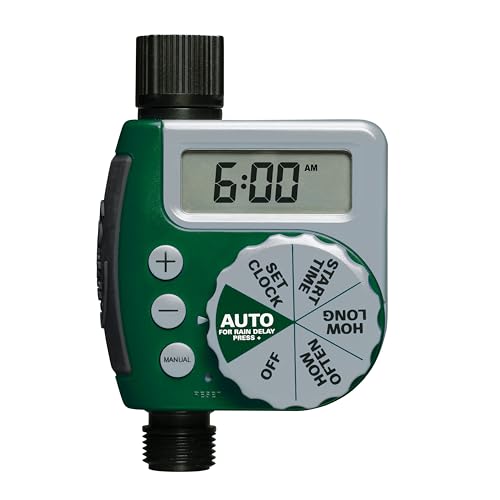
Best for straightforward irrigation with a single outlet. This Orbit timer converts a standard faucet into an automatic watering system and supports adjustable watering durations to conserve water. The LCD screen provides a simple interface for quick programming, and a built-in rain delay helps protect plants during wet periods.
Who it’s best for: homeowners with small to medium gardens who value a simple setup and easy-to-read controls. Why selected: reliable single-outlet operation with clear scheduling and water-saving features.
Caution: Limited to one outlet; not ideal if you need multi-zone control in a larger landscape.
RAINPOINT Sprinkler Timer, 1 Outlet

Best for customizable daily or weekly schedules with rain delay. This timer lets you set start times, durations from 1 minute to several hours, and frequencies from hours to days. The big LCD makes it easy to monitor watering details at a glance, while the rain delay can pause schedules automatically for 24 to 72 hours.
Who it’s best for: gardeners who need precise control over daytime irrigation with flexibility to pause during forecasted rain. Why selected: strong display, versatile scheduling, and effective rain delay features.
Caution: Initial setup can be fiddly for absolute beginners; take time to program the start times and durations correctly.
Orbit 62067 1-Outlet Programmable Digital Hose Watering Timer (2-Pack)

Best for households needing two timers or coverage across multiple hoses. This 1-outlet timer remains easy to program with a large LCD and retains its settings when batteries are replaced. A two-pack option provides value for expanding irrigation across two zones or beds.
Who it’s best for: larger yards or users who want backup timers. Why selected: cost-effective multi-pack, reliable memory of settings, and simple operation. Caution: Ensure batteries are available and replaced to prevent loss of schedules in busy seasons.
Insoma Outdoor Garden Hose Faucet Timer

Best for durability and versatility in outdoor conditions. Insoma’s timer uses a brass inlet and metal threading, designed to handle higher pressure and resist wear. It offers three watering modes (Auto, Manual, Rain Delay) and includes a larger LCD display for easy programming. Built to withstand rain and sun exposure, making it suitable for long-term outdoor use.
Who it’s best for: gardeners who demand rugged hardware and multiple watering modes. Why selected: brass inlet/resilience, useful modes, and a robust display. Caution: Heavier build may be more cumbersome for tight faucet areas; verify clearance before installation.
Sprobil Sprinkler Timer, 1 Outlet
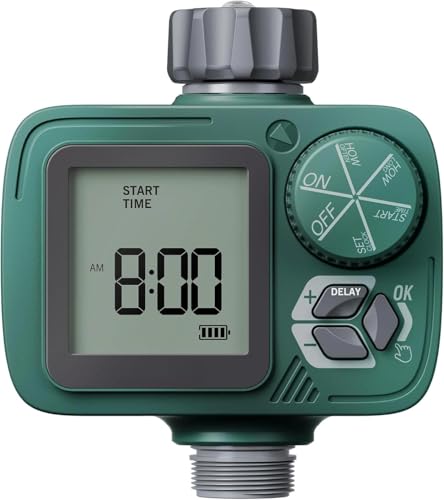
Best for budget-conscious buyers who still want reliable automation. Sprobil’s timer emphasizes a clear LCD readout and easy programming for start time, duration (1 minute to 3 hours 59 minutes), and frequency (every 1-12 hours or 1-7 days). It includes rain delay and manual modes for flexible watering essential when away from home.
Who it’s best for: those seeking an affordable timer without sacrificing core features. Why selected: straightforward setup, rain delay, and practical manual mode. Caution: Feature depth may be limited compared with higher-priced models; plan for future expansion if needed.
Buying Guide: Key Considerations For Digital Hose Timers
- Number of outlets: Do you need single-zone simplicity or multi-zone coverage? Multi-outlet timers or two-pack options help manage several areas without buying extra devices.
- Scheduling flexibility: Look for multiple frequencies (hours and days), duration ranges, and start times. A rain delay feature helps conserve water during rainy periods.
- Display readability: A large LCD or easy-to-read display reduces setup errors. Consider models with backlighting for dusk or dawn programming.
- Durability: Outdoor timers should resist weather, UV exposure, and pressure. Brass inlets, metal threads, and IP ratings enhance longevity.
- Battery life and memory: Some units retain programming after battery changes; others require reconfiguration. Check battery type and expected life.
- Maintenance: Built-in filters and sediment protection help keep the irrigation system clean and prevent blockages.
- Compatibility: Ensure the timer uses standard 3/4-inch hose fittings and fits your faucet type without adapters.
Frequently Asked Questions
- What is a rain delay on a hose timer?
It pauses the watering schedule for a specified number of hours or days to prevent overwatering after rain. - Can I use a digital hose timer for potted plants?
Yes, many timers support short watering durations suitable for containers and small pots. - Do timers keep their settings after battery changes?
Some models retain programming; others reset. Check the product description for memory features. - What should I consider when choosing between 1-outlet and multi-outlet timers?
Multi-outlet or dual-timer setups are better for lawns, flower beds, and vegetable gardens that require different schedules. - Are brass inlet timers more durable than plastic?
Brass inlets typically offer greater durability and resistance to wear and corrosion in outdoor use. - Is a larger display always better?
A larger display improves readability, especially in bright outdoor lighting or when adjusting settings quickly.