Answer: When choosing a deer fence for a garden, look for durable netting or panel systems that are easy to install, UV-resistant, and sized to cover your space. The best options suit small home gardens, medium plots, or larger patches with varying wildlife pressure. This guide compares five top choices to help different buyers decide quickly who each product is best for and why. A quick summary table follows to streamline your initial decision.
Product Comparison Snapshot
- FEED GARDEN Heavy Duty Deer Netting — Best overall for mid-sized gardens seeking a complete, all-in-one kit.
- FEED GARDEN Deer Netting 7 x 200 Feet — Best value for large plots needing long coverage with easy installation.
- Tenax 084060 Deer Fence Kit — Best modular system for custom layouts with adjustable poles.
- FRUITEAM Deer Fence — Best long-roll option for expansive spaces or multiple beds.
- POYEE 5x100ft Deer Fence Netting — Best budget-friendly, flexible mesh for mixed plantings.
FEED GARDEN Heavy Duty Deer Netting 7x100ft

The kit includes 7 feet by 100 feet of deer netting with a 3/4-inch mesh, plus 10 metal landscape staples and 50 zip ties. This combination targets deer, rabbits, birds, and other small pests, and is sold as a ready-to-install solution. The material is UV-protected and designed for multi-season use, allowing sunlight, water, and air to reach plants naturally. Best for medium-sized gardens needing a sturdy barrier without complex setup. Limitations include fabric wear over very harsh climates and the need to secure edges properly to maintain tension.
Who it’s best for: Home growers with a standard garden footprint who want a straightforward installation with included hardware. It’s especially suitable for plots where deer pressure is consistent but not extreme. Pick this if you want a single-bundle solution that’s easy to deploy and remove seasonally.
FEED GARDEN Deer Netting 7 x 200 Feet

This extended roll provides 7 feet by 200 feet of 3/4-inch mesh and a complete accessory set, including 20 metal stakes and 50 zip ties. The heavy-duty, UV-protected polyethylene mesh blocks deer, rabbits, birds, and other small pests while still letting light and water reach plants. Ideal for larger gardens or long, uninterrupted border lines. A potential limitation is the need to stake edges frequently to prevent sagging in wind or under weight of foliage.
Who it’s best for: Gardeners with large plots or multiple beds that require continuous fencing without frequent replacements. Choose this if you want long coverage from a single roll and minimal re-supply during the growing season.
Tenax 084060 2A130002 Deer Fence Kit

This kit offers 7-foot tall fencing with 10 adjustable poles and 50 self-locking ties. It’s designed for modular use and easy customization across irregular garden shapes. The Tenax components emphasize a simple “no dig” or shallow install approach with adjustable poles to maintain tension. Best for gardeners who want a flexible layout that can adapt to curved beds or variable plant zones. A caveat is that the system may require careful alignment of poles to preserve tension and keep deer out.
Who it’s best for: Those who need a customizable, low-dig fencing solution for non-uniform plots or for quickly reconfiguring borders as beds change. Choose this if you anticipate changing fence lines or adding new segments over time.
FRUITEAM 8ft×165ft Deer-Fence

This deer-fencing roll comes in two sizes, with a long 165-foot run that supports covering wide boundary lines or large garden sections. The fencing is made from polypropylene material noted for corrosion resistance and aging resistance, contributing to long-term durability in outdoor conditions. It’s designed to deter deer and other large animals while allowing plant-friendly airflow and light. A potential limitation is that very sharp corners or tight bends may require additional staking or support to maintain straight lines.
Who it’s best for: Gardeners planning a long, continuous barrier around a sizable plot or multiple adjacent beds. Choose this for a cost-effective, high-coverage option when you prefer one long roll over many short segments.
POYEE 5x100ft Deer Fence Netting
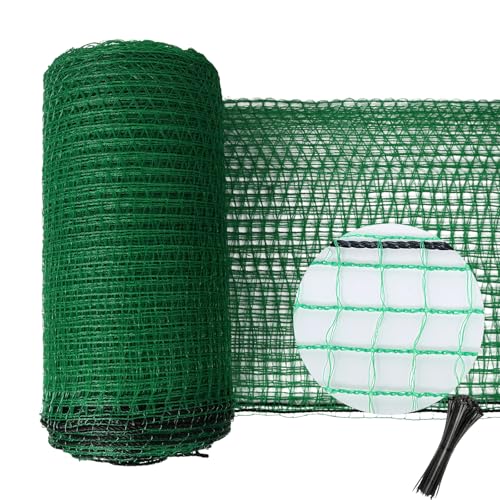
This mesh fence measures 5×100 feet and uses heavy-duty woven HDPE with UV protection. It blocks deer, rabbits, birds, chickens, and other animals while maintaining wind passage and natural airflow. Edges are reinforced with rope to prevent fraying, and the design aims for easy handling and straightforward installation. Best for budget-conscious buyers who still need a resilient barrier across multiple garden beds. A limitation is that smaller mesh may require taller barriers in high deer-traffic zones or where deer can reach over lower sections.
Who it’s best for: Budget-minded gardeners with several beds or a narrow but long garden perimeter. Choose this if you want reliable protection at a lower upfront cost and can manage edge reinforcement during setup.
Buying Guide: Key Considerations For A Deer-Proof Garden
- Garden size and layout: Measure perimeter length and bed shapes. Longer rolls work well for straight borders, while modular kits suit curved or irregular plots.
- Mesh size and material: A 3/4″ mesh is common for deer and rabbits without snagging delicate plants. UV-protected polyethylene or PP materials offer longer outdoor life.
- Installation method: No-dig or low-dig designs save time but require stakes or posts to maintain tension. Consider whether you want removable barriers for seasonal plantings.
- Durability and weather resistance: Look for rust-resistant coatings, corrosion-proof posts, and reinforced edges to withstand sun, wind, and rain.
- Maintenance and aesthetics: Choose a fence style that matches your landscape. Arched panels and decorative borders can add curb appeal while serving a functional purpose.
- Expansion and reconfiguration: If you expect changes to beds or adding new plants, opt for modular systems that can be extended or reoriented.
Practical tips for installing a deer fence
- Anchor posts firmly to avoid sagging. In soft soil, driving posts deeper improves stability.
- Overlap or secure edges to prevent gaps at joints, especially where panels meet or stakes are used.
- Combine fencing with natural deterrents or plant placement to maximize protection during peak forage seasons.
Common scenarios and recommended picks
- Medium garden with a few beds: FEED GARDEN Heavy Duty Deer Netting 7x100ft is a balanced choice for solid coverage and simple setup.
- Large plots with expansive borders: FEED GARDEN Deer Netting 7x200ft provides long-run coverage and lowers the frequency of re-supply.
- Irregular layouts or evolving beds: Tenax 084060 Deer Fence Kit offers modular components and adjustable poles to shape the fence as needed.
- Very long swaths or multiple beds connected: FRUITEAM 8ft×165ft Deer-Fence is ideal for extended runs with fewer joints.
- Budget-focused projects with several perimeter lines: POYEE 5x100ft Deer Fence Netting provides cost-effective spacing with practical durability.
Quick FAQ
What height should a deer fence be for a garden?
Most home gardens benefit from fences at least 6–8 feet tall where deer can jump high. For smaller dogs or other animals, 4–6 feet can suffice depending on local wildlife behavior.
Can I install fencing without digging?
Yes. Many kits use snap circles, stakes, or step-in posts that avoid digging, though some stability is gained by driving posts into the ground.
Will deer damage compost or low-lying plants behind a fence?
A barrier reduces access, but deer can graze along the perimeters. Position fences to create a buffer zone around prized plants and use companion barriers or repellents as needed.
Should I combine fencing with deterrents?
Combining physical barriers with scent, noise, or visual deterrents can enhance protection, especially during migration seasons.
How do I maintain a fence over multiple seasons?
Inspect for sagging, torn mesh, or loose stakes after storms. Tighten, repair, or replace sections as needed to sustain effective defense.