Answering the question of how to protect a spacious 8×12 cedar raised bed, this guide highlights top deer-proof options. The selected models blend solid cedar construction with integrated fencing to deter deer while preserving airflow and sunlight. The best buyers are suburban gardeners needing deer protection, larger families with multiple planting beds, and those who want easy assembly. Below is a quick comparison table of five recommended options to help you decide at a glance.
| Product | Deer Fence Included? | Approximate Size | |
|---|---|---|---|
| Outdoor Living Today 12×8 Western Red Cedar Raised Garden Bed with Deerfence | Yes | 12′ x 8′ | USA |
| Outdoor Living Today 8×8 Deer Proof Raised Garden Bed | Yes | 8′ x 8′ | Canada |
| AMERLIFE Raised Garden Bed with Deer Proof Fence, 7.5Wx17Dx6H | Yes | 7.5′ x 17′ | USA |
| AMERLIFE Raised Garden Bed with Deer Proof Fence, 7.5Wx20Dx6H | Yes | 7.5′ x 20′ | USA |
| Greenes Fence Premium Cedar Raised Garden Bed 8′ x 8′ x 10.5″ | Yes | 8′ x 8′ | USA |
Outdoor Living Today 12×8 Western Red Cedar Raised Garden Bed with Deerfence

Best for: gardeners seeking a large, deer-protected growing area with easy assembly. Why selected: this model combines a substantial 61.3 sq ft growing area with a 5’7″ high deer fence, providing robust defense and sufficient airflow. It requires 4.5 cubic yards of soil for a full bed setup. The pre-assembled panels shorten construction time to about 2–4 hours. Consider this option if you want a ready-to-build, long-lasting cedar solution that scales for family harvests.
Outdoor Living Today 8×8 Deer Proof Raised Garden Bed

Best for: gardeners who want a compact, deer-resistant cedar bed from a trusted Canadian manufacturer. Why selected: this bed emphasizes western red cedar construction and sustainable credentials (PEFC & WRCA Certified). It is a solid choice for small-to-medium plots where deer pressure is present but space is limited. Limitation: the fenced height is optimized for typical deer activity, but extremely tall elk regions may require taller enclosures.
Greenes Fence Classic Cedar Raised Garden Bed, 4′ x 8′ x 14″

Best for: buyers who want a tool-free, easy-to-assemble cedar bed with solid American wood. Why selected: 14″ deep growing bed supports healthy root growth and robust yields, with Greenes’ dovetail system for quick setup. Best for mid-sized spaces; may be smaller than 8×8 options for some users. Caution: width and depth should align with your existing fencing or nearby structures to avoid balance issues in windy yards.
AMERLIFE Raised Garden Bed with Deer Proof Fence, 7.5Wx17Dx6H

Best for: larger plots needing deer protection across a narrower width. Why selected: the 7.5′ x 17′ footprint accommodates a broader planting area with a 19″ depth planter box, providing strong soil volume for vegetables and perennials. Best for homeowners with longer bed layouts. Caution: longer beds may require sturdier staking or anchoring in very windy locations to prevent movement.
AMERLIFE Raised Garden Bed with Deer Proof Fence, 7.5Wx20Dx6H
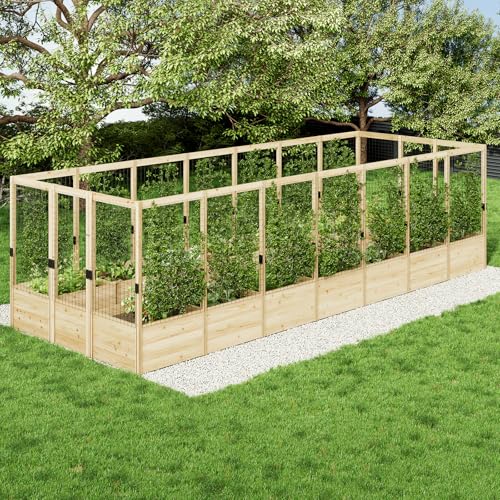
Best for: expansive growing areas where deer risk is a primary concern. Why selected: similar deer protection features with additional depth and length, enabling diverse crop rotations and larger plantings. Choose this if you need a long bed that maximizes soil volume. Limitation: larger footprint may require more outdoor space and soil fill to achieve optimal height and stability.
Greenes Fence Premium Cedar Raised Garden Bed with CritterGuard Fence System, 8′ x 8′ x 10.5″
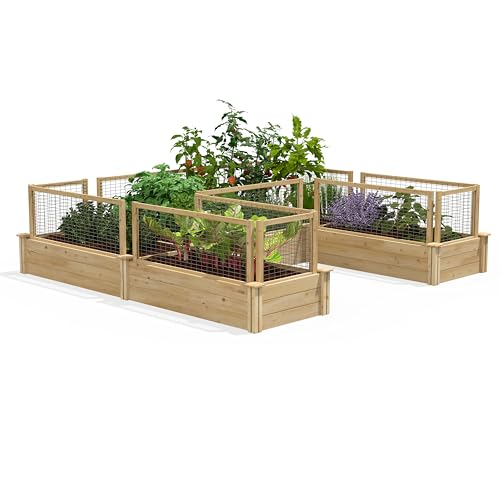
Best for: homeowners seeking a premium, US-made cedar bed with integrated critter protection. Why selected: this 8′ x 8′ bed uses North American cedar, 3/4″ thick boards, and dovetail interlocking joints for tool-free setup, paired with a critter guard system to deter small and mid-sized animals. Avoid this if you need a deeper bed or a different fence height; depth is 10.5″ and surface area is fixed at 8′ x 8′.
Greenes Fence Premium Cedar Raised Garden Bed, 4′ x 8′ x 17.5″

Best for: gardeners focusing on compact layouts with robust cedar material and fast setup. Why selected: the 4′ x 8′ bed offers durable, chemical-free cedar and reliable dovetail joints for quick assembly. Useful for establishing a starter deer-protected bed or for creating a multi-bed layout within a limited space. Limitation: smaller footprint compared to 8′ x 8′ or 12′ x 8′ options.
Buying Guide: Key Purchase Considerations
- Deer protection level: Look for a fence high enough to deter local deer activity and check whether the fence is integrated or an add-on.
- Bed depth and soil volume: Deeper beds support larger root systems; ensure you have access to enough soil mix to fill the bed.
- Material quality and origin: US-made cedar boards reduce chemical exposure and often offer longer durability; verify certification where relevant.
- Assembly effort: Pre-assembled panels or dovetail systems can dramatically reduce setup time.
- Size fit: Align bed dimensions with your garden layout, tiered planting plan, and existing fences or structures to avoid spatial conflicts.
- Drainage and airflow: Favor beds designed to maintain good airflow and drainage for healthy root zones.
- Warranty and care: Consider cedar care requirements and any manufacturer-facing warranty details for long-term use.
Frequently Asked Questions
- Do cedar raised beds inherently deter deer, or is fencing necessary? Answer: Cedar provides durable structure but deer deterrence relies on an integrated or adjacent fencing system.
- What size is best for a family garden with deer pressure? Answer: An 8×8 or 12×8 bed offers ample growing space while allowing room for fencing and pathways.
- Is tool-free assembly common for these beds? Answer: Several models feature dovetail joints or pre-assembled panels that simplify setup.
- Are these beds made in the USA? Answer: Some models are made in the USA, while others come from Canada or other regions; check product pages for origin.
- Can I expand my bed later if I need more space? Answer: Many modular Cedar bed designs allow additional panels or extensions, depending on the model.
- What depth is ideal for vegetables and root crops? Answer: 14″ to 20″ depths typically support a wide range of vegetables and deep-root crops.