Eliminating duckweed in ponds is best achieved with targeted aquatic herbicides and algaecides that control floating and submerged vegetation without harming fish. The top products below are selected for practical use, broad weed control, and ease of application. They’re suited for pond owners, HOAs, and small lake managers seeking long-lasting results while maintaining healthy pond ecosystems.
| Product | Best For | Application Note |
|---|---|---|
| Airmax Wipeout Pond Weed Defense (4 oz) | Small to medium ponds; careful seasonal treatment | Simple edge-area dosing; gradual control |
| Airmax Wipeout Pond Weed Defense (8 oz) | Medium ponds needing longer season protection | All-season coverage; larger volume per treatment |
| Tsunami DQ Aquatic Herbicide (Quart) | Lakes and larger ponds with extensive weed problems | Fast-acting, broad-target control |
| Airmax Knockdown Defense (16 oz) | Algae and mixed weed outbreaks; rapid response | Liquid formulation for quick mixing and use |
| Airmax EasyKlear Pond & Lake (15 lbs) | Bottom-growing algae and submerged weeds | Granular, no mixing; long-lasting action |
Airmax Wipeout Pond Weed Defense, 4 Ounce
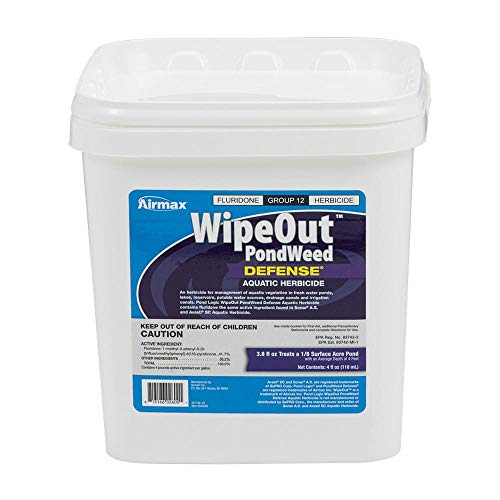
Product overview: A long-term pond weed control solution that treats the entire water body. The systemic floridone herbicide slows growth of submerged and floating weeds by reducing chlorophyll, limiting nutrients without rapid oxygen loss or fish kill. This makes it suitable for ponds with fish and vegetation balance concerns.
Best for: Small to medium ponds where homeowners want an easy, season-long solution without frequent reapplication. Ideal for busy owners and community ponds seeking steady control with minimal maintenance.
Why chosen: Effective, broad-spectrum performance on floating and submerged species, including common duckweed varieties, without heavy equipment. The all-season approach reduces the need for frequent treatments.
Caution: Do not rely on a single treatment for dense, established weed beds. Follow label instructions to avoid unintended impacts on non-target plants.
Airmax Wipeout Pond Weed Defense, 8 Ounce

Product overview: Similar long-term weed control in a larger bottle, designed to cover bigger water volumes. It follows the same systemic herbicide approach to slowly starve submerged and floating weeds of nutrients.
Best for: Medium to larger ponds with ongoing weed challenges and where a single-edge treatment covers more area per application.
Why chosen: The larger quantity provides a cost-effective option for higher-volume water bodies while maintaining ease of use.
Caution: Ensure even distribution around the pond edge to avoid untreated pockets where weeds can regrow quickly.
Tsunami DQ Aquatic Herbicide (Quart)

Product overview: A diquat-based aquatic herbicide designed for rapid and broad control of submerged, floating, and emerged weeds. The quart size is aimed at larger bodies of water or substantial weed populations, delivering fast results.
Best for: Lakes and large ponds facing a mix of duckweed and other emergent weeds where quick action is desired.
Why chosen: Known for quick knockdown of multiple weed types, which helps to restore water clarity sooner after application.
Caution: Not available in certain states; verify local regulations before purchase and use. Follow label directions regarding water-use restrictions and safety precautions.
Airmax Knockdown Defense 2-in-1 Liquid Pond Algae Control (16 oz)

Product overview: A fast-acting liquid algaecide and aquatic herbicide designed to address both algae and floating or submerged weeds. It’s formulated for easy measurement, mix, and application, with a suggested use of surfactants and a tank sprayer for best results.
Best for: Ponds and lakes where rapid clarity is a priority and mixed weed-algae problems are common. Suitable for circular or irregular water bodies where precise application is needed.
Why chosen: Quick disruption of algae blooms and weed growth helps prevent duckweed from spreading while enabling regular maintenance cycles.
Caution: Use as directed with a compatible surfactant and sprayer to ensure even coverage and maximize effectiveness; avoid applying during extreme heat or wind conditions that can reduce efficacy.
Airmax Knockdown Defense 2-in-1 Liquid Pond Algae Control (16 oz) with Treatment Booster

Product overview: Enhanced formulation with a booster option for faster action against algae and weeds. It shares the same liquid delivery method for ease of use and rapid results.
Best for: Quick response scenarios where overcrowded weed patches and algal blooms threaten water quality within a single season.
Why chosen: The booster variant can accelerate initial control, making it a good fit for urgent pond-maintenance plans.
Caution: Re-apply only as recommended; overuse can disrupt beneficial microflora and oxygen dynamics in densely populated ponds.
Airmax EasyKlear Pond & Lake Algae & Weed Vegetation Control (Granular, 15 Lbs)

Product overview: A 2-in-1 granular treatment designed to control algae and submerged weeds, including challenging species like Chara. Granules sink quickly to target weeds, with no mixing required.
Best for: Larger ponds or those with dense bottom-growing vegetation where a granular approach reduces manual application effort and provides ongoing control over time.
Why chosen: The granules’ sinking action helps target bottom weeds directly, complementing surface-focused treatments for comprehensive control.
Caution: Proper spreader calibration is essential for even coverage; uneven spreading can leave untreated areas where weeds rebound.
Buying Guide: Key Considerations For Choosing Duckweed Treatments
- Weed profile: Identify whether your pond mainly has floating duckweed, submerged weeds, or a mix. Some products are formulated especially for duckweed, while others target a broad spectrum of aquatic weeds and algae.
- Pond size and water volume: Larger water bodies typically require higher volumes or combination treatments to achieve even coverage. Always calculate per-application dosing according to product label directions.
- Environmental impact: Consider non-target plants, fish, and beneficial microbes. Choose products with a gradual, systemic action for fish-friendly results and lower risk of oxygen depletion.
- Application method: Liquid formulations mix with pond water and require sprayers or spreaders, while granular options simply scatter onto the water surface or apply to the littoral zone. Select a method that fits your equipment and skill level.
- Seasonal timing: Some products work best when duckweed blooming is underway or prior to rapid growth spurts. Plan applications to align with your local climate and pond usage.
- Regulatory considerations: Some products are restricted in certain states. Verify local regulations and ensure compliance before purchase and use.
- Long-term management: For ongoing ponds, a schedule combining a primary weed-control product with an algae-control program can help maintain clarity and reduce recurring duckweed blooms.
Practical Tips For Safe And Effective Use
- Test a small, inconspicuous area first to observe how the pond responds before full-scale treatment.
- Avoid applying on windy days to limit drift to shoreline vegetation or wildlife habitats.
- Follow label instructions for water-use restrictions, fish safety, and pesticide recovery times.
- Use a compatible surfactant when applying liquid formulations to improve spreading and coverage.
- Maintain a regular monitoring schedule to assess weed rebound and adjust frequency or product choice accordingly.
FAQ
- What is the quickest way to reduce duckweed in a pond? Use a fast-acting aquatic herbicide designed for duckweed and mixed aquatic weeds, preferably formulations that show rapid chlorophyll disruption and weed kill. Follow label directions and monitor fish health.
- Can I use multiple products together? Yes, but only if the label allows tank-mixing or sequential use. Check compatibility and timing to avoid negative interactions or reduced efficacy.
- Is duckweed harmful to my pond’s ecosystem? Duckweed can shade other submerged plants and affect oxygen dynamics if it blooms excessively. Targeted control helps maintain biodiversity while keeping water clear.
- Do these products pose a risk to fish? Most products are formulated to minimize fish harm when used as directed. Always adhere to label precautions regarding fish safety and application timing.
- Should I hire professional help for large ponds? For large lakes or complex weed issues, professional pond-management services can ensure precise treatment plans, proper dosing, and regulatory compliance.
- How soon will I see results? Results vary by product and weed density, but fast-acting formulas often show visible reduction within days, with continued improvement over weeks.