Yes—multi-room grow tents can streamline indoor horticulture by separating propagation, vegetation, and flowering areas within a single frame. This guide highlights five options that emphasize distinct interior chambers or layered layouts, helping you tailor environments for different plant stages. Ideal buyers include hobbyists who want year-round cycles, small commercial setups, and anyone aiming to stabilize light, heat, and humidity while keeping odors contained.
Product snapshot: the following five tents are selected for their built-in multi-chamber or multi-story designs, offering separate spaces for distinct growth phases. The table provides quick comparison data on layout, height, and key strengths.
| Product | Interior Layout | Approx. Height | Best For |
|---|---|---|---|
| VIVOSUN 2-in-1 4×3 Grow Tent | Multi-Chamber (two small + large main area) | 72″ | Propagation + Vegetation + Flowering in one unit |
| VIVOSUN 4×5 Grow Tent 2-in-1 | Multi-Chamber (two small + large main area) | 80″ | Compact year-round cycle with separate stages |
| VIVOSUN D948 2-in-1 9×4 Grow Tent | Multi-Chamber (two small + large main area) | 80″ | Large-scale multi-stage grows with tall canopy potential |
| CastleGreens 48x24x72 Multi-Storey Grow Tent | Multi-layer/Multistorey with six iron mesh panels | 72″ | Six-layer nursery to flowering transitions in one unit |
| Gorilla Grow Tent 4×4 Fixed Height | Single large chamber with tall height (not multi-chamber) | 6’11” | Tall canopy and heavy equipment setups in a sturdy frame |
VIVOSUN 2-in-1 4×3 Grow Tent

- Best for: Small- to mid-sized indoor gardens needing dedicated propagation and flowering zones in one footprint.
- Why selected: This 4×3 setup provides two interior chambers plus a larger main area, enabling staggered growth stages without buying separate tents.
- Limitation: Descriptions emphasize light containment and chamber layout; exact interior dimensions for each chamber aren’t listed.
VIVOSUN 4×5 Grow Tent 2-in-1
- Best for: Medium-scale indoor growers who want a larger multi-room footprint for propagation and flowering.
- Why selected: The multi-chamber design across a 5×4 footprint provides flexible staging while maintaining lightproofing with reflective Mylar surfaces.
- Limitation: Larger footprint may require more ceiling height and a sturdier setup for heavy equipment.
VIVOSUN D948 2-in-1 9×4 Grow Tent
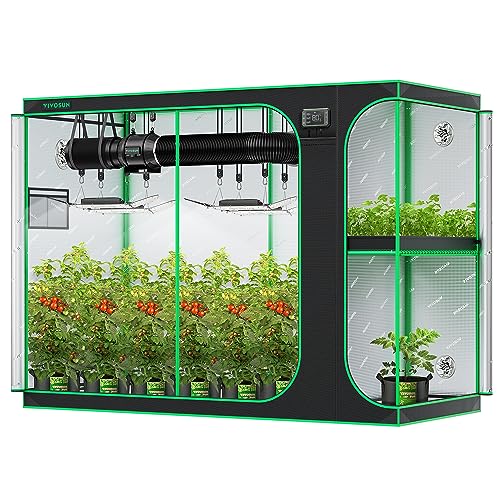
- Best for: Larger home grows that need three distinct zones within a single tent footprint.
- Why selected: The 9×4 unit continues the multi-chamber concept at a bigger scale, supporting propagation, vegetation, and flowering with robust light containment.
- Limitation: The larger size can pose setup and space challenges in smaller rooms.
CastleGreens 48x24x72 Multi-Storey Grow Tent

- Best for: Growers seeking a true multi-layer setup with enhanced observation and modular space.
- Why selected: This tent includes six iron mesh panels and a transparent front window, enabling layered nursery-to-flowering growth in one enclosure.
- Limitation: The multi-layer design may be more complex to assemble and maintain than single-chamber tents.
Gorilla Grow Tent 4×4 Fixed Height

- Best for: Growers needing tall overhead space with a sturdy frame for heavier equipment.
- Why selected: While not a true multi-chamber tent, its height and durability support larger, taller canopies and heavier gear within a single main chamber.
- Limitation: This model lacks built-in multi-chamber zoning; consider it when height and load capacity matter most.
Buying Guide
What makes a multi-room grow tent different? Look for multiple internal compartments or a floor plan that separates propagation, vegetation, and flowering areas. Key factors include height clearance, lightproof construction, frame strength, and ease of assembly.
- Internal layout: Prefer tents advertised as multi-chamber or multi-storey, which help isolate heat, humidity, and light between stages.
- Height and space: Taller tents enable tall plants and bigger lights; ensure your room can accommodate the height plus ventilation needs.
- Light containment: Heavy-duty zippers, double stitching, and thick canvas with reflective interior improve efficiency and reduce light leaks.
- Ventilation compatibility: Check for venting options and mesh panels that support airflow without compromising isolation between chambers.
- Floor protection: A removable, waterproof floor tray simplifies cleaning and containment of spills or runoff across zones.
- Durability: Look for reinforced metals, weight capacity for hangings, and high-density fabric for long-term use.
FAQ
- What is a multi-room grow tent? A single tent unit designed with separate interior zones for different growth stages or functions, reducing the need for multiple tents.
- Who should consider a multi-room tent? Gardeners who run propagation, vegetative growth, and flowering phases concurrently, or who want to quarantine certain stages for pests or diseases.
- Are multi-storey tents easier to manage than single-chamber tents? They can be more efficient for space and organization but may require careful setup to balance airflow and humidity across layers.
- Can I use a regular tent for multi-stage grows? Regular tents can be adapted, but multi-chamber designs optimize light use and climate control within one enclosure.
- What maintenance is required? Regular cleaning of interior surfaces, checking zipper seals, and ensuring proper ventilation across zones to prevent mold and heat buildup.
- Do these tents support heavy lighting and carbon filters? Most multi-room tents have frames rated for substantial hanging weight, but confirm the listed capacity for your gear.