Looking for plastic round tree rings that protect roots, control weeds, and conserve water? This guide identifies five top options and explains who each Product is best suited for. The selections cover deep-root irrigation basins, non-woven mulch rings, and lightweight craft-worthy rings suitable for DIY projects. Use this to compare sizing, material, and installation needs before you buy.
| Product | Type | Best For |
|---|---|---|
| WaterRounds 6 Pack 24″ Tree Watering Rings | Deep-root irrigation basin | New plantings, drought-prone landscapes |
| TezhiIe Non Woven Tree Rings 24.4″ | Biodegradable weed barrier rings | Long-term weed control with root protection |
| Macarrie 16.5″ Non-Woven Tree Mulch Rings | Weed barrier mats | Smaller trees, dense plantings |
| UCandy 32.5″ Non-Woven Tree Mulch Ring | Non-woven weed barrier mat | Large trees, moisture retention |
| SYWHXY 10 Pack 10.6″ Non-Woven Tree Mulch Ring | Weed barrier mats | Compact trees, easy spacing |
WaterRounds 6 Pack 24″ Tree Watering Rings
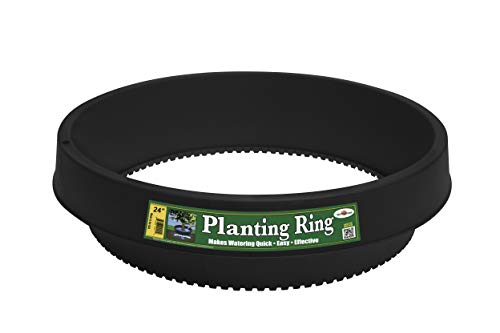
These 24-inch rings install around a tree without tools or digging. The built-in basin holds up to 5 gallons of water and slowly releases it to the root zone, boosting deep hydration while minimizing surface runoff.
Best for: new or established trees in drought-prone landscapes, especially where watering efficiency matters. The product is designed to water deeply rather than spray across the surface, which helps shrubs and small trees establish strong root systems.
Limitation: as a water-delivery ring, it may be larger than needed for small ornamentals and can be heavy when filled; ensure space around the trunk for installation and maintenance.
TezhiIe 10 PCS Non Woven Tree Rings, 24.4″

These biodegradable, non-woven rings act as weed barriers while maintaining soil moisture and promoting root health. They combine durability with natural degradation to reduce waste over time.
Best for: gardeners seeking an eco-friendly weed-control solution that also supports moisture retention for young trees. They provide a balance of airflow and water permeability.
Caution: while durable, they rely on gradual degradation; for high-traffic areas or heavily mowed borders, check wear over seasons and replace as needed.
Macarrie 16.5 Inch Non-Woven Tree Mulch Ring

This 16.5-inch non-woven ring helps keep soil moist and protect tree roots while preventing weed growth and lawn mower damage. It’s a cost-effective way to enclose smaller trees in a breathable barrier.
Best for: smaller trees or tight landscape spaces where a compact ring is ideal. The design supports root health with air and moisture permeability.
Limitation: outer diameter is 16.5 inches, so very large trunks may require larger rings or alternative forms.
UCandy 32.5″ Non-Woven Tree Mulch Ring
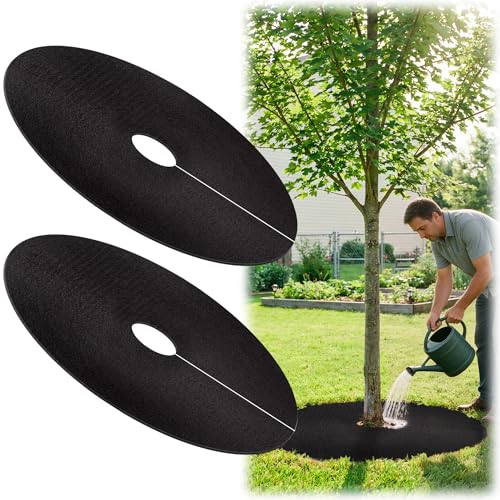
This 32.5-inch ring provides a sizable barrier around larger trees, offering robust weed control and moisture retention. It is biodegradable and designed to maintain soil health around the root zone.
Best for: larger specimens or landscapes where a wide ring minimizes weed competition and simplifies maintenance. It also aids in keeping mulch in place around the trunk.
Limitation: larger size may not fit tight garden areas or mulch beds with limited space; ensure clearance around the trunk before installation.
SYWHXY 10 Pack Non-Woven Tree Mulch Ring

This 10.6-inch ring is a compact option designed for weed control and root protection. The non-woven material offers air and water permeability while resisting sun exposure.
Best for: small to medium trees where a simple, reusable barrier is desired. It’s easy to install around the trunk with a snug fit to protect roots from mowing and weed competition.
Limitation: smaller diameter may require multiple rings for larger trunks or wider root zones; consider planting spacing when choosing this size.
Buying Guide
What size should you choose?
Size matters for root coverage and access. For newly planted trees, a larger ring (like 24–32 inches) helps shield the root zone and supports deep watering. For mature trees or tight spaces, 10–16 inch rings provide targeted protection without crowding the trunk.
What material should you prefer?
Non-woven mulch rings are breathable and help with moisture retention. Biodegradable options reduce waste over time but may require replacement as they degrade. For watering rings, ensure the design delivers water effectively to the root zone without causing runoff.
How important is water management?
If your goal is drought resilience, choose rings with built-in basins or slow-release features that deliver water directly to the root zone. These reduce evaporation and help plants establish strong, drought-tolerant roots.
How durable are these rings in landscaping?
Durability depends on material and exposure. Non-woven fabrics resist tearing and sun exposure longer in low-traffic areas. Plastic or resin rings used for craft or decorative purposes are typically lightweight and easier to relocate but may not last as long in heavy use zones.
Are installation and maintenance considerations important?
Many rings are tool-free and install around the trunk by simply placing and securing. Consider whether you need annual maintenance to adjust mulch, inspect for weed growth, or remove and replace rings as trees grow or landscape plans change.
Usage scenarios summary
- New plantings in drought-prone yards: Watering-ring options.
- Eco-friendly weed control: Biodegradable non-woven rings.
- Large trees with broad trunks: Wider non-woven rings for adequate coverage.
- Compact gardens or planters: Smaller rings with tight fit.
- DIY and crafts: Durable plastic rings for creative projects with a woody theme.
Frequently Asked Questions
- What is the main purpose of plastic round tree rings?
- Can these rings be reused year after year?
- Do rings prevent lawn mower damage?
- Which ring size is best for a newly planted sapling?
- Are biodegradable rings as durable as non-biodegradable options?
They protect root zones, control weeds, and in some cases improve water efficiency by delivering moisture to the root zone.
Many non-woven rings are designed for repeated use and can be repositioned as trees grow. Check the product description for reuse guidance.
Yes, several rings act as a barrier to mower blades and weed growth, protecting the trunks and shallow roots.
For saplings, start with a 16–24 inch ring to provide space for growth and ensure adequate moisture delivery.
Biodegradable rings reduce waste but may degrade over time; non-woven options offer longer-lasting protection in demanding conditions.