Answering the question with clear, practical choices: these organic pesticides are designed for cannabis cultivation, focusing on safety, efficacy, and ease of use. Best for home growers seeking non-toxic options, best for small gardens, and best for growers who need a broad-spectrum solution without compromising flavor. The top picks here target common cannabis pests while remaining friendly to beneficials and the harvest.
The table below compares five products commonly used by cannabis growers who prefer organic inputs. Use this as a quick reference to decide which product fits your grower profile, then read the detailed sections for each item.
| Product | Best For | Notes |
|---|---|---|
| AgroMagen GrowSafe 8.5 fl oz | Small- to medium-sized grows needing targeted miticide/ fungicide | Oil-based, easy mixing, non-toxic ingredients |
| AgroMagen GrowSafe 33.8 fl oz | Larger grows requiring larger-volume solution | Same formulation family; scalable. |
| AgroMagen GrowSafe Ready-to-Use 24 fl oz | Home gardens needing ready-to-use convenience | Pre-mixed, quick spray readiness |
| Organic Laboratories Lab QT Organocide 3-in-1 Garden Spray | Broad insect and mite control with fungicidal action | OMRI-listed, flexible use in various settings |
| Debug Turbo 1QT Organic Pesticide | Neem-based multi-purpose control with aphids and mites | Contains azadirachtin and neem oil; short REI/PHI |
AgroMagen GrowSafe Bio-Pesticide, 8.5 Fl Oz

Overview: This organic miticide, fungicide, and insecticide is designed to combat spider mites (two-spotted, broad, russet), whiteflies, aphids, powdery mildew, and downy mildew. It relies on all-natural, food-based ingredients suitable for organic gardening and is touted as non-toxic. The formula is described as a unified, stable oil blend that mixes well with water and minimizes leaf burn or flavor impact on the harvest.
Who it’s best for: Small to medium cannabis cultivators seeking an organic option with targeted pest coverage. The product is marketed for growers who want a non-toxic approach that is easy to mix and apply across multiple pest types.
Why chosen: It consolidates several pest-control functions into a single product and emphasizes plant safety and flavor integrity. The oil blend is highlighted for safer performance than some alternative oils.
Cautions/Limitations: The product notes effectiveness on specific pests and relies on oil-based chemistry, which may require careful spraying conditions to avoid phytotoxicity in extreme temperatures or on sensitive cultivars. Always follow label directions for dilution and timing.
AgroMagen GrowSafe Bio-Pesticide, 33.8 Fl Oz

Overview: This larger-volume version shares the same organic formulation as the 8.5 oz option, targeting the same pests: spider mites, whiteflies, aphids, powdery mildew, and downy mildew. It emphasizes non-toxic, food-based ingredients and an oil blend designed for easy mixing without separation or leaf damage.
Who it’s best for: Growers with bigger plant counts or commercial setups that need a scalable organic solution without increasing application complexity.
Why chosen: The larger size provides a cost-per-application advantage for bigger operations while keeping the same safety and efficacy profile described for the smaller bottle.
Cautions/Limitations: As with any oil-based spray, environmental conditions and plant sensitivity can influence results. Ensure proper coverage and avoid spraying during peak heat to minimize leaf burn risks.
AgroMagen GrowSafe Ready-to-Use 24 Fl Oz

Overview: A ready-to-use variant designed for quick application without pre-mixing. It covers the same pest spectrum as the other AgroMagen GrowSafe products, emphasizing non-toxic, organic ingredients and a stable oil blend that blends easily with water when diluted as directed.
Who it’s best for: Growers who value immediate deployment and minimal preparation, especially in on-site maintenance where quick response to an outbreak is needed.
Why chosen: The ready-to-use format reduces handling steps and time-to-spray, making it convenient for frequent applications or spontaneous pest issues.
Cautions/Limitations: Pre-mixed products can be less flexible in dilution if pest pressure is unusually high; always confirm dilution instructions if the bottle is intended for dilution before use.
Organic Laboratories Lab QT Organocide 3-in-1 Garden Spray

Overview: Organocide is a nature-safe organic insecticide and fungicide designed to tackle a broad range of insects and mites. It is marketed as a safer alternative to harsher pesticides and is EPA exempt for certain uses. It permits spraying at harvest time or indoors and claims no significant environmental risk.
Who it’s best for: Growers seeking a broad spectrum organic spray that also provides fungicidal action, suitable for integrated pest management programs where indoor or greenhouse environments demand flexible timing.
Why chosen: Its 3-in-1 description highlights convenience for growers needing insecticidal, miticidal, and fungicidal coverage from a single product, aligning with organic cultivation goals.
Cautions/Limitations: As with any broad-spectrum organic spray, it may affect non-target organisms if misapplied. Always follow label directions to limit impact on beneficial insects and apply within recommended intervals.
Organic Laboratories 100-004 Organocide 3-in-1 RTU Garden Spray
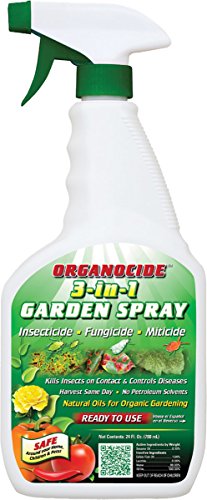
Overview: This RTU variant is OMRI-listed and designed for organic production. It uses a blend of soybean extract and sesame and fish oils to provide insecticidal and fungicidal action against a variety of pests and diseases, with a focus on safe use in organic systems.
Who it’s best for: Growers needing a ready-to-use organic option that can be applied in diverse settings, including outdoor and greenhouse environments, without complex preparation.
Why chosen: The OMRI listing and plant-safe formulation support compliance with organic cultivation standards while offering practical pest control for cannabis crops.
Cautions/Limitations: Avoid spraying during extremely hot conditions or when plants show signs of stress to prevent potential leaf burn or reduced photosynthesis. Use as part of a broader IPM plan to reduce resistance development.
Debug Turbo Organic Pesticide, 1 Quart

Overview: Debug Turbo combines 0.7% azadirachtin and 65.8% neem oil to deliver a four-in-one approach: insecticide, fungicide, miticide, and nemacide. It emphasizes a multi-pest control strategy within organic gardening.
Who it’s best for: Growers facing a mix of pests in cannabis crops who want a single product with broad-action neem-based chemistry, especially in environments where quick action against multiple pests is needed.
Why chosen: The azadirachtin and neem oil combination is a classic organic option that often complements other IPM practices, offering a flexible tool for pest management.
Cautions/Limitations: Neem-based products can vary in performance depending on pest species and growth stage. Avoid using during periods of intense heat or high light intensity if leaf burn risk is noted by the label.
Buying Guide: Key Purchase Considerations
- Target pests: Identify whether your cannabis grow is dealing with spider mites, whiteflies, aphids, powdery mildew, downy mildew, or a mix. Choose a product that explicitly lists your key pests.
- Mode of action: Consider whether you need a miticide, fungicide, insecticide, or a broad-spectrum solution. Organic options often combine several actions in one formula.
- Form factor: Ready-to-use sprays save prep time; concentrates reduce cost per application but require dilution. Match the format to your workflow.
- Safety and organics status: Look for OMRI-listed or EPA-exempt labels if you require strict organic compliance for cannabis production.
- Crop stage and environment: Some products are safer near harvest or for indoor applications. Check re-entry intervals and pre-harvest intervals on the label.
- Plant sensitivity and flavor: Oil-based and neem-based products may influence essential oil profiles or aroma if applied heavily. Moderate use and proper timing help preserve quality.
- Resistance and rotation: Avoid relying on a single product. Rotate among products with different active ingredients to minimize pest resistance development.
FAQ
- Q: Can I use these products on cannabis during flowering? A: Some products permit use near harvest as per label guidelines; always verify harvest-related timing on the product label before applying.
- Q: Are these products safe for beneficial insects? A: Organic formulations aim to be gentler than synthetic pesticides, but broad-spectrum products can affect non-targets. Apply with targeted timing and consider IPM strategies.
- Q: Do these products leave residues on cannabis buds? A: Organic inputs are designed to minimize residue effects; follow label directions to reduce any potential residue impact on flavor or aroma.
- Q: How should I store these products? A: Store in a cool, dry place away from direct sunlight and heat sources. Always seal tightly to maintain stability.
- Q: Can I mix different products? A: Do not mix unless the label explicitly permits mixing. Some combinations may cause phytotoxicity or reduced efficacy.
- Q: What is the best IPM approach for cannabis? A: Use a layered strategy that includes cultural controls, sanitation, beneficials where appropriate, and a rotation of labeled organic products to manage pests effectively.