Answering the search for durable, flowering shrubs, this guide highlights top Rose of Sharon options ideal for American landscapes. These selections suit different buyers: seasoned gardeners seeking vibrant color, first-time planters wanting easy-care shrubs, and landscapers aiming for layered garden design. The table below compares five strong choices, helping you pick by color, size, and suitability.
| Product | Best For | Key Feature |
|---|---|---|
| 2 Rose of Sharon Tree Live Plant – Red Althea | Semi-established red color accents | Two young shrubs, red blooms, upright growth |
| Proven Winners White Pillar Rose of Sharon | Bright, tall white blooms in borders | 2 Gal., full sun to partial shade |
| Proven Winners Purple Pillar Rose of Sharon | Colorful focal point in beds | 2 Gal., tall pillar habit |
| Proven Winners Dark Lavender Chiffon Rose of Sharon | Soft lavender tones with striking form | 2 Gal., larger mature size |
| TriStar Pink Rose of Sharon | Pink flowering shrub for mixed borders | 1 Gal., pink blossoms, fast growth |
Below are five detailed product sections. Each entry includes who it’s best for and why it was selected, plus a practical caution to consider during planting or maintenance.
2 Rose of Sharon Tree Live Plant – Red Althea

Best for color accents in residential landscapes, these two Hibiscus syriacus shrubs rise 1–2 feet tall now and will develop into taller, flowering plants over time. The standout red blooms provide a bold contrast against green foliage, ideal for borders, entryways, or focal plantings. Choose this if you want a quick, paired-impact display with reliable outdoor hardiness. Caution: young plants will establish gradually; routine watering and mulching support root development in hot summers.
Proven Winners White Pillar Rose of Sharon (Hibiscus) Shrub

Best for bright, clean accents in sunny borders, this 2-gallon white pillar rose of Sharon is designed for full sun to partial shade and a mature width of about 24–36 inches with a tall height. It’s well suited for gardeners seeking a striking vertical element in beds, fences, or mixed borders. Why selected: reliable color in a classic pillar form that complements darker foliage plants. Caution: ensure plenty of sun exposure to maximize bloom production.
Proven Winners Purple Pillar Rose of Sharon (Hibiscus) Shrub

Best for adding bold color in larger landscapes, this purple pillar form grows to a similar width and height as the white variety, making it a logical side-by-side option for contrast. Selected for gardeners who want a cohesive, tall pillar display across beds. Caution: mature size can require generous spacing between plants to avoid crowding in smaller plots.
Proven Winners Dark Lavender Chiffon Rose of Sharon
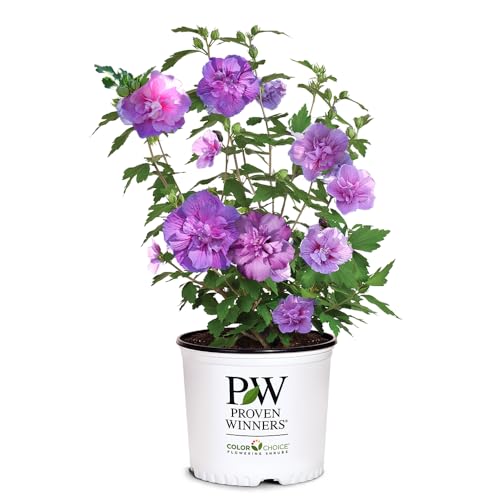
Best for soft color palettes in mid- to large-sized gardens, this lavender-toned cultivar features a larger mature footprint for a dramatic statement. It suits expansive borders or as a backdrop for ever-green shrubs. Why chosen: a reliable, showy lavender flower with a robust habit that can anchor a color palette across the season. Caution: taller varieties may require staking or support in strong winds early on.
TriStar Pink Rose of Sharon – 1 Gallon

This pink cultivar is ideal for mixed borders or screens, offering a relatively compact size in a 1-gallon pot. It’s best for gardeners seeking a fast-growing pink flowering focal point without occupying too much space initially. Selection rationale: flexible in placement, easy to establish, and adds a warmer hue to spring through late summer. Caution: pink blooms may vary with light exposure and soil conditions; monitor for consistent watering to sustain bloom quality.
Buying Guide
Key purchase considerations for Rose of Sharon shrubs:
- Sunlight and soil: Most cultivars prefer full sun to partial shade and well-draining soil. Assess your site’s sunlight hours and amend soil if needed.
- Size at maturity: Check mature width and height to ensure proper spacing, especially for pillar forms and larger varieties.
- Color and form: Decide whether you want a vertical pillar, a free-branching shrub, or a multicolor display to match your landscape design.
- Watering needs: Young plants benefit from regular watering during establishment, especially in hot climates.
- Maintenance: Consider pruning requirements to maintain shape and promote blooms; some cultivars respond well to light shaping.
- Hardiness: Most Rose of Sharon perform well in USDA zones 5–9; verify zone compatibility with your local climate for best results.
FAQ
- What is the Rose of Sharon best for in a garden?
A: It serves as a colorful focal point, border accent, or backdrop for pollinator-friendly plantings, depending on cultivar and size. - Do Rose of Sharon shrubs require a lot of maintenance?
A: Generally low to moderate maintenance. Pruning after flowering can help maintain shape, and regular watering during establishment supports healthy blooms. - Which Rose of Sharon grows tallest?
A: Some cultivars can reach significant heights; pillar forms tend to be consistently tall, while wider shrubs vary by cultivar and space. - Are Rose of Sharon good for containers?
A: They can be grown in large containers for a limited period, especially younger plants, but many cultivars grow large and may outgrow pots. - When is the best time to plant?
A: Spring or early fall are ideal planting windows in temperate climates, giving roots time to establish before extreme temperatures. - Can these plants attract pollinators?
A: Yes, Rose of Sharon blooms attract butterflies, bees, and other pollinators when in bloom.