If you are shopping for a UV-C pond pressurized bio filter, you want models that pair strong filtration with reliable UV-C disinfection. These systems help keep koi and ornamental ponds clear by combining mechanical, biological, and UV treatment in one unit. This guide highlights five top options, explains who each is best for, and shows you how to choose based on pond size, flow, and maintenance needs.
Overview at a glance:
| Product | Recommended For | Max Flow (GPH) | UV-C | Notes |
|---|---|---|---|---|
| VIVOGROW Bio Pressure Pond Filter (1580 GPH) | Small to mid koi ponds up to 800 gal | 1580 | 13W | Replaceable sponges; lid turbidity indicator |
| VIVOGROW Bio Pressure Pond Filter (2630 GPH) | Medium koi ponds up to 1300 gal | 2630 | 13W | High throughput for larger ponds |
| RELAX4LIFE Bio Pressure Pond Filter (2642 GPH) | Mid-to-large ornamental or koi ponds | 2642 | 13W | Vortex plus multi-density sponges |
| VIVOGROW Bio Pressure Pond Filter (1840 GPH) | Ponds up to 1000 gal; landscape installations | 1840 | 13W | Four sponges; clear water maintained |
| IRONMAX Pond Filter (2630 GPH) | Decorative ponds and koi ponds up to ~2600 gal | 2630 | 13W | Backflush function for easy cleaning |
VIVOGROW Bio Pressure Pond Filter, 1580 GPH

Best for small to mid-size ponds, this model delivers up to 1580 GPH with a 13W UV-C lamp. It uses four replaceable filter sponges and a turbidity indicator on the lid to cue cleaning. The ABS body offers sunlight resistance and longevity, making it suitable for outdoor setups. Choose this if you have a koi or decorative pond under 800 gallons and want energy-efficient filtration with in-line UV treatment.
Limitation: The maximum flow may be insufficient for larger ponds or high-flow waterfall setups. Regular monitoring of the turbidity indicator helps prevent buildup and maintain water clarity.
VIVOGROW Bio Pressure Pond Filter, 2630 GPH
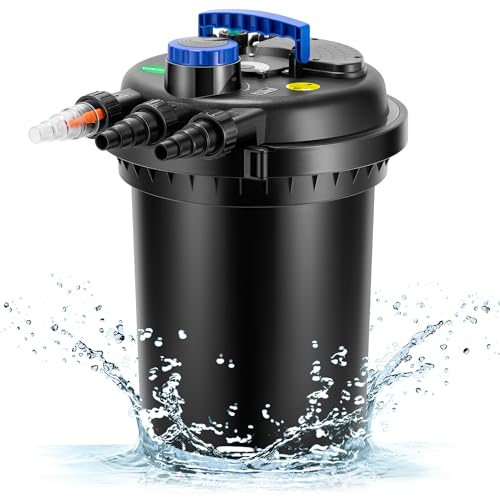
This higher-capacity unit is best for larger koi ponds up to about 1300 gallons or landscape ponds up to 2600 gallons. It maintains water quality with a 13W UV-C lamp and four replaceable sponges, plus a turbidity indicator. Best for owners who need stronger throughput while still relying on UV disinfection. Choose this if you have a medium-to-large pond and want robust filtration with long intervals between maintenance cycles.
Caution: Higher flow requires a compatible pump and plumbing to avoid excessive head pressure. Ensure your pump can support 2630 GPH without overtaxing the system.
RELAX4LIFE Bio Pressure Pond Filter, 2642 GPH
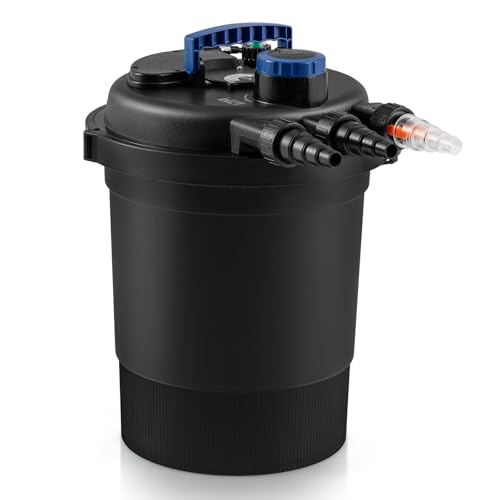
Best for koi and ornamental ponds up to about 1321 gallons or ornamental ponds up to 2642 gallons, this model combines a vortex system with mechanical and biological filtration and a 13W UV-C light. It includes multiple sponge densities for targeted debris removal. Ideal for users who want strong filtration with clear maintenance indicators and a built-in UV treatment for year-round water clarity.
Limitation: The water pump is required but not included, so plan for a compatible pump alignment and space for this unit in your filtration setup.
VIVOGROW Bio Pressure Pond Filter, 1840 GPH

Best for ponds up to 1000 gallons or landscape installations needing reliable filtration, this 1840 GPH unit provides four replaceable sponges and a 13W UV-C lamp. It supports sustained clarity with a durable ABS body and an intuitive turbidity indicator for cleaning. Choose this if you want solid mid-range throughput with straightforward upkeep.
Caution: As with other pressurized units, ensure your pump and plumbing match the 1840 GPH rating to avoid flow shortfalls or excessive head height.
IRONMAX Pond Filter, 2630 GPH

This 2630 GPH unit targets ponds up to 1300 gallons for koi or up to 2600 gallons ornamentally. It combines biological and mechanical filtration with a 13W UV-C lamp and a backflush function for easier maintenance. Best for users who want a high-throughput, backflushing option to reduce downtime during cleaning.
Limitation: Backflush functionality is beneficial, but it requires correct alignment and occasional inspection to ensure seals remain watertight over time.
Buying Guide: Key Considerations for UV-C Pond Pressurized Bio Filters
- Pond size and desired throughput: Match GPH to pond volume and filtration needs. Larger ponds benefit from higher GPH units, but ensure the pump can sustain the flow without excessive head loss.
- UV-C lamp power and maintenance: All listed models use 13W UV-C lamps. Consider lamp replacement intervals and the ease of access for bulb changes.
- Filtration stages: Look for units with mechanical and biological filtration stages plus a vortex or multi-density sponge system for comprehensive cleaning of debris and ammonia.
- Ease of maintenance: Features like replaceable sponges, turbidity indicators, and backflush or cleaning indicators help reduce downtime and simplify upkeep.
- Durability and materials: ABS construction with sun resistance and insulation contributes to longer service life in outdoor ponds.
- Pump compatibility: Confirm your existing pump supports the system’s maximum flow rating and that set-up space accommodates the unit’s dimensions and plumbing.
Frequently Asked Questions
- What does UV-C do in pond filters?
UV-C lamps illuminate the water to kill free-floating algae and reduce green water, while the mechanical and biological stages remove debris and convert ammonia for healthier pond conditions.
- How large should a UV-C filter be for my pond?
Choose based on pond volume and desired clarity. A higher GPH system handles larger volumes and can reduce maintenance frequency, but ensure compatibility with your pump.
- Are backflush filters easier to maintain?
Yes. Backflush systems simplify cleaning by pushing debris out without fully disassembling the filter, saving time and effort.
- Can I run a UV-C filter with a fountain or waterfall?
Yes. Plan plumbing to accommodate additional flow patterns without creating excessive head pressure for the filter.
- What maintenance indicator should I watch for?
Turbidity indicators or cleaning reminders help you know when to refresh sponges or backflush, preserving filtration efficiency.