Answering the search for organic rose care, this guide compares top, readily available fertilizers designed to boost blooms, root strength, and lush foliage without synthetic additives. The right choice depends on your rose type, garden size, and whether you prefer ready-to-use blends or slow-release formulas. The following selections are well suited for amateur and seasoned gardeners alike, offering OMRI-listed or naturally sourced options for roses and flowering plants. The buyer’s table below highlights each product’s strengths and best-use scenarios.
| Product | Best For | Best Use | OMRI/Certifications |
|---|---|---|---|
| Espoma Organic Rose-Tone, 4 lb | All types of roses | Monthly feeding during growing season | Bio-tone enhanced |
| Jobe’s Organics Granular Rose Fertilizer | Small to medium beds, mixed shrubs | Balanced NPK for blooms | OMRI listed |
| Down To Earth Organic Rose & Flower Mix, 5 lb | Organic gardens and containers | Balanced 4-8-4, root/flower boost | OMRI listed |
| Burpee Organic Bloom Granular Food | Container gardens, beds | Long-lasting bloom support | OMRI-listed |
| Espoma Organic Rose-Tone, 8 lb | Larger rose plantings | Monthly feeding through growing season | Bio-tone enhanced |
Espoma Organic Rose-Tone 4-3-2 (4 lb, Pack of 2)
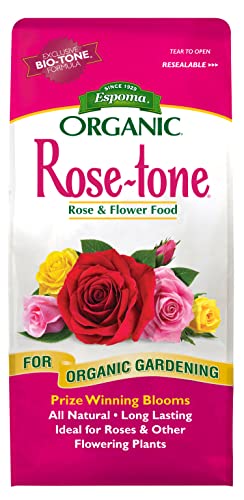
Type: Ready-to-use, organic granular fertilizer. Formulation: 4-3-2 with 5% calcium, enhanced with Bio-tone beneficial microbes.
- Best for: All types of roses, including knockouts and climbers, plus other flowering plants such as viburnum, bougainvillea, and clematis.
- Why selected: Combines natural ingredients with beneficial microbes to support soil biology and steady nutrient release through the growing season.
- How to apply: Apply around the drip line, water thoroughly, and reapply monthly from May through September for ongoing growth and blooms.
- Caution: Do not exceed recommended monthly application; over-fertilizing can stress plants in hot periods.
Jobe’s Organics Granular Rose Fertilizer (4 lbs)

Type: Organic plant fertilizer grains. NPK: 3-4-3. OMRI listed. Focus: Rose and flowering shrubs, with a formulation designed to minimize runoff and handling hazards.
- Best for: Gardeners seeking a straightforward, granular organic option with minimal risk of runoff and easy application.
- Why selected: Balanced nutrients support both flowering performance and foliage without synthetic additives.
- How to apply: Sprinkle around the drip line and water; repeat per season as needed based on plant vigor and growth stage.
- Limitation: May require more frequent application in very hot climates to maintain blooms.
Down To Earth All Natural Fertilizers Organic Rose & Flower Mix (5 lb)

Type: Organic, OMRI listed rose and flower mix. NPK: 4-8-4. Focus: Supports flowering with high phosphorus while maintaining healthy leaves and roots.
- Best for: Organic gardeners growing a mix of roses, bulbs, and ornamentals in beds or containers.
- Why selected: Balanced formula that emphasizes bloom production and root health without synthetic additives.
- How to apply: Follow label directions for soil concentration; water after application to aid uptake.
- Caution: Higher phosphorus means stronger blooms; avoid heavy application if your garden already has adequate phosphorus.
Burpee Organic Bloom Granular Food (4 lb)

Type: Granular plant food, OMRI-listed. NPK: Not explicitly stated here, designed to feed quickly with long-lasting results.
- Best for: Container gardens, beds, and established bushes requiring a quick nutrient flush and long-lasting feeding.
- Why selected: Contains beneficial microbes to promote color, bloom production, and robust root systems.
- How to apply: Mix into soil or potting mix; water to begin nutrient release.
- Limitation: May deliver faster bloom response than some slower-release blends; plan timing to avoid heat stress.
Espoma Organic Rose-Tone 8 lb (2 Pack)

Type: Large-bag version of Rose-Tone, ready-to-use organic fertilizer. Formulation: 4-3-2 with 5% calcium; Bio-tone microbe blend.
- Best for: Larger rose plantings or multi-plant installations needing repeat seasonal feeding.
- Why selected: Same natural formulation as the smaller bag but extended coverage for bigger beds or containers.
- How to apply: Monthly through May–September; apply around the drip line and water well.
- Caution: Ensure even distribution to avoid hotspots near the root zone, which can stress plants in hot weather.
Buying Guide: How To Choose Organic Fertilizers For Roses
What are the key nutrients to look for?
Roses typically benefit from balanced NPK values with emphasis on phosphorus for blooms and calcium for strong cell walls. Look for products labeled OMRI-listed or with organic certification to ensure suitability for organic gardens. Biostimulants like Bio-tone microbes can improve nutrient availability and soil health over time.
What is the right application method?
Most organic rose fertilizers are applied around the drip line and watered in to reach the root zone. Some are ready-to-use blends, while others are granular that require pairing with soil and water. Monthly feeding during the growing season is common, but follow label directions for your climate and rose variety.
Choosing by garden type and rose variety
For container gardens, consider lighter, quicker-acting blends to avoid salt build-up. For large beds, larger bags or concentrates can reduce replacement frequency. If you grow repeat bloom varieties, a steady supply of nutrients through spring and summer helps consistent flowering.
Environmental and safety considerations
Organic options reduce synthetic runoff and support soil life. OMRI listing and bio-enhancers can indicate suitability for organic certification and environmental safety. Avoid creating nutrient overload, especially in small spaces or regions with restricted drainage.
Which product stands out for specific situations?
- Best for beginners: Espoma Organic Rose-Tone 4-3-2 (4 lb) — ready to use with clear monthly schedule.
- Better for large plantings: Espoma Organic Rose-Tone 8 lb (2 Pack) — extended coverage for multiple roses.
- Best for organic purity: Jobe’s Organics Granular Rose Fertilizer — OMRI listed with a balanced NPK.
- Best for container beds: Burpee Organic Bloom Granular Food — quick bloom support with microbial benefits.
- Best overall bloom boost: Down To Earth All Natural Fertilizers Organic Rose & Flower Mix — strong phosphorus and organic foundation.
How to interpret product features
- Bio-tone or microbial blends: Aims to improve soil biology, not just supply nutrients.
- OMRI listing: Indicates suitability for organic gardening.
- Phosphorus emphasis (4-8-4): Encourages flowering and root growth but may require balancing with nitrogen for leaf vigor.
Placement and maintenance tips
- Apply evenly around the drip line and water deeply to reach roots.
- Avoid applying close to stem bases to prevent burn in hot weather.
- Monitor plant response; adjust feeding frequency based on growth rate and bloom intensity.
FAQ
- Q: Are organic fertilizers safe for all types of roses? A: Yes, when used as directed. Check specific product recommendations for rose varieties and container or bed gardening.
- Q: How often should I feed roses with organic fertilizer? A: Most products suggest monthly feeding during the growing season, May through September, or per label instructions.
- Q: Do organic fertilizers cause salt buildup? A: Generally less risk than synthetic fertilizers, but avoid over-application and ensure thorough watering.
- Q: Can I mix organic fertilizers with other soil amendments? A: Yes, but follow manufacturer guidelines to avoid nutrient imbalances.
- Q: Are these products suitable for organic certification? A: Several listed options are OMRI-listed, which supports organic gardening practices.
- Q: Should I use one product or mix multiple brands? A: For simplicity and consistent nutrient delivery, start with one product that matches your garden size and rose type, then consider additional products if growth or bloom targets aren’t met.