Finding a graceful, low-maintenance focal point is easy with a dwarf weeping crape myrtle. This guide highlights compact, ornamental trees ideal for patios, borders, and small landscapes. The top picks below are best for gardeners seeking continuous summer color, manageable height, and a striking silhouette. Each option adapts to containers or in-ground beds, offering varied bloom colors and foliage effects.
| Product | Best For | Height x Width (approx.) |
|---|---|---|
| Near East Crape Myrtle (Weeping Dwarf) | Elegant focal point, medium yards | 8–10 ft tall × 10–12 ft wide |
| Acoma Dwarf Crape Myrtle | Privacy border, formal landscape accents | 8–10 ft tall × 8–10 ft wide |
| Kiowa Crape Myrtle | Hedge or privacy screen | 6–8 ft tall × 6–8 ft wide |
| Velmas Royal Delight | Statement color in small spaces | 8–10 ft tall × 8–10 ft wide |
| Tonto Crape Myrtle | Dense, fast-growing backdrop | 8–10 ft tall × 8–10 ft wide |
Near East Crape Myrtle Weeping Dwarf

Best for a refined focal point, the Near East Crape Myrtle offers a graceful weeping mounding habit that creates an elegant silhouette in landscaped beds or containers. It matures to a compact size, ideal for medium-sized spaces. The abundant light pink blooms appear from early summer into fall, delivering months of color. Best for gardeners who want a dramatic yet understated centerpiece with easy maintenance.
Who it suits: homeowners seeking a low-profile, showy accent for a perennial border or entryway. Why selected: its classic weeping form and long bloom window maximize visual impact without overwhelming a small garden.
Caution: its mature width—10 to 12 feet—requires thoughtful spacing to prevent crowding nearby plants. Plant in well-drained soil with full sun exposure for best bloom production.
Acoma Dwarf Crape Myrtle – Crisp Snow White

This white-blooming dwarf is designed for standout summer color with a clean, crisp look. It grows to 8–10 feet tall and wide, making it an excellent focal point or privacy hedge in smaller landscapes. The plant is shipped 2–4 feet tall in soil-rich pots, ready for transplanting. It pairs well with evergreens or contrasting foliage for a bright, modern garden aesthetic.
Who it suits: gardeners desiring white blooms for a bright, airy effect and a plant that doubles as a soft privacy screen. Why selected: the enduring white florals bring classic elegance that complements many garden palettes.
Caution: seasonal bloom timing may vary with climate; provide full sun for optimum flowering and ensure consistent moisture while establishing in the ground.
Kiowa Crape Myrtle – Snow White, Dwarf Form

Kiowa is a compact, naturally bushy dwarf tree ideal for privacy hedges and borders. It features petite white flower clusters on graceful weeping branches that bloom from summer through fall. In addition to floral display, it offers striking fall foliage color and decorative exfoliating bark in light red, brown, and gray tones. Best for: quick, dense screening with ongoing color shifts across seasons.
Caution: its compact size should not be confused with a low-clustered growth; ensure it has room to spread to achieve that natural hedge effect.
Velmas Royal Delight – Dark Purple Blooms
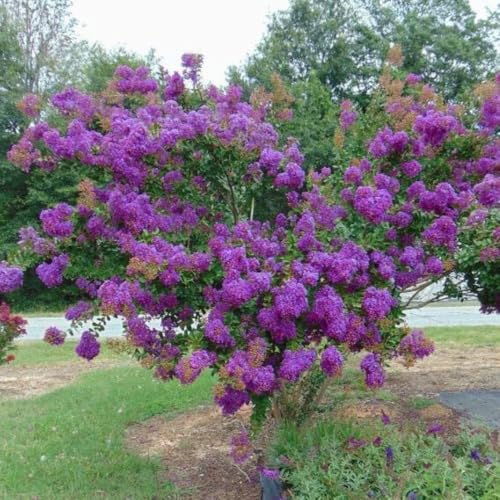
Velmas Royal Delight stands out with extremely dark purple blooms that provide a dramatic contrast against green foliage. This dwarf tree can function as a striking vertical accent in medium-sized landscapes or can be trained as a dense shrub or hedge. It matures to 8–10 feet tall and wide, shipping as a well-established 1–4 foot tall plant for easier transplanting.
Who it suits: gardeners seeking bold flower color for a modern, moody garden palette. Why selected: the unique purple hues and flexible growth form offer design versatility. Caution: color intensity may shift slightly with sun exposure and soil conditions; regular watering during establishment helps stabilize bloom quality.
Tonto Crape Myrtle – Dark Watermelon Red

Tonto offers vibrant dark watermelon red blooms on a fast-growing, compact dwarf tree. It matures to 8–10 feet tall and wide, making it suitable for small gardens and as a bold backdrop or focal plant. It grows quickly to establish a thick, bushy presence, which is ideal for privacy hedges and structure within tight spaces.
Who it suits: homeowners who want rapid impact and dense screening. Why selected: the combination of bright red flowers and fast growth helps fill spaces sooner. Caution: rapid growth means it may require staking or shaping to maintain a desired form in windy sites.
Dwarf Crape Myrtle Diamondettes Cherry Marquis

Diamondettes Cherry Marquis is a compact dwarf variety with vibrant cherry red blooms throughout summer and glossy dark green foliage. It’s well-suited for containers, small patios, and garden beds where color bursts are desired without a large footprint. The plant is characterized by fast, manageable growth and year-round appeal due to its evergreen-like foliage in mild climates.
Who it suits: gardeners prioritizing container-friendly color and low-maintenance care. Why selected: vivid red flower clusters create a striking contrast with foliage, enhancing any small outdoor space.
Crape Myrtle Guy 4 Pack – Pink Blooms

This four-pack delivers a versatile option for larger containers or grouped plantings. The pink blooms provide extended color coverage across the summer into fall. The plants ship in quart containers, offering healthy root systems that facilitate quicker establishment. Best for: massing color in a restricted area or creating a low-maintenance privacy screen. Caution: four compact plants require planning to space evenly for a balanced look over time.
Caddo Crape Myrtle – Perfect Pink Weeping Dwarf

The Caddo stands out for a graceful weeping form and soft pink blooms through summer and fall. It matures as a dwarf tree, 8–10 feet tall and wide, which makes it ideal for specimen planting, driveways, and privacy hedges. It ships 1–4 feet tall in well-rooted pots, ready for garden integration.
Who it suits: buyers seeking a perfect pink weeping accent with versatile use in landscapes. Why selected: its combination of form, color, and manageable size suits many small- to mid-sized yards. Caution: ensure full sun exposure for best flowering performance; protect young plants from heavy frost in colder regions.
Buying Guide: Key Purchase Considerations
- Space and mature size: Most dwarfs reach 6–10 feet tall and wide. Plan planting spacing to avoid crowding and ensure air circulation.
- Sun exposure: Full sun encourages the best bloom production. Partial shade may reduce flowering intensity.
- Soil and drainage: Well-drained soil is essential. Improve soil with organic matter if drainage is poor.
- Watering and establishment: Water regularly during the first growing season. Once established, many dwarf crape myrtles tolerate drought better but appreciate consistent moisture during heat waves.
- Bloom color and season: White, light pink, and deep purple tones appear across several cultivars. Consider color harmony with nearby plants and hardscape.
- Growth habit and maintenance: Weeping and bushy forms provide different silhouettes. Some varieties may require pruning to maintain shape or encourage branching.
Frequently Asked Questions
- What is a dwarf weeping crape myrtle?
It is a smaller cultivar of crape myrtle that develops a cascading, weeping habit and generally remains under 12 feet in height and width, making it suitable for limited spaces.
- When do these plants typically bloom?
Most varieties bloom from early summer into fall, with peak color lasting several weeks depending on climate and care.
- Can these plants be grown in containers?
Yes, many listed varieties ship well-rooted in pots and are suitable for container gardening with appropriate watering and drainage.
- Do they require annual pruning?
Pruning helps maintain shape and fosters branching, but not all cultivars require aggressive pruning. Follow cultivar-specific guidance for best results.
- Are these plants good for privacy hedges?
Some dwarf crape myrtles can form dense screens when planted in a row and allowed to grow, while others are better as focal points or specimen plants. Evaluate the mature width to determine suitability.
- What soil conditions are best?
Well-drained soil with moderate fertility supports robust flowering. Amending heavy clay or poorly drained sites improves establishment success.