Looking for reliable 5-gallon containers to grow vegetables, herbs, or ornamental plants? This guide highlights five versatile options, balancing fabric grow bags and sturdy plastic pots. Each choice is suited to different growing styles, spaces, and maintenance preferences. Fabric bags excel for airflow and root health, while plastic pots handle durability and simple placement. Use the quick comparison table below to shortlist these picks, then read detailed sections to see which one fits your setup best.
Quick comparison table
| Product | Type | Best For | Notable Feature | Limitations |
|---|---|---|---|---|
| VIVOSUN 5 Pack 5 Gallon Grow Bags | Fabric Grow Bags | Gardeners needing excellent drainage and aeration | High-strength 300G fabric with reinforced handles | Reusable with care; fabric may wear with rough handling |
| COKIELE 5 Pack 5 Gallon Grow Bags | Fabric Grow Bags | Vegetables and fruiting crops with demanding roots | Heavy-duty 300G nonwoven fabric; breathable | Care needed to extend life |
| FEED GARDEN 5 Gallon Grow Bags (4 Pack) | Fabric Grow Bags | Balcony or patio gardening with multi-season use | Thick 300G fabric; reinforced handles | Higher upfront cost for multiple bags |
| Delxo 20 Pack 5 Gallon Grow Bags | Fabric Grow Bags | Bulk planting projects or multiple containers | Large 5-gallon capacity; easy handling | Bulk set may be more than needed for small spaces |
| RooTrimmer 5 Gallon Plastic Nursery Pots | Plastic Pots | Stable, portable plantings with simple transplanting | 12-inch diameter; drainage holes included | Plastic pots may retain more moisture if overwatered |
Note: The table above summarizes the five selections and highlights who they’re best for. The following sections provide detailed, buyer-focused insights for each option, including why they were selected and practical cautions to consider when purchasing for your space.
VIVOSUN 5 Pack 5 Gallon Grow Bags

Type: Fabric grow bags made from 300G thickened nonwoven fabric. Best for gardeners prioritizing root health, airflow, and easy plant retrieval. The material is BPA-free and designed to drain well, preventing waterlogged roots. Reinforced handles use serger stitching for durability, supporting full bags of soil.
Who this is best for: Home growers with balcony or soil-less setups who want strong airflow and simple transplanting. Avoid if you require rigid edges for stacking in tight spaces, as fabric bags are more flexible than rigid plastic pots.
Why chosen: This set emphasizes sturdy construction and practical handles, making it a reliable option for frequent re-potting or seasonal reuse. Its breathable fabric helps prevent root circling and encourages vigorous growth.
COKIELE 5 Pack 5 Gallon Grow Bags

Type: Thickened 300G nonwoven fabric grow bags with handles. Breathable design promotes fast drainage and strong root growth. These professional-style bags help prevent root circling and support dense root systems for better nutrient uptake.
Who this is best for: Vegetables, fruits, and flowering plants that benefit from robust root systems and frequent pruning. Choose this if you want long-term reuse with high strength. Caution: fabric bags can wear at seams with rough handling; inspect handles regularly.
FEED GARDEN 5 Gallon Grow Bags (4 Pack)

Type: 4-pack of 5-gallon bags with reinforced double-stitched handles. Thick 300G fabric provides durability and multi-season use. The breathable design aids soil aeration and drainage, supporting healthier root formation over time.
Who this is best for: Gardeners who want bulk growth capability without sacrificing root health. Best for balcony setups or small yards where multiple containers are needed. Limitation: bulk purchase may be more than needed for a single project.
Delxo 20 Pack 5 Gallon Grow Bags
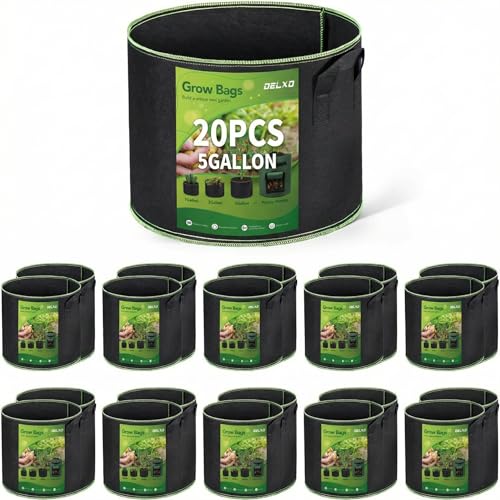
Type: A 20-pack collection of 5-gallon fabric pots. They use 300G thickened nonwoven fabric for durability, with easy-to-move handles. These bags are designed for strong root growth and efficient drainage, supporting healthy crops in a compact setup.
Who this is best for: Those planning an extensive container garden project or multiple rotational plantings. Best for users who value plant vigor and flexible arrangement. Limitation: may require careful storage to prevent fabric wear during off-season.
RooTrimmer 5 Gallon Plastic Pots

Type: Rigid plastic nursery pots with a 5-gallon capacity. Features drainage holes to prevent water accumulation and root rot, and a lightweight design for easy handling and transplanting. The hard-sided form provides shape stability for stacking or tight spaces.
Who this is best for: Gardeners needing stable containers that stack or fit snugly in shelves or sheds. Better for those who prefer easy transplanting and simple maintenance. Caution: plastic pots can retain more moisture if not monitored, so adjust watering accordingly.
Buying Guide: How to Choose the Right 5-Gallon Container
What growth stage are you planning to support?
For seedlings and shrubs, fabric grow bags encourage vigorous root systems and fast establishment. For mature plants with longer growing seasons or those requiring stable containers, plastic pots provide durability and consistent shape.
How much space do you have?
Fabric bags are flexible and stack well in shallow balconies and garden corners. Plastic pots demand solid space but offer neat, rigid placement. Consider how you’ll move or rotate containers seasonally.
What climate and watering habits apply?
In hot, dry climates, fabric bags improve aeration and reduce waterlogging risk. In humid or rainy areas, the same bags help drainage but require monitoring for moisture loss. Plastic pots retain moisture longer, which can be helpful or problematic depending on your watering routine.
Durability and reuse expectations
Most fabric bags rated at 300G are designed for multi-season reuse with careful handling. Plastic pots are typically longer-lasting under rough handling but are less forgiving if roots grow to fit the container poorly.
Maintenance and cleaning considerations
Fabric bags usually clean up with gentle washing and air drying. Plastic pots are easier to wipe down, but they may crack if dropped or frozen. Plan for storage during off-seasons to maximize the lifespan of your containers.
Cost and project scope
Bulk fabric bag sets provide cost-effective options for multiple plants and seasons. Plastic pots in multi-packs can be economical for larger projects but may require more space. Choose based on how many plants you plan to maintain at once.
Summary checklist
- Fabric bags for airflow and strong root growth
- Reinforced handles for easy relocation
- Plastic pots for stability and simple stacking
- Drainage considerations to prevent root rot
- Storage and care requirements for longevity
Frequently asked questions
- What is the main difference between fabric grow bags and plastic pots? Fabric bags provide better aeration and drainage, promoting strong roots, while plastic pots offer rigid support and durability for long-term use.
- Are 5-gallon containers suitable for most vegetables? Yes, many vegetables thrive in 5-gallon volumes, providing enough root room for growth while remaining manageable in small spaces.
- Do fabric bags need drainage holes? Yes, proper drainage is essential to prevent overwatering and root rot. Ensure bags have drain perforations.
- Can these containers be reused across seasons? Fabric bags are designed for multi-season use with care; plastic pots are generally durable for repeated use as well.
- Which option is best for balcony gardening? Fabric grow bags are often preferred for balconies due to their lighter weight and flexible arrangement.
- What should I consider when choosing between bulk packs vs single packs? Bulk packs are cost-effective for many plants, but they occupy more storage space and may exceed your current project needs.