If you’re seeking green-leafed Japanese maples that bring year-round interest, this guide highlights five top options and explains who they’re best for. Each selection emphasizes lush foliage, striking seasonal color, and reliable growth in typical American landscapes. The list caters to hobby gardeners, small-space courtyards, and shade-loving landscape fans looking for manageable trees with distinct character.
| Product | Best For | Why It Stands Out |
|---|---|---|
| The Japanese Sango Kaku Green Maple | Colorful winter interest fans | Coral-red bark contrasts with green leaves, year-round visual appeal |
| Hanami Nishiki Japanese Maple | Color lovers with compact space | Red-edged foliage and dense color display, good dwarf form |
| Floating Cloud Japanese Maple Ukigumo | Very ornamental foliage lovers | Unique veining and ever-changing leaf tones that look like floating clouds |
| Summer Gold Japanese Maple | Sun lovers seeking brilliant summer color | Bright golden foliage through summer with minimal burn in sun |
| Butterfly Japanese Maple | Variegated color fans and small-space gardens | Pink, cream, and green variegation with evolving color in season |
The Japanese Sango Kaku Green Maple

The Japanese Sango Kaku Green Maple is best for gardeners seeking striking winter color. It features coral-red bark that remains visible against green foliage during dormancy, delivering year-round visual interest. In fall, leaves transition to vibrant yellows and oranges, enhancing the landscape with bold seasonal display. This selection is well suited for medium-sized gardens or entryways where the bark can stand out as a structural accent. Best for homeowners who value texture and seasonal drama over rapid growth.
Best for: landscapes needing standout winter bark and vivid autumn color. Considerations: not shippable to CA, AZ, AK, or HI due to agricultural laws; plan alternatives if you live in those states. This is a two-tree grower pot that requires proper spacing and care for optimal growth.
Hanami Nishiki Japanese Maple

Hanami Nishiki is a compact, dwarf-shaped maple, making it ideal for small gardens, containers, or accent plantings. The foliage often displays red-edged light green leaves in early spring, followed by rich color as the season progresses. Its dense growth habit supports year-round structure without overpowering surrounding plantings. Choose this if you want a striking, low-maintenance addition with high ornamental value.
Best for: compact spaces needing colorful impact with easy upkeep. Limitation: as with any dwarf cultivar, growth is steady but slower than larger maples; ensure adequate spacing for future branching.
Floating Cloud Japanese Maple Ukigumo

Floating Cloud Ukigumo is celebrated for its unique veining and color shifts across seasons. The foliage appears to float with delicate textural contrast, offering an elegant, cloud-like presence in the landscape. It suits shaded or partially sunny spots and pairs well with rock gardens or water features. Best for gardeners who prioritize ornamental foliage and sculptural branches over dense canopy growth.
Best for: dramatic foliage and graceful form in shaded areas. Limitation: variegation and color can vary with light exposure; ensure your site aligns with the plant’s light needs for consistent color development.
Summer Gold Japanese Maple
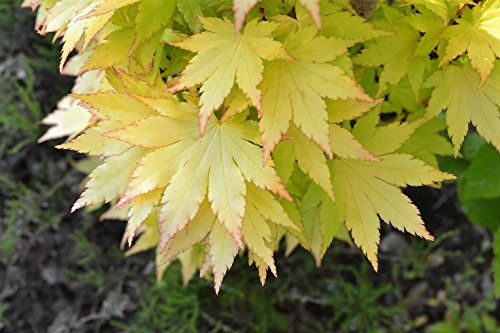
Summer Gold offers the best golden color in summer among the options listed, with a notable resistance to sunburn. It maintains bright yellow tones even when exposed to full sun, making it a strong choice for sunny yards. Its upright form and palmate leaves give it a classic maple silhouette suitable for focal points, borders, or pathways. Choose this if you want maximum daylight-lit color without sacrificing leaf integrity in heat.
Best for: sunny spots needing vibrant summer color without leaf scorch. Limitation: sometimes requires more space to accommodate its upright growth, so ensure planting area is wide enough.
Butterfly Japanese Maple

Butterfly is favored for its pink, cream, and green variegation, producing a charming tapestry of color on a compact frame. New growth is reddish and gradually becomes green, while pink and cream tones intensify in the fall. This cultivar is well suited for containers or small garden borders where consistent color variation enhances visual interest. Best for: color-rich displays in tight spaces. Caution: variegation may be less uniform in extreme heat or cold, so monitor seasonal color shifts.
Buying Guide: Key Purchase Considerations
- Site conditions: Most Japanese maples prefer partial shade and well-drained soil. Consider how much sun your planting location receives and choose a cultivar that tolerates it.
- Size and growth rate: Dwarf and compact varieties are ideal for small yards or containers, while standard forms suit larger landscapes. Verify expected mature height and width.
- Color and seasonal interest: The listed selections offer a mix of evergreen-like green leaves, golden summer color, and striking autumn or winter tones. Match color preferences to your landscape plan.
- Care and maintenance: Maples typically benefit from mulching, regular watering during establishment, and protection from harsh winter winds. Some cultivars demand more pruning to maintain shape.
- Climate and USDA zones: Most maples thrive in temperate climates. Check local zone recommendations to align with your region’s winter lows and summer heat.
- Shipping and regulations: Some sellers may have state shipping restrictions. Plan alternatives if you live in regions with agricultural limitations.
Frequently Asked Questions
- Do green-leafed Japanese maples tolerate full sun? Some do, like Summer Gold, but many prefer partial shade. Assess your site’s sun exposure and pick accordingly.
- Are these maples good for containers? Several listed varieties are container-friendly, notably Hanami Nishiki and Butterfly, which fit smaller spaces well.
- What is the best time to plant? Plant in spring or fall when temperatures are moderate to reduce transplant shock and establish strong roots.
- Do these maples require special soil? They perform best in well-drained, slightly acidic to neutral soil. Amend heavy, clay soils to improve drainage.
- Will the bark color of Sango Kaku stand out in winter? Yes, its coral-red bark provides a striking contrast against green leaves in dormancy.
- Are there shipping restrictions I should be aware of? Some products may have state-based restrictions; check seller notes before purchasing.