Answer: Waist-high raised beds are ideal for gardeners who want to reduce bending, improve accessibility, and maximize small outdoor spaces. The top picks below suit different needs—from mobility-friendly planters with wheels to sturdy, long-lasting wooden boxes. Whether you’re growing vegetables, herbs, or flowers, these beds help you maintain better soil control and easier maintenance. The list highlights options for seniors or anyone who’s seeking comfortable, ergonomically friendly gardening without sacrificing growing space.
Summary table of chosen products:
| Product | Size/Height | Material | Best For |
|---|---|---|---|
| FOYUEE 31.5″ Tall Raised Garden Bed with Wheels | 31.5″ tall | Metal | Anyone needing mobile, tall bed with extra planting space |
| YEFU Raised Garden Bed with Legs 72x24x30 | 30″ height | HIPS (HDPE-like) | People seeking waist-high ergonomic gardening long-term |
| YEFU Elevated Garden Box 48x24x30 | 30″ height | HIPS | Smaller footprint with elevated ergonomics |
| MIXC 331 lb Capacity Wooden Raised Bed | 48x24x31 | Wood | Heavy-duty, wood-plank style for larger spaces |
| 48×24×30 Inch Raised Garden Bed with Legs | 30″ height | Wood | Solid-wood, economical elevated option |
FOYUEE 31.5-Inch Tall Raised Garden Bed With Wheels

The FOYUEE model prioritizes mobility and ease of use. Its 31.5-inch elevated height reduces back strain for gardeners who prefer not to kneel. The expansive 37.4-by-15.7-inch planting area supports a variety of crops and ornamentals, including vegetables, herbs, and flowers. Built-in wheels and a handle allow you to reposition the bed to chase sunlight or shield plants from heavy rain, making it a smart choice for patios, balconies, and small yards.
Best for: Gardeners who want a tall, movable bed to adapt to sun patterns and seasonal shading. Good for seniors or anyone with limited bending ability who still desires a sizable planting box. Caution: Ensure you can manage the bed’s weight when fully loaded with soil and plants.
YEFU Raised Garden Bed With Legs: 72x24x30

This waist-high model emphasizes long-term ergonomic gardening. At 72 by 24 inches with a 30-inch height, it delivers a substantial planting area while keeping soil-level access comfortable. The bed uses UV-resistant HIPS material, reducing weathering compared with wood and metal. Strategic drainage holes help prevent overwatering, supporting healthier root systems and deeper-rooted crops like tomatoes or carrots.
Best for: Homeowners who want a large, maintenance-light elevated bed with durable, weatherproof materials. Choose this if you need a tall, all-season planter that minimizes bending and resists fading. Limitation: HIPS beds may require occasional care to manage soil volume as plants grow large.
YEFU Elevated Garden Box for Balcony: 48x24x30

This 30-inch waist-high bed combines compact footprint with ergonomic access. Its UV-resistant HIPS composition promises durability in outdoor settings, while drainage holes prevent waterlogging and root rot. The design supports vegetables, herbs, and flowering plants in a balcony or patio, with a focus on easy care and minimal maintenance.
Best for: Gardeners who want a mid-sized, weatherproof elevated bed suitable for balconies or compact yards. Choose this if you value low maintenance and upright gardening in smaller spaces. Limitation: May be smaller in planting area compared with larger beds, so crop selection matters.
MIXC 331 lb Wooden Raised Bed With Legs

The MIXC bed uses untreated fir wood for a solid, traditional look and robust construction. Its 48-by-24-inch base with 31-inch height creates a spacious growing area, and the beam-and-column design adds strength for heavier soil loads. Included drainage holes and an inner liner help manage moisture and protect the wood from rot, making it a practical option for longer-term outdoor use.
Best for: Gardeners who prefer a classic wooden raised bed with a substantial capacity and a heavy-duty frame. Choose this if you want a larger, solid-wood option that stands up to outdoor conditions. Limitation: Wood requires maintenance over time to prevent weathering and rot without liners or protective finishes.
Wood-Natrl 48×24×30 Inch Raised Garden Bed With Legs

This solid wood option features a waist-height design for comfortable gardening, a 48-by-24-inch planting area, and sturdy legs for stability. The elevated stand reduces kneeling and torso strain while providing ample room for a diverse mix of vegetables, herbs, and flowering plants.
Best for: Gardeners who want a straightforward solid-wood bed with a generous planting area and stable stand. Choose this if you prefer a traditional wooden build with simple assembly. Limitation: Wood may require periodic treatment for outdoor durability and may show weathering over time.
MIXC 8×2ft Wooden Raised Bed With Legs

This longer, 8-foot wooden bed is designed to maximize planting space in a single elevated unit. It uses untreated fir wood with a pre-sanded, dovetail-jointed panel system for quick assembly. A liner is included to separate soil from wood, helping extend the bed’s life by reducing direct contact between soil and wood.
Best for: Gardeners who need a wide, long raised bed for vegetables or flowers in a backyard or large patio. Choose this if you want a substantial, traditional wooden bed with straightforward assembly. Caution: Longer beds require secure placement and careful anchoring on uneven ground.
Giantex 65-Inch Wooden Raised Bed With Trellis On Wheels
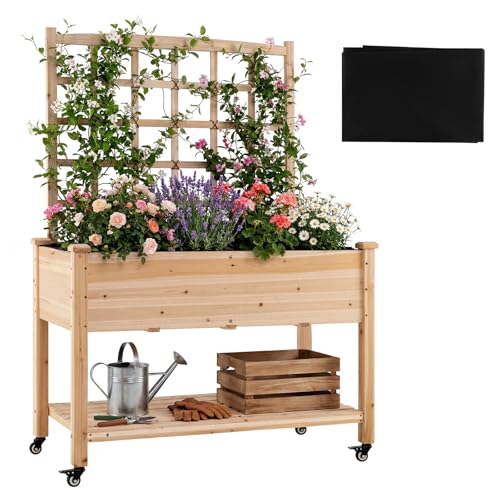
This model combines a large, 47-by-23-inch planter with a vertical trellis for climbing plants, offering a tall 65-inch overall height. The four wheels (two lockable) provide flexible placement and stability for moving between sunny and shaded areas. The waist-high height reduces bending while the trellis expands growing options for vines, beans, and climbers.
Best for: Gardeners who want a multifunction, tall bed with support for climbing plants and mobility. Choose this if you need a vertical dimension to maximize vertical growth. Limitation: The trellis adds height and may require anchoring on windy days to prevent tipping.
Buying Guide: Key Considerations For Waist-High Raised Beds
- Material durability: Compare wood, metal, and high-density plastic (HIPS). Wood offers a classic look and robustness but may require maintenance; plastic or composite options resist weathering but may lack the same stiffness as metal or wood.
- Height and ergonomics: Waist-high beds typically range from 28 to 34 inches. Choose a height that reduces bending and supports comfortable, long sessions of gardening.
- Soil capacity and drainage: Consider bed depth and total soil volume. Ensure drainage holes or liners are present to prevent waterlogging and root rot.
- Mobility and placement: Wheels and handles add flexibility but check wheel strength and locking options. For small spaces, a compact bed with a good turning radius is ideal.
- Maintenance needs: Metal and wood require different upkeep. Plan for liners or protective coatings if opting for wood, and confirm UV resistance for plastic beds to extend life.
- Space and layout: Larger beds provide more planting area but require more space. Balance available sun exposure with bed footprint.
FAQ
- What height is considered waist-high for raised beds?
– Typically around 28 to 34 inches, designed to reduce bending and back strain. - Are wheels on raised beds worth it?
– Yes for movable sun exposure and sheltered positioning, but ensure they lock securely for stability. - Which material lasts longest outdoors?
– UV-resistant plastics and high-density composites resist weathering well; treated wood lasts several seasons with proper care; metal can corrode without protection. - Do I need a liner for wooden beds?
– A liner helps prevent soil from contacting the wood directly, reducing rot and extending bed life. - Can waist-high beds support deep-rooted crops?
– Yes, provided the bed depth and soil mixture support adequate root development; deeper beds work well for tomatoes and carrots. - How should I choose between a large bed and a compact one?
– Consider available space, preferred plants, and whether you need mobility or climbing support.