Crape myrtles with deep, purple leaves add dramatic contrast and year-round interest to gardens and landscapes. This guide highlights five standout options that showcase rich foliage alongside vibrant blooms. Each selection offers unique size, growth habits, and planting considerations to help you choose the right fit for your space and climate. Read on for detailed product profiles and practical buying tips to compare varieties side by side.
Summary of selected products:
| Product | Size / Pot | Key Highlights |
|---|---|---|
| Lavender Skies Crape Myrtle | 2-3 ft tree; 7 gal pot | Purple blooms; pollinator-friendly; restricted shipping to certain states |
| First Editions Purple Magic Dwarf | 1 gal live plant | Compact hedge-friendly; early summer blooms; compact growth |
| Purely Purple Black Diamond | 1 gal nursery pot | Deep purple foliage with tall potential; shipping limits |
| Miss Sandra Crape Myrtle | 2-4 ft tall in pot | Very dark purple blooms; mature form up to 20 ft |
| 35+ Crape Myrtle Purple Seeds | Seed packets | Perennial highlight for containers or borders |
Lavender Skies Crape Myrtle — Dark Leaves, Purple Blooms
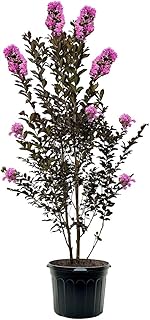
Lavender Skies features dark foliage that serves as a striking backdrop for profuse purple blossoms. Suitable for USDA zones 7–9, this tree reaches a modest height in its early years and can create a vivid focal point in mixed borders or near entryways. Note the shipment restrictions: orders to CA, AZ, AK, or HI may be canceled due to agricultural laws. The plant is pollinator-attracting, supporting local bee and butterfly populations during late spring through summer.
First Editions Purple Magic Dwarf Crape Myrtle

This dwarf variety is ideal for smaller spaces, including patios, courtyards, or narrow borders. It blooms early in summer with dark purple flowers and maintains a dense, compact form that suits hedge lines or mass plantings in limited footprints. The plant arrives in a Full Gallon pot and is designed to fit into mixed landscapes without overpowering nearby ornamentals. It’s well-suited for coastal or inland sites with adequate sun and soil drainage.
Purely Purple Black Diamond Crape Myrtle

Black Diamond stands out with its richly dark purple foliage and dramatic form. Grown in a 1 gal nursery pot, this cultivar can develop into a striking tree with time, offering bold color both in foliage and seasonal blooms. However, shipping restrictions again apply for certain states. Plant in full sun with well-drained soil to maximize flower clusters and leaf color during the growing season.
Miss Sandra Crape Myrtle — Dark Purple Blooms

Miss Sandra delivers mature impact with blooms described as rich purple with fuchsia undertones. In the landscape, this upright tree can reach up to 20 feet tall and about 15 feet wide, providing a dramatic focal point in larger yards or formal gardens. The plant ships as a well-established 2–4 foot tall specimen in a soil-enriched pot, ready for immediate planting. It’s a robust addition for color continuity from summer through fall flowers.
35+ Crape Myrtle Purple Seeds — Perennial Tree

For gardeners interested in propagation or extending color through seeds, this pack offers a selection of purple-themed seeds suitable for perennial tree presentations. Seeds can be used in containers, border plantings, or as accent plantings in larger landscapes. Consider climate suitability and the need for consistent sun exposure to encourage vigorous growth and flowering in the season following planting.
Buying Guide: Key Purchase Considerations
- Climate and hardiness: Choose varieties rated for your USDA zone to ensure reliable bloom cycles and foliage color. Many purple-leaved crapemyrtles perform best in zones 7–9 but some dwarf or seed varieties can adapt to zones 6–10 with proper care.
- Size and growth habit: Dwarf forms suit small gardens and containers, while upright trees provide dramatic focal points in larger landscapes. Consider mature height and width to prevent overcrowding and to allow air flow around the plant.
- Foliage and bloom timing: Some cultivars emphasize foliage color year-round, while others prioritize extended flowering. If pollinator benefits matter, seek varieties with abundant blooms in late spring through summer.
- Soil and sun requirements: Crapemyrtles thrive in full sun and well-drained soil. Amending heavy clay or poor soils can improve establishment and flowering. Mulching helps regulate moisture and temperature around roots.
- Shipping and regulations: Several listings note agricultural restrictions to certain states. Verify eligibility before purchase to avoid order cancellations and ensure compliance with local plant import rules.
- Care and maintenance: Regular pruning encourages stronger blooms and better shape. In older plantings, remove spent flower clusters and light pruning to maintain vigor without sacrificing bloom output.
- Propagation and alternatives: If seed packets are chosen, understand germination requirements and outdoor growing conditions. For instant color, potted nursery specimens offer immediate garden impact.