Explore top black pepper plant options suited for American gardens and indoor setups. This guide highlights live Piper nigrum vines and pepper-related seeds that support culinary spice production, ornamental value, and tropical-growth aesthetics. Each selection includes growth traits, light and watering needs, and practical considerations for container and ground growing.
| Product Type | Brand | Product | Notes |
|---|---|---|---|
| Live Plant | Hello Organics | Black Pepper Plants “Piper Nigrum” Choose Four (4) or Eight (8) Plants | Vining tropical peppers; 3–6 inch starter plants in 2 inch pots |
| Live Plant | Wellspring Gardens | Black Pepper – Piper nigrum Starter Plant | Full sun to moist soil; 12–15 ft mature height with trellis |
| Live Plant | Wekiva Foliage | Black Pepper Plant – 3 Live Starter Vines | Glossy leaves; tropical vine growth; warm, humid care |
| Live Plant / Seeds | YOKEBOM | Black Pepper Plants, Piper Nigrum Live, 5 to 8 Inches Tall | 5–8 inch tall starter plants; ideal for home gardens or containers |
| Seeds | Sherwoods Seeds | Black Pearl Hot Pepper Premium Seeds | 10 seeds per pack; heirloom pepper variety for spicy cooking |
Black Pepper Plants by Hello Organics

The Hello Organics offering features vining black pepper plants marketed as multi-plant bundles in 2-inch tray pots, with each plant sized around 3–6 inches. These starting plants are designed for gardeners who want quick establishment and the option to form a dense pepper vine. They emphasize the classic peppercorn production of Piper nigrum and long trailing growth that can span several tens of feet with proper support. Growing guidance suggests a warm, humid environment with bright, indirect light and regular moisture. The potential to produce peppercorn clusters becomes evident as vines mature and are provided with trellising or staking support.
Wellspring Gardens Black Pepper Starter Plant

This Wellspring Gardens starter plant is described as a live Piper nigrum vine suited for indoor or outdoor growing. It thrives in full sun to moist, well-drained soil and can reach 12–15 feet when supported by a trellis. The plant is ideal for warmer climates within USDA zones 10–11 and can be grown in containers for balcony or patio setups. The listing notes an arrival height of 3–8 inches, planted in a 3-inch pot with ready-to-care-forward potential. It combines visual appeal with culinary use, offering glossy leaves and a climbing habit that turns into pepper-producing vines over time.
Black Pepper Plant – 3 Live Starter Vines (Wekiva Foliage)
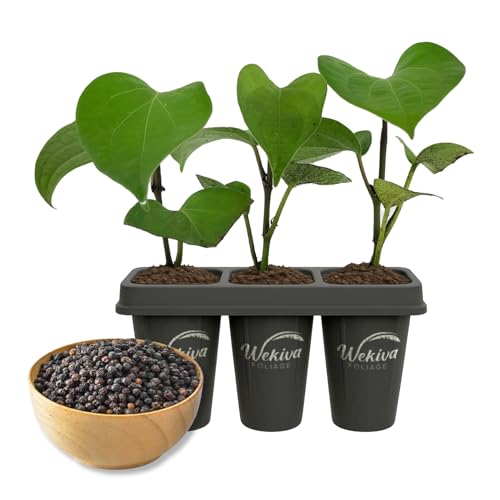
The Wekiva Foliage listing offers three live starter pepper vines. The description highlights large glossy leaves and twisting vines that need support. It emphasizes a tropical aesthetic for both indoor décor and outdoor landscapes, with care guidance focused on bright, indirect light or partial shade. Watering guidance stresses keeping soil consistently moist but not waterlogged, with a preference for humidity to support foliage and vine growth. This option prioritizes immediate vine development and visual appeal while laying a foundation for eventual pepper production with proper trellising.
Black Pepper Plants, Piper Nigrum Live (5–8 Inches)

This YOKEBOM listing provides one starter plant option ranging from 5 to 8 inches tall. The description emphasizes a strong early growth phase suitable for home gardeners, with the expectation of growth into a productive pepper vine given adequate warmth, humidity, and support. The product positioning focuses on convenient, ready-to-plant stock for containers or garden plots, making it accessible for beginners seeking a tropical pepper vine without a prolonged waiting period for establishment.
Sherwoods Seeds Black Pearl Hot Pepper Seeds

The Black Pearl hot pepper seeds by Sherwoods Seeds provide a genetic starting point for growing peppers with distinctive color and heat. Each pack contains 10 seeds and is described as an heirloom option for culinary use, suitable for indoor germination or outdoor garden beds. This seed packet supports gardeners who want to cultivate peppers that can mature from black to red, delivering a versatile, spicy harvest. Optimal results are achieved when sowed in warm soil (around 70–80°F) and given ample light as seedlings develop into productive plants.
Buying Guide
- Tropical growth requirements: Piper nigrum vines thrive in warm, humid environments. In cooler regions, indoor growing with a bright light source is recommended.
- Light and placement: Bright, indirect light is ideal; direct sun can scorch leaves. Place near south- or east-facing windows or use grow lights for container setups.
- Watering and humidity: Maintain evenly moist soil without waterlogging. Humidity supports leaf vigor and flowering/pepper production; consider a humidity tray or misting in dry rooms.
- Support structures: Vining pepper plants need trellises, stakes, or other supports to manage long trailing growth and pepper clusters.
- Plant vs. seed options: Live plants offer faster establishment but require more careful transplanting; seeds provide more variety but require longer time to maturity and pepper production.
- Climate considerations: Long-term success depends on climate suitability. Containers enable mobile placement during seasonal changes, while ground plantings require warm, frost-free periods.
- Care for ornamental vs. culinary aims: For ornamental peppers, focus on foliage vigor and vine form; for culinary peppers, prioritize peppercorn production and harvest timing as vines mature.
- Pest and disease prevention: Monitor for common houseplant and tropical vine pests; ensure good air circulation and well-draining soil to reduce fungal issues.
- Harvest expectations: Pepper vines can take multiple growing seasons to yield significant peppercorn clusters; patience and consistent care improve outcomes.