Spider mites can quickly infest houseplants and garden crops, leaving stippled leaves and webbing. The right spray helps interrupt their life cycle, protects foliage, and supports plant recovery. This article highlights five top candidates that target spider mites while explaining how to choose the best option for indoors, outdoors, and edible plants. All products are designed to minimize harm to beneficial insects when used as directed and cater to a range of pest and disease issues.
| Product | Key Benefit | Best For | Notes |
|---|---|---|---|
| Mint+ Plant Protection Spray | Essential oils for pest deterrence | Indoor and outdoor plants, including edibles | Natural scent; safe when used as directed |
| Ortho Insect Mite & Disease 3-in-1 | Broad-spectrum control of pests and fungal diseases | Gardens and porch plants needing quick action | Ready-to-use gallon; versatile for multiple issues |
| Fertilome Triple Action | Insecticide, miticide and fungicide in one | Fruits, vegetables, flowers, shrubs | Comprehensive protection; check label for full list |
| Organic Insecticide Liquid Concentrate | Organic-based, fast-acting on contact | Houseplants and garden beds seeking biological balance | Concentrate with customizable dilution |
| Bonide Captain Jack’s Deadbug Brew | Ready-to-use spray for a range of pests | Outdoor use on diverse plant types | Pack of 2; effective against spider mites among others |
Mint+ Plant Protection Spray

Mint+ Plant Protection Spray combines essential oils such as peppermint and neem to deter pests and fungal infections. It is positioned as safe for use on indoor and outdoor plants, including edibles when used as directed. This makes it suitable for a home garden or a city apartment with potted herbs. Apply as a preventive spray or at first signs of mite activity to help slow reproduction and reduce feeding damage. Users should follow label directions for dilution, frequency, and compatibility with edible crops.
Key considerations: this option emphasizes a natural approach with plant-based actives, which may be preferred by growers seeking organic-friendly solutions. It is typically best for lighter infestations or preventative care, and may work best when used in conjunction with cultural controls like humidity management and regular inspection.
Ortho Insect Mite & Disease 3-in-1 Ready-To-Use

Ortho Insect Mite & Disease 3-in-1 Ready-To-Use blends pest control with disease suppression in a single spray. It targets aphids, mites, beetles, and a broad spectrum of fungal diseases, including black spot, powdery mildew, rust, and blights. This makes it a practical option for gardeners who need an all-in-one solution for mixed pest pressure. For best results, apply according to label directions and reapply as needed to manage ongoing mite activity or fungal symptoms.
Key considerations: dilution is not required for this ready-to-use format, which can be convenient for quick, on-demand treatment. The versatility is a strong point, but users should monitor for phytotoxic effects on sensitive plants and avoid applying during peak heat or direct sunlight to reduce leaf burn risk.
Fertilome (12245) Triple Action
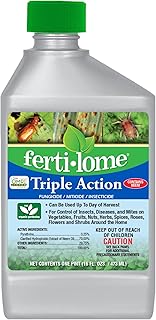
Fertilome Triple Action provides insecticide, miticide, and fungicide protection in one product. It is designed for fruits, nuts, vegetables, roses, flowers, and a broad range of shrubs, with a stated capability to control spider mites among other pests. The multi-action approach reduces the need for multiple sprays across different pests and diseases, potentially saving time during garden maintenance.
Key considerations: always refer to the label for approved crops and dilution instructions. This product is suitable for users seeking a single solution to address both mites and common fungal diseases. As with any chemical spray, confirm compatibility with edible plants and follow pre-harvest intervals where applicable.
Organic Insecticide Liquid Concentrate

This organic liquid concentrate targets a suite of pests, including spider mites, fungus gnats, aphids, whiteflies, and mealybugs. It operates by disrupting pest life cycles and supporting a healthy microbiome in soil and foliage. The product allows customizable dilution for different plant types, from seedlings to mature shrubs, and is positioned for use before indoor relocation, post-repotting, or quarantine of new plants.
Key considerations: organic formulations appeal to growers seeking lower synthetic residues and a biological approach. Be mindful of rinse or re-entry intervals and ensure compatibility with beneficial insects or pollinators around outdoor plants. Regular monitoring and repeating treatments may be needed during flare-ups.
Bonide Captain Jack’s Deadbug Brew Ready-to-Use
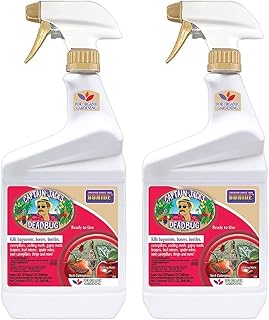
Captain Jack’s Deadbug Brew is a ready-to-use spray designed for outdoor use and covers a broad range of pests, including spider mites, thrips, leaf miners, caterpillars, and more. It is positioned as suitable for a wide variety of foliage across fruiting vegetables, cucurbits, leafy greens, and ornamentals. The spray can be effective in mixed pest scenarios and is convenient for quick, on-hand applications in outdoor settings.
Key considerations: this product is well-suited for organic or near-organic gardens. Test on a small area first to assess plant tolerance, particularly for sensitive or young foliage. For best outcomes, apply during cooler parts of the day and avoid application during high heat or drought stress conditions.
Buying Guide for Spider Mite Sprays
When choosing a spray to combat spider mites, consider the following factors to balance effectiveness, plant safety, and environmental impact. First, identify your plant setting—indoors or outdoors—and whether you also need protection from fungal diseases or other pests. For indoor houseplants, softer formulations with plant-based actives may reduce the risk of residue and phytotoxicity, while outdoor gardens often tolerate broader-spectrum products.
Second, evaluate active ingredients and mode of action. Some products rely on oils or plant extracts, others provide broad-spectrum insecticidal or fungicidal action, and certain concentrates allow dilution for different plant sizes. Rotating products with different mechanisms can help slow resistance in pests like spider mites. Always follow label directions for dilution, application frequency, and pre-harvest intervals for edibles.
Third, check plant safety and crop compatibility. Edible crops require extra caution, and some products are explicitly labeled for use on fruits, vegetables, and herbs. Testing on a small area before full-scale treatment reduces the risk of lightburn or leaf burn. If treating ornamentals alongside edibles, separate timing or safe windows may be necessary.
Fourth, consider application practicality. Ready-to-use sprays are convenient for quick interventions, while concentrates offer flexibility and cost efficiency for larger setups. Evaluate your space: indoor environments may benefit from low-odor formulas and minimal residue, while outdoor spaces often need weather-resistant sprays and longer-lasting protection.
Fifth, environmental and beneficial-insect considerations matter. Opt for products that minimize impact on pollinators and natural enemies when possible. Organic or biopesticide options are preferred in many home gardens, especially near vegetable plots. Always follow integrated pest management practices, combining sanitation, humidity management, and monitoring with chemical controls for the best long-term results.