Lawn care benefits from aeration that adds weight to the drum, allowing deeper soil penetration without heavy manual effort. Water-filled or weight-assisted aerators help loosen compacted soil and improve air, water, and nutrient access to roots. Below is a curated selection of top performers that support fillable drums, weighted rollers, or weight-enabled designs to maximize efficiency and coverage for American yards.
| Product | Brand | Weight/Fill Method | Key Benefit |
|---|---|---|---|
| Goplus Rolling Lawn Aerator | Goplus | Fillable drum for added weight (sand/stone) | Effective, heavy-duty aeration with adjustable weight |
| Rolling Lawn Aerator Manual Aeration Tool | ROIKETU | Drum weight can be increased with stones/sand | Bearings for smoother operation and deeper soil penetration |
| Seeutek 23 Inch Rolling Lawn Aerator | Seeutek | Water or sand ballast via side fill hole | 3-height options plus weight enhancement for deeper aeration |
| YITAMOTOR 32″ Tow Spike Lawn Aerator | YITAMOTOR | Heavy-duty frame supports added weight (concrete blocks) | Tow-behind design with adjustable depth for robust lawns |
| Lineware 18-Inch Lawn Aerator | Lineware | Can carry bricks or added weight on steel tray | Four-wheel setup with independent spikes for efficient coverage |
Note: The information above highlights weight-enabled and fillable aerators that help maximize soil penetration while reducing user fatigue. Each product balances weight, control, and maneuverability to adapt to common American lawn conditions, from soft loam to compacted clay.
Goplus Rolling Lawn Aerator
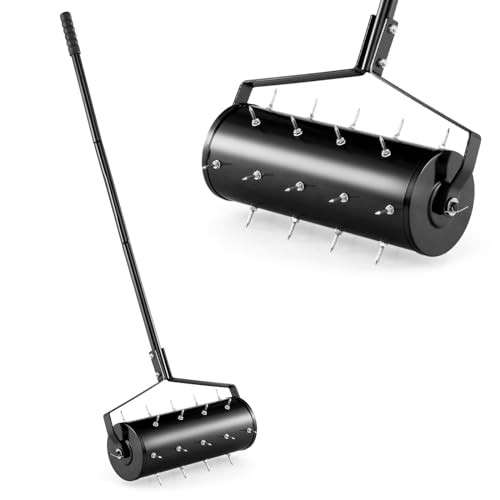
Features include a heavy-duty design for promoting healthy lawn growth and a fillable drum that accepts sand or stones to increase weight. It uses multiple sharp tines capable of loosening soil types such as dirt, sand, and clay, aiding oxygen, water, and nutrient access to roots. The drum opens for easy filling and adjustments to weight. This combination aims to reduce effort while improving aeration depth and effectiveness across typical yard sizes.
Rolling Lawn Aerator Manual Aeration Tool

This model emphasizes a weight-enabled roller and a bearing-assisted design to reduce pushing effort. The drum length is substantial, with the option to fill with heavy materials like stones or sand to deepen penetration. By rolling back and forth, it softens soil and improves access for oxygen, water, and nutrients to reach plant roots, supporting a greener, healthier lawn.
YITAMOTOR 40″ Tow Behind Spike Aerator

Designed for tow-behind use, this aerator features 11 star-shaped core knives with 8-inch diameters. It penetrates up to 2 inches, delivering oxygen, water, and nutrients directly to roots. A wide tow bar adds stability, and the design supports added weight via ballast to enhance aeration depth while maintaining durability across larger lawns.
Seeutek 23 Inch Rolling Lawn Aerator
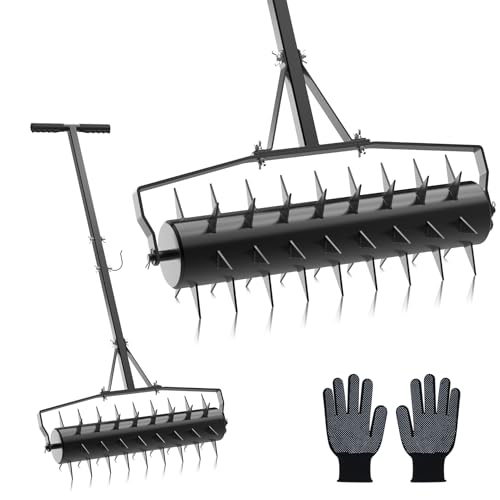
Seeutek’s model features 2-inch star-shaped spikes with a weight-adding side hole for water or sand. Its 3-height adjustment and ergonomic design reduce back strain during manual operation. Built with high-density material and a sturdy connection between handle and roller, this aerator improves soil turning depth and overall efficiency for mid-sized lawns.
YITAMOTOR 32″ Tow Spike Lawn Aerator

This model combines a universal hitch for compatibility with various lawn tractors and ATVs, plus the ability to add ballast to increase depth. Eight steel spikes provide robust core penetration up to 2 inches, supporting durable aeration across diverse soil conditions. The setup aims to balance weight, control, and ease of use for larger outdoor spaces.
18-Inch Lawn Aerator With Four Wheels

Lineware’s 18-inch model features a four-wheel base for stability and easy rolling. It uses 5 spikes with shims and a steel tray to carry additional weight, enabling deeper penetration into the soil. The design supports comfortable operation with foam armrests and a long handle, promoting efficient aeration across standard yard sizes.
Buying Guide
- Weight strategy: Water ballast is common in fillable aerators. Consider whether you want a fillable drum, ballast bricks, or stones, and confirm how easy it is to fill, drain, and clean.
- Soil suitability: For soft or sandy soils, lighter weights may be sufficient. Heavier soils like clay benefit from extra weight for deeper core penetration.
- Spikes vs. cores: Spike aerators loosen soil but don’t remove cores; core aerators remove cores and can relieve compaction more effectively in dense soils. Some models combine both approaches or offer adjustable tine configurations.
- Handle design and ergonomics: Look for padded grips, multiple height options, and leverage features that reduce back strain. Three-height adjustments and ergonomic T-bars help with comfort during extended sessions.
- Tow vs. manual: Tow-behind aerators excel for large lawns but require compatible equipment (lawn tractors or ATVs). Manual models suit smaller yards or tighter spaces.
- Portability and durability: Consider wheel quality, bearing systems, and frame sturdiness to ensure long-term performance on American lawns with varying terrains.
- Maintenance: Check for rust resistance, ease of cleaning after use, and simple replacement parts for spikes or cores to extend tool life.
- Coverage and timing: Aeration is most effective when soil is moist but not wet. Plan aeration for optimal windows in spring or fall when grass is actively growing.