Grow a thriving pollinator habitat with proven bee-friendly flower seed mixes. This guide highlights five top bee feed flower mixes designed to attract bees, butterflies, and other pollinators while delivering season-long color and easy planting. Each selection provides a blend of annuals and perennials, broad coverage, and clear growing guidance to help you establish a robust pollinator garden.
| Product | Brand | Seed Count / Coverage | Notes |
|---|---|---|---|
| Wildflower Seeds Bulk, Save The Bees Mix | Mountain Valley Seed Company | 80,000+ seeds; covers ~250 sq ft | Non-GMO mix with 19 varieties; supports Bee Conservancy |
| Burpee Wildflower 25,000 Bulk | Burpee | 25,000 seeds; up to ~1,000 sq ft | 18 varieties; pollinator-friendly |
| Ferry Morse Wildflower Seeds | Ferry Morse | One lb; covers 3,623–7,247 sq ft | Full sun, non-GMO; large-area suitability |
| Bee Friendly Wildflower Seed Mix (Sweet Yards) | SWEET YARDS | 1 ounce packet; ~7,500+ seeds | Fresh, high germination; 19 perennial varieties |
| Tactiko Garden 26 Wildflower Mix | Tactiko Survival | 4 oz bag; 120,000+ seeds | 26 varieties; up to 600 sq ft coverage |
Wildflower Seeds Bulk Save The Bees Mix

This mix from Mountain Valley Seed Company combines 19 annual and perennial varieties to create a bee-friendly landscape. It includes seeds such as Butterfly Milkweed, New England Aster, Coreopsis, Cosmos, Lupine, and California Orange Poppy, designed for across North America. The pack contains 80,000+ seeds and covers roughly 250 square feet, promoting season-long blooms that attract bees and other pollinators. A portion of proceeds supports the Bee Conservancy, reinforcing conservation efforts.
Burpee Wildflower Seed Mix 25,000

Burpee’s 25,000-seed wildflower mix features 18 varieties, combining perennials and annuals to provide long-lasting color while supporting pollinators. The mix includes Siberian Wallflower, Forget-Me-Not, Echinacea, Coreopsis, Indian Blanket, and more, designed for sun-loving planting. It covers up to 1,000 square feet and is non-GMO. Suitable for a wide range of soil types; scatter in sunny areas and maintain evenly moist conditions as plants establish.
Ferry Morse Bee Feed Wildflower Seeds

Ferry Morse offers a bee-friendly, non-GMO wildflower seed mix optimized for full-sun spaces. One pound yields a broad coverage—approximately 3,623 to 7,247 square feet depending on planting density. The seeds, ranging from perennial to annual varieties, support robust blooms from spring through fall and attract honey bees and other pollinators across hardiness zones 6a to 9b.
Bee Friendly Wildflower Seed Mix (Sweet Yards)

Sweet Yards offers a 1-ounce bulk packet containing approximately 7,500 open-pollinated seeds across 19 perennial varieties. The mix emphasizes freshness and germination quality, designed for reliable results in diverse soils. Its packaging includes planting instructions and a reusable zipper for storage, helping gardeners maintain seed viability for future seasons while attracting bees, butterflies, and birds alike.
Tactiko Garden 26 Wildflower Mix
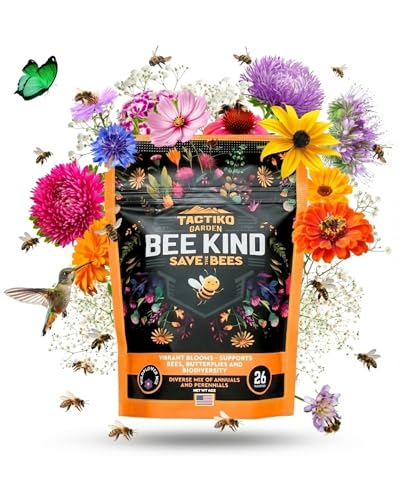
Tactiko Survival’s 26-variety wildflower blend is designed to attract a wide range of pollinators, including honeybees, butterflies, and hummingbirds. Packaged in a 4-ounce bag, this mix contains 120,000+ seeds and covers up to 600 square feet. The mix emphasizes season-long color with both annuals and perennials, suitable for lawns, borders, and larger landscape projects. It provides a robust, easy-to-apply solution for a pollinator-focused garden.
Buying Guide
- Pollinator diversity: Look for mixes featuring a balance of annuals and perennials to ensure quick color and lasting bloom in subsequent seasons.
- Seed quality and germination: Choose brands that emphasize freshness and high germination rates to maximize establishment success.
- Site suitability: Consider sun exposure, soil type, and space. Some mixes are optimized for large areas, while others suit small beds or containers.
- Non-GMO and open-pollinated: If supporting natural pollinator networks is important, prefer non-GMO and open-pollinated varieties.
- Coverage and density: Compare seed counts and expected coverage to match your garden size and mowing plans.
- Packaging and storage: Reusable packaging with clear storage guidance helps maintain seed viability for future seasons.
- Conservation impact: Some products donate a portion of proceeds to pollinator or bee-conservation initiatives; factor this into your choice if that matters to you.
- Maintenance needs: Most mixes require regular watering during establishment and occasional weeding to reduce competition.
- Climate adaptability: Select blends designed for your USDA hardiness zone to improve success rates and bloom longevity.